20 July 2026
Sustainable Pavement Stabilisation for Strategic Border Connectivity
Maccaferri’s MacGrid EG geogrid optimized the pavement design for the Akhegwo–Avangkhu Road in Nagaland, reducing aggregate use, construction time, and costs while ensuring long-term pavement performance.
Discover how Maccaferri’s MacGrid EG geogrid optimized pavement construction on Nagaland’s Akhegwo–Avangkhu Road by reducing aggregate consumption, costs, and construction time while delivering durable infrastructure.
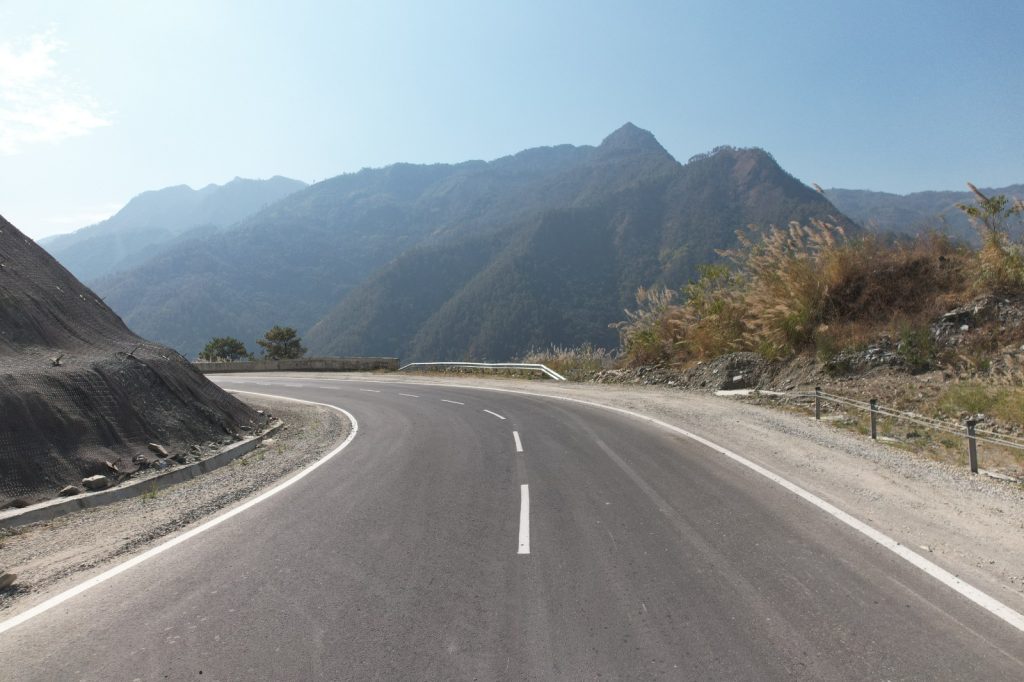
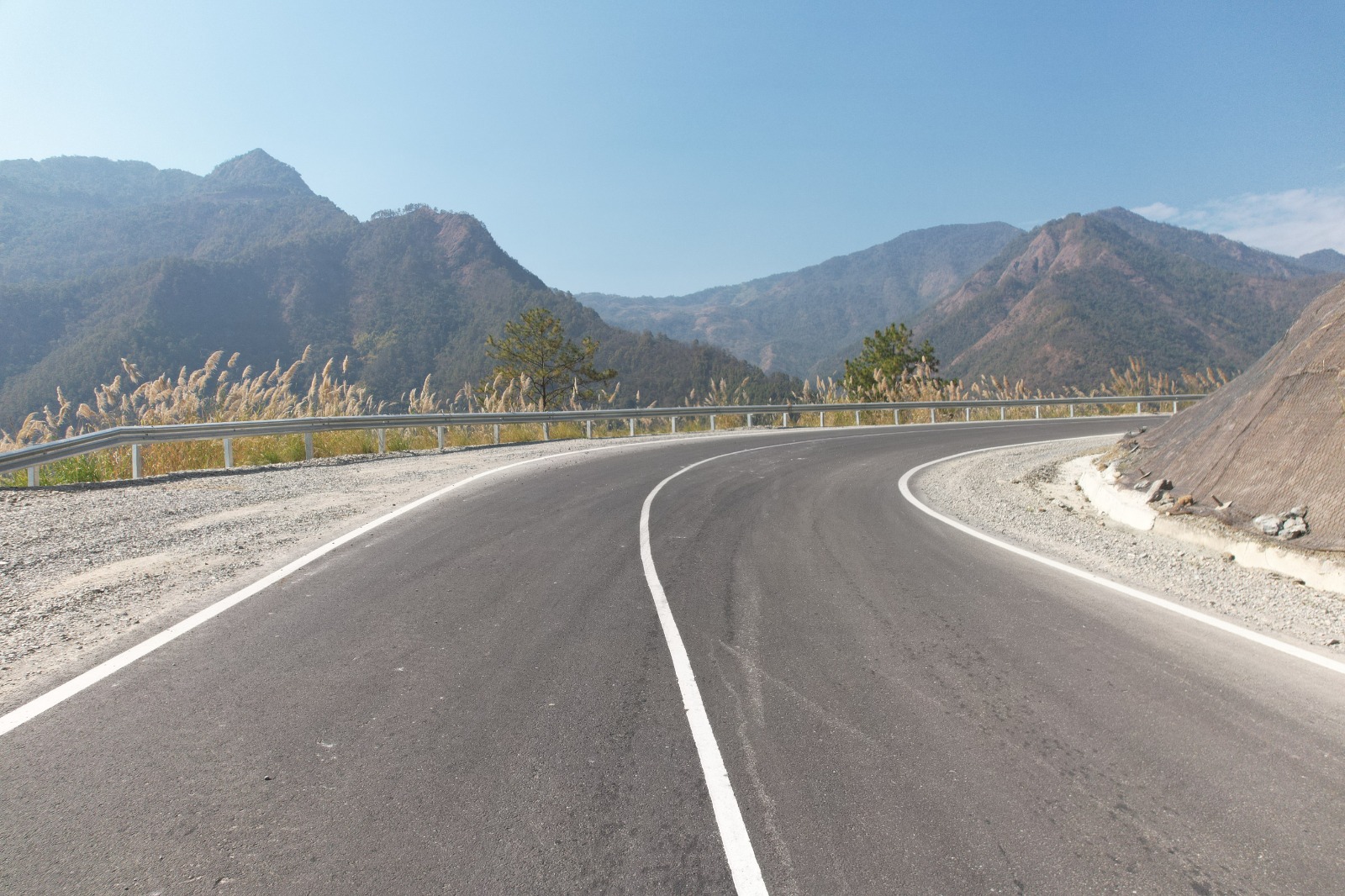
The two-laning of the Akhegwo–Avangkhu Road, Package III of NH 202K, is located in the hilly and geologically sensitive terrain of Nagaland near the Indo-Myanmar border. The corridor is strategically important for strengthening connectivity in India’s North-East region. With a subgrade CBR of 10% and a design traffic loading of 20 MSA, a conventional pavement section designed in accordance with IRC 37:2018 would have required substantial thicknesses of granular sub-base, Wet Mix Macadam and bituminous layers. This would have resulted in a higher demand for good-quality construction aggregates, increased transportation requirements and greater overall project costs. Furthermore, a government-imposed ban on mining operations in the region severely restricted aggregate availability and posed a risk of delays in pavement construction. An engineered solution was therefore required to reduce aggregate consumption and optimise the pavement section without compromising pavement strength, durability or design life
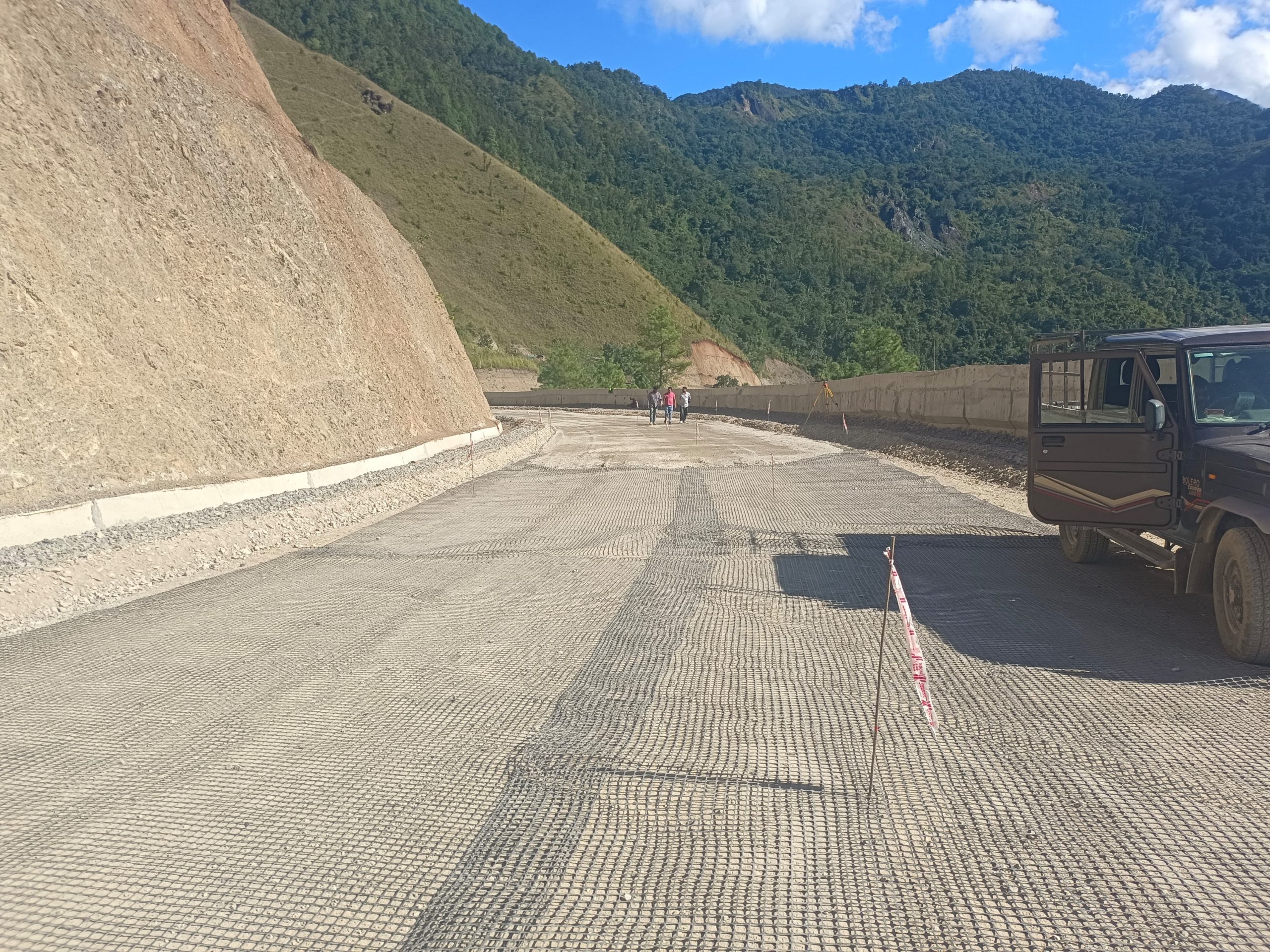
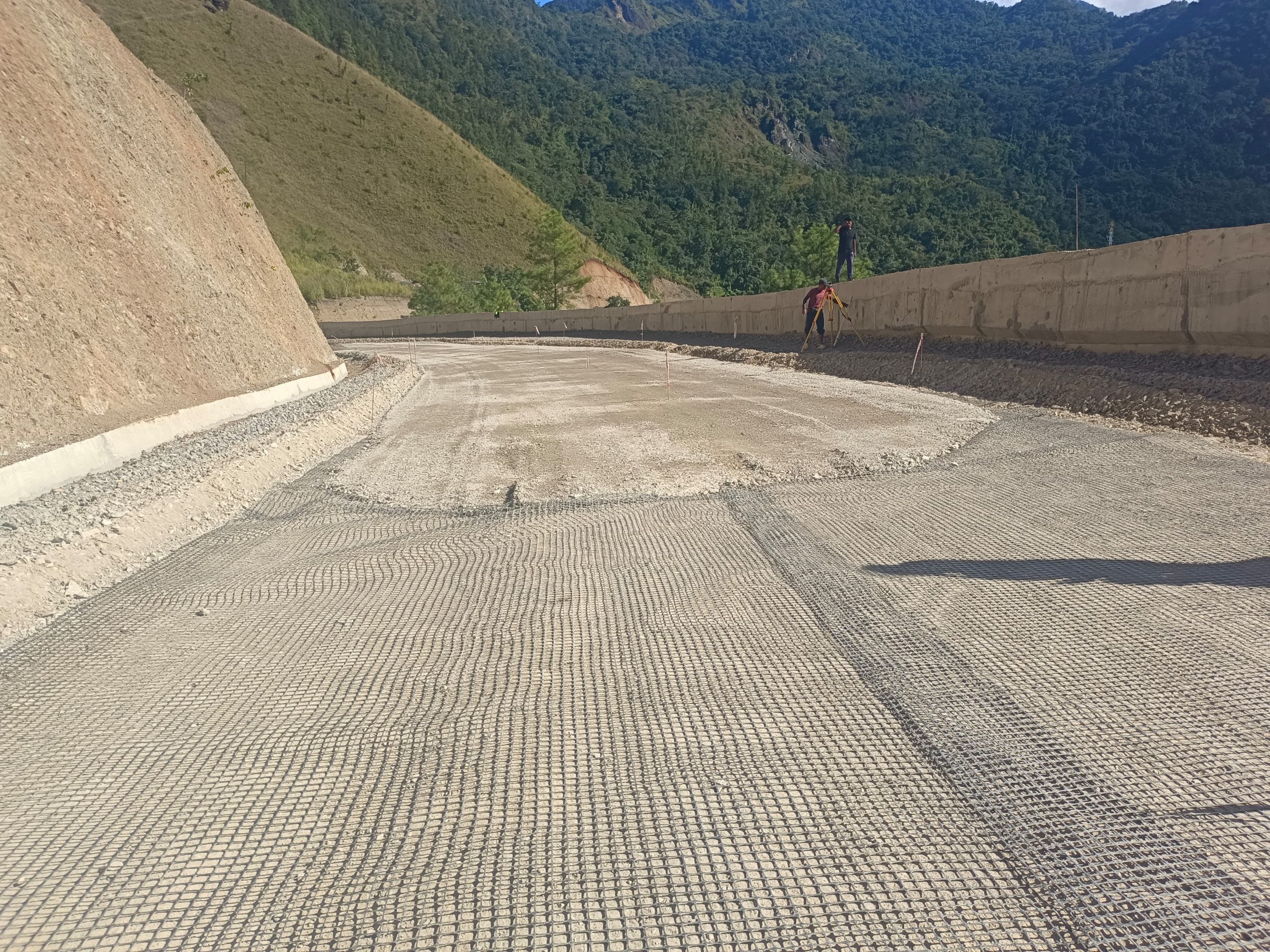
Maccaferri proposed a pavement-stabilisation solution using MacGrid EG, an extruded biaxial polypropylene geogrid incorporated within the pavement structure to stabilise the granular base layer. The reinforced pavement solution enabled the Wet Mix Macadam thickness to be reduced from 250 mm to 180 mm, while the combined thickness of the bituminous layers was reduced from 110 mm to 80 mm. Consequently, the overall pavement thickness was optimised from approximately 560 mm to 460 mm while meeting the applicable design requirements in accordance with IRC 37:2018. The solution reduced dependence on scarce aggregates, lowered material consumption and reduced the number of compaction layers, thereby supporting faster and more cost-efficient construction. By optimising the pavement section while maintaining the required performance, the MacGrid EG solution contributed to the development of durable and resilient infrastructure along this strategically important border road.
To know more about our Soil Stabilisation and Pavements solutions click on the below link: https://www.maccaferri.com/in/applications/soil-stabilisation-pavements/