2022
Eastfield, North Lanarkshire
EDF Renewables
I&H Brown
Maccaferri / Tony Gee and Partiners
West Benhar Wind FarmGeogrid Reinforcement Solution for Peat Stability and Access Roads
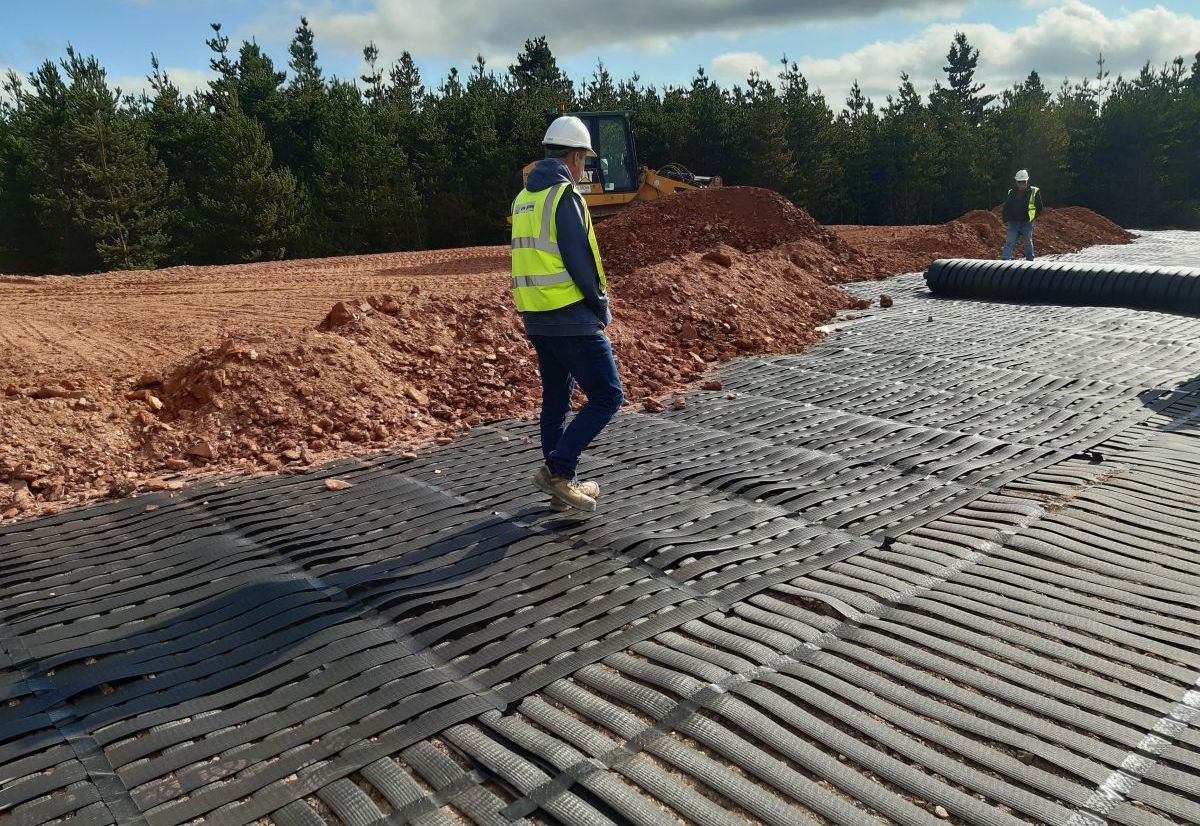
ParaLink fully Layed out
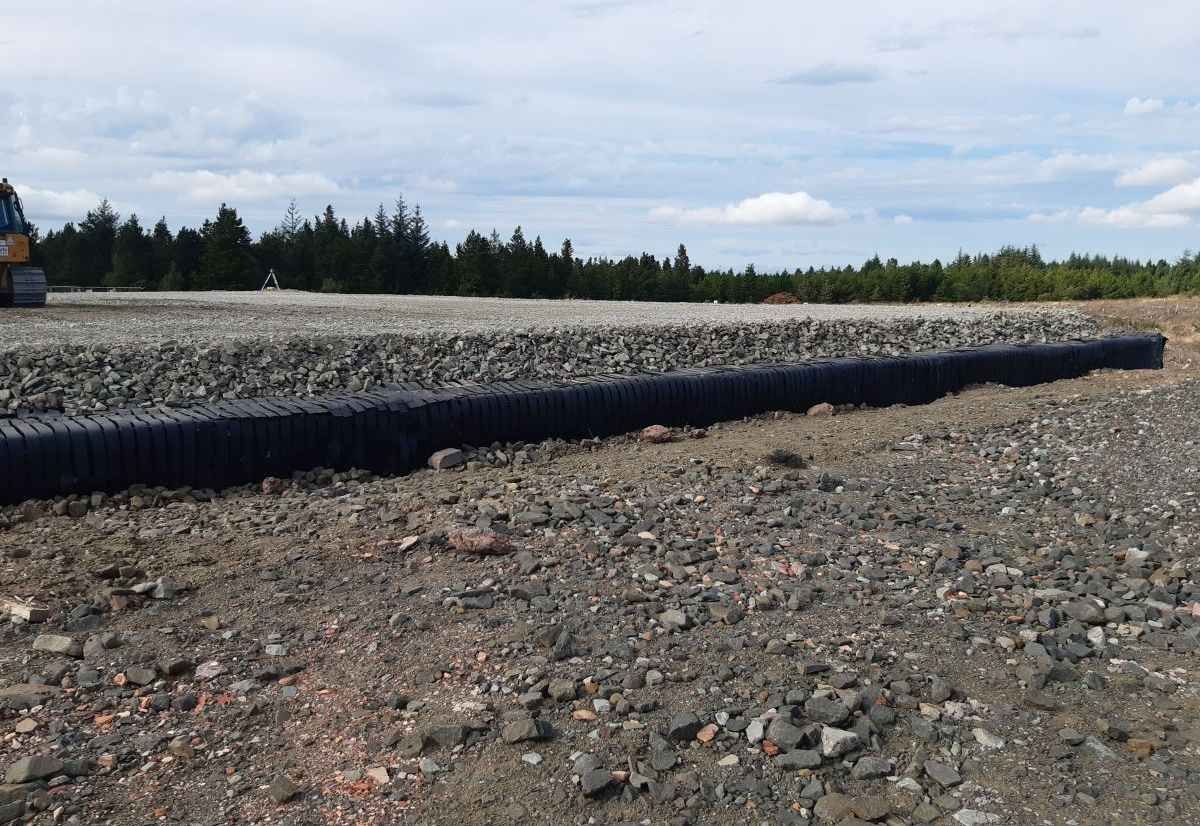
ParaLink Installation for work platform
Challenge
The West Benhar Wind Farm is a 30.1 MW renewable energy project consisting of seven turbines, designed to generate enough electricity to power approximately 18,000 homes. A critical phase of the development involved constructing a spinal access road and turbine hardstanding platforms to support heavy construction traffic, including cranes and low-loader deliveries.
However, the site presented severe geotechnical challenges due to extensive areas of fibrous peat, which had to remain undisturbed in line with strict environmental regulations. Peat depths across the site ranged from 0.5 metres to 6.5 metres, creating highly unstable ground conditions unsuitable for traditional construction methods. The presence of a Peat Management Plan, alongside Waste and Habitat Management Plans, further restricted intrusive ground improvement techniques.
These constraints meant that the access roads and working platforms needed to be designed to span weak peat deposits, minimise settlement, and maintain long-term stability, all while reducing environmental impact. Developing a cost-effective and sustainable ground engineering solution was therefore essential to enable safe construction and long-term performance of the wind farm infrastructure.
Solution
Maccaferri was appointed by Tony Gee and Partners in February 2021 to deliver an innovative ground stabilisation solution using high-strength geogrid reinforcement. The design focused on improving load distribution, minimising settlement, and enabling construction over weak peat without excavation or disturbance.
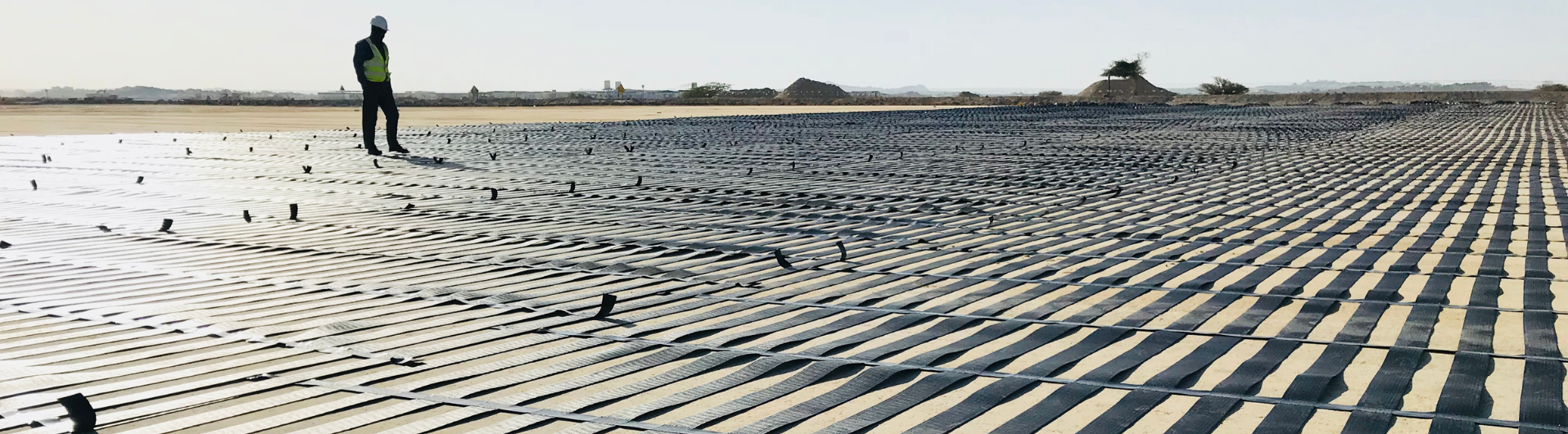
For the turbine hardstanding platforms, a piled foundation system was implemented, with pile caps connected using Maccaferri’s high-performance Paralink geogrids. Using the MacBars design software, Maccaferri engineers calculated the required geogrid strength in accordance with BS8006-1:2010+A1:2016 standards. The Paralink geogrid acted as a load transfer platform, effectively bridging between pile caps and providing uniform support across the surface.
This reinforced system was designed to suspend the load above the कमजोर ground, ensuring that even if the peat beneath compressed or failed locally, the platform would maintain structural integrity. By reducing differential settlement and surface deformation, the solution eliminated the need for a costly reinforced concrete slab, delivering significant cost savings for the client while maintaining performance and safety.
For the spinal access roads, a geogrid-reinforced floating road design was adopted to accommodate construction traffic loads of up to 12 tonnes, with axle loads reaching 22 tonnes for cranes. The design assumed up to 10,000 equivalent standard axle loads during the construction phase, which is typically the most demanding period for wind farm infrastructure.
A layer of imported, well-graded angular aggregate, such as 6F2 or Type 1 fill, was placed over the geogrid reinforcement to form a stable load-bearing surface. The geogrid improved load distribution, enhanced interlock within the aggregate, and reduced rutting, allowing the road to “float” over the peat without causing significant ground disturbance.
This geosynthetic solution enabled the successful construction of access infrastructure across challenging peat conditions, ensuring environmental compliance, structural stability, and long-term durability. By combining advanced geogrid technology with efficient design practices, Maccaferri delivered a sustainable, cost-effective solution tailored to the unique demands of wind farm construction.
Used Products