2017
Newquay, Cornwall
Cormac
ABCAS UK
John Grimes Partnership
Tolcarne Beach Cliff Stabilisation, Newquay Rockfall Protection and Slope Stabilisation
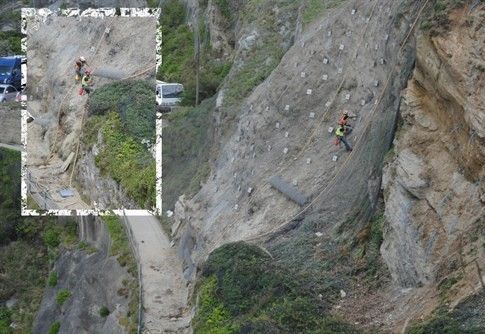
Abcas was installing the Maccaferri solution
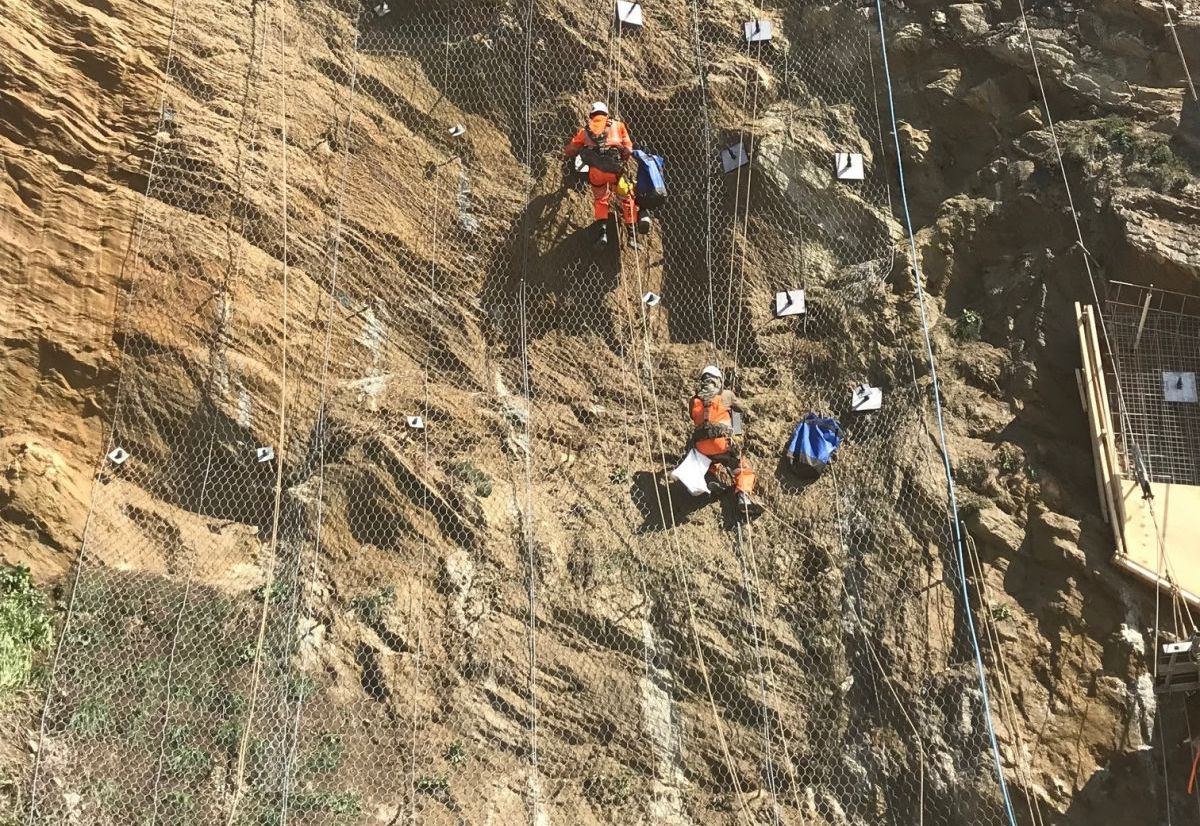
Securing the Steelgrid HR mesh with HR plates
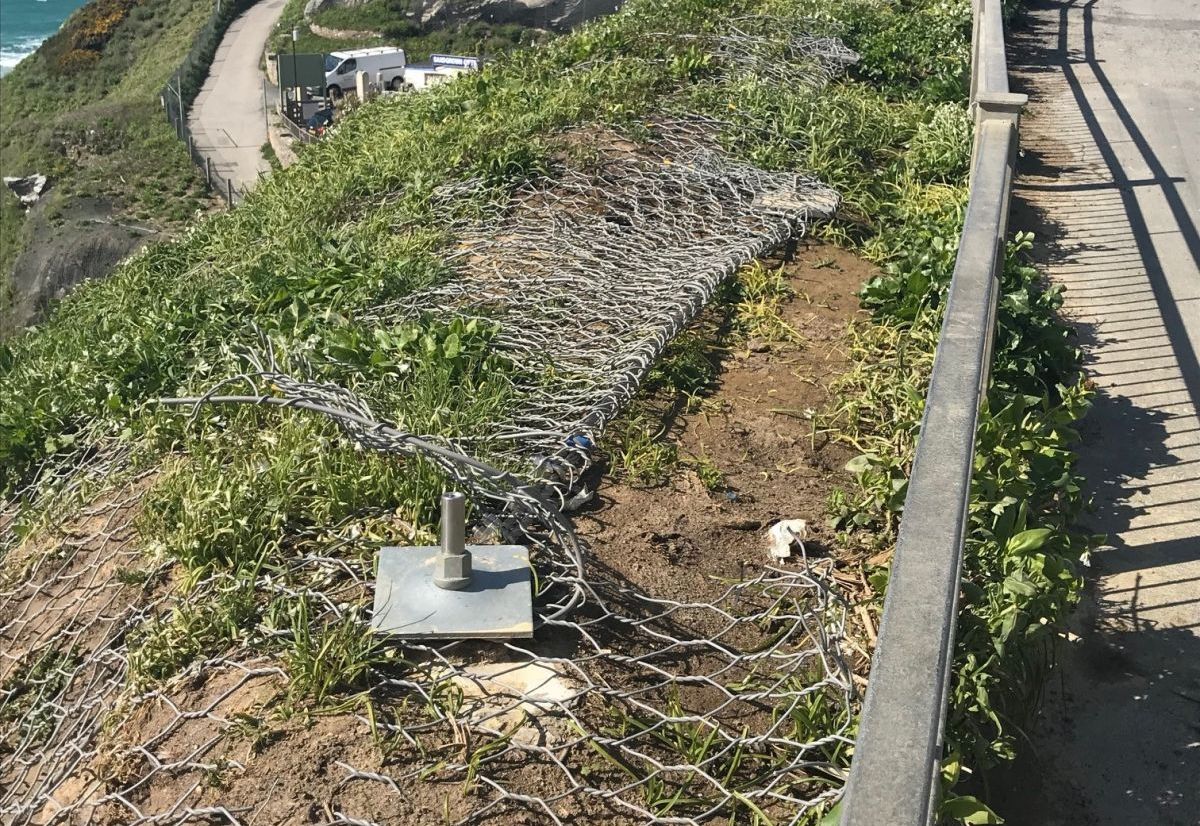
Steelgrid HR secured at the crest of the cliff
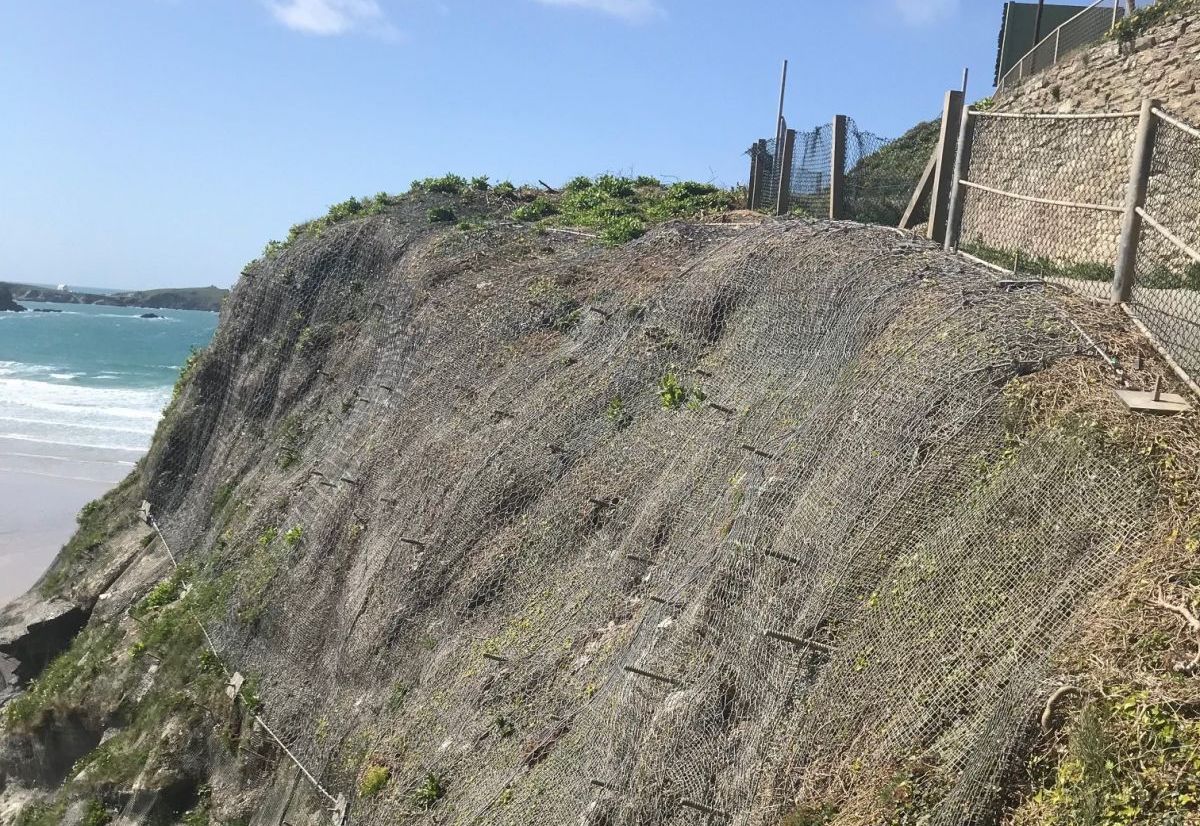
View of the stabilised cliff. A coastal environment requires a PoliMac® coat
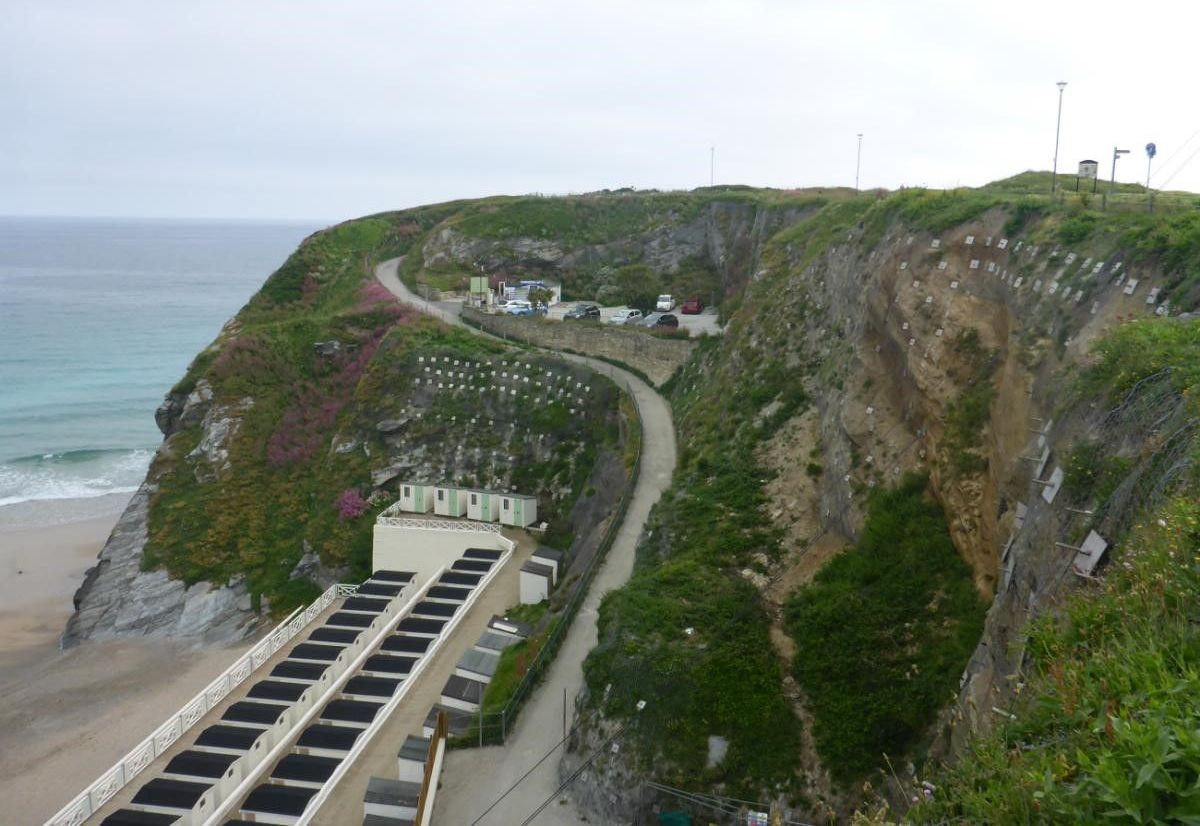
The solution was safely installed without impacting on the local fauna and flora
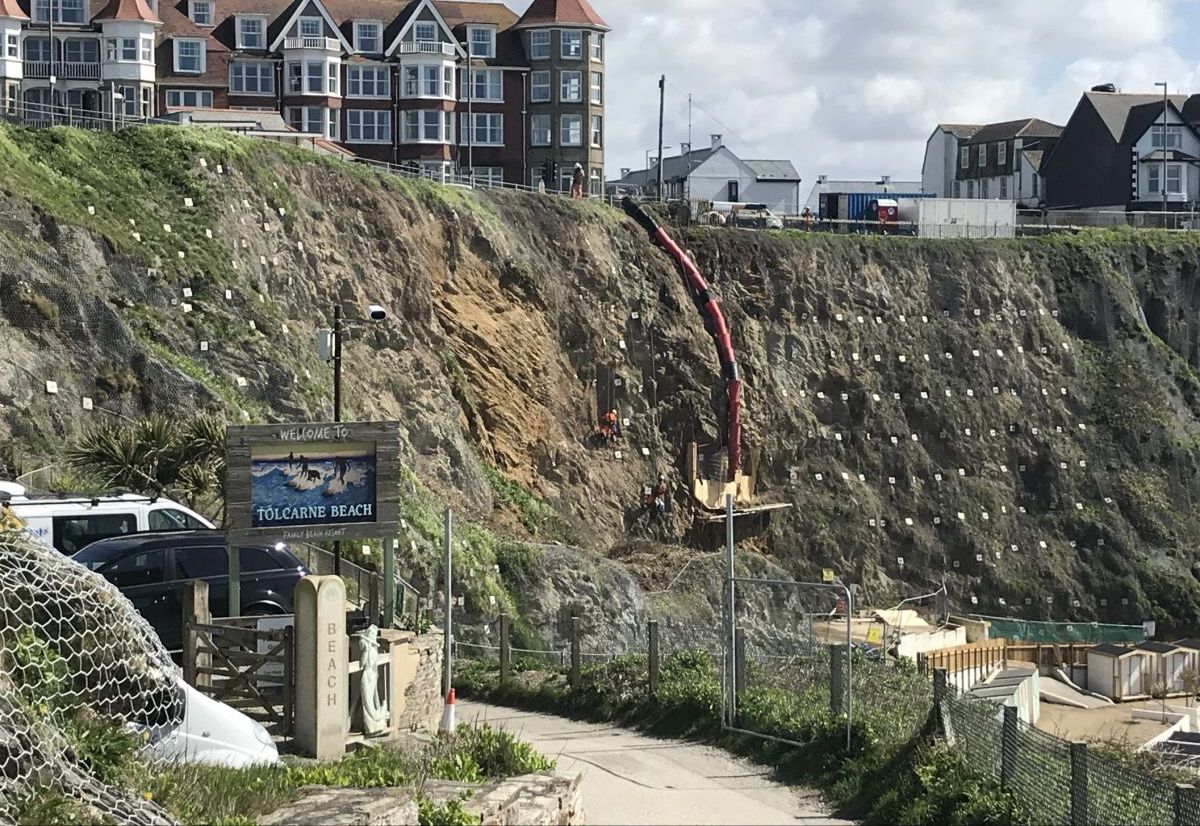
View of the works in Autumn 2017
Challenge
Tolcarne Beach in Newquay is accessed via a narrow, winding cliff road that descends in a hairpin formation from the clifftop to a mid-level car park and onward to the beach. Due to its steep alignment and proximity to the cliff face, the road is highly susceptible to instability and rockfall hazards.
In November 2016, a significant landslide occurred when debris detached from the cliff and fell directly onto the beach access road. This event created a serious safety risk, leading to the immediate closure of the route. Detailed geotechnical inspections and slope stability analysis identified ongoing instability within the cliff face, confirming that further rockfall events were likely.
As a result, the access road could not be reopened without implementing a robust cliff stabilisation and rockfall protection solution. The challenge was to design a system that would ensure long-term safety while also addressing environmental sensitivities associated with the coastal location.
Solution
A comprehensive cliff stabilisation scheme was designed by John Grimes Partnership, focusing on long-term slope stability and controlled rockfall management. The solution involved the installation of soil nails and rock anchors drilled into the bedrock, with lengths of up to six metres. These anchors were fitted with bearing plates, which, when tensioned, stabilise large sections of the cliff and prevent further failure.
To address smaller-scale rockfall, a Maccaferri polymeric rockfall netting system was installed across the cliff face. This high-performance mesh, secured to the anchored system, effectively contains loose debris while allowing for controlled release when required. This ensures ongoing safety for road users and reduces maintenance risks.
Specialist contractor Abcas (UK) Ltd carried out the installation using 3m-wide Steelgrid® HR polymeric-coated mesh, a durable solution designed for aggressive coastal environments. The works were delivered in two phases, with phase one completed in July 2017 to stabilise the most critical sections of the cliff. Phase two was finalised before summer 2018, enabling the safe reopening of Tolcarne Beach on 27th July 2018.
The project also required extensive ecological and environmental assessments to minimise impact on local wildlife and vegetation. Particular attention was given to protecting nesting birds and rare plant species. During the design and investigation stages, temporary wire mesh was installed to prevent animals from inhabiting the cliff face, ensuring construction could proceed without ecological disruption.
Maccaferri’s rockfall protection system was selected for its proven performance, durability, and adaptability in coastal conditions. The final solution provides a reliable, long-term cliff stabilisation system that ensures public safety while preserving the surrounding environment.
Used Products