2014
Coventry, Warkwickshire
Wates Construction
Maccaferri Ltd
Maccaferri Ltd
Temporary Retaining Wall Solution for School Reconstruction in Coventry
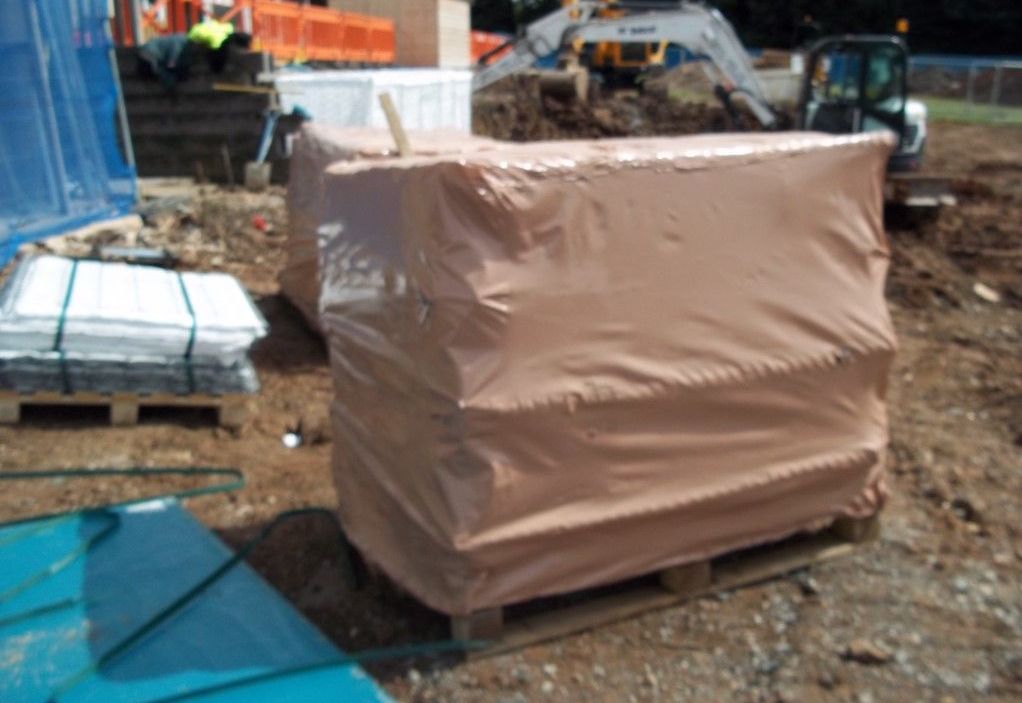
FlexMac DT Units arrive on site fully palletised and sealed
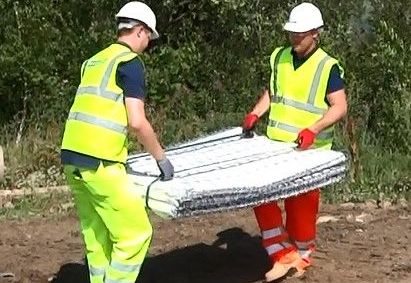
FlexMac DT Units can easily be moved into position
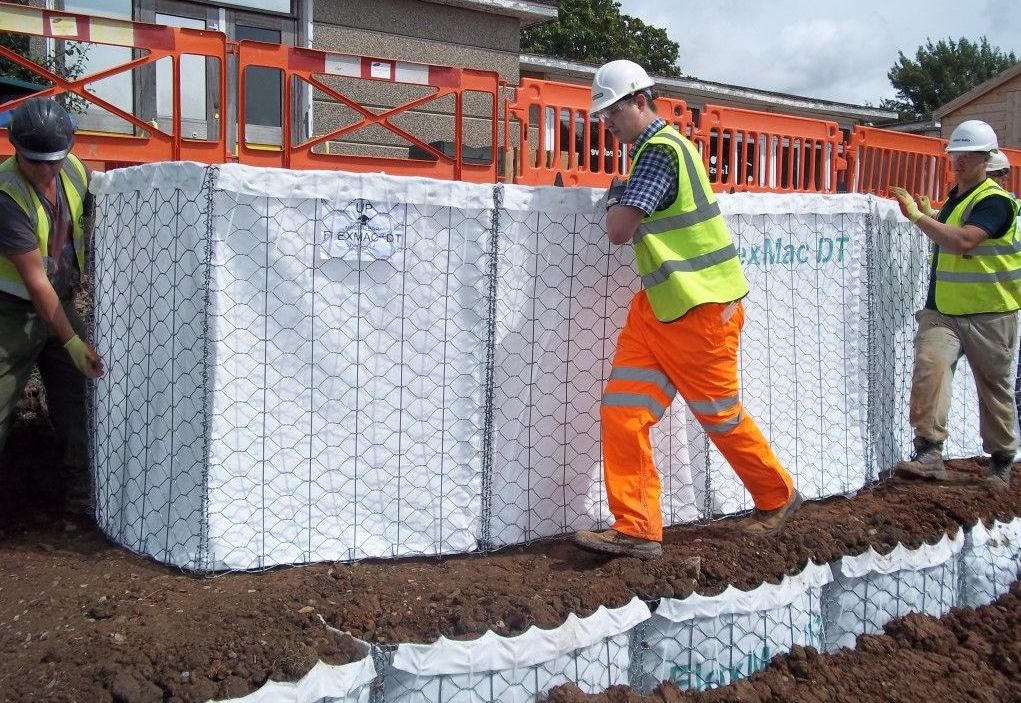
FlexMac DT Units opened in place in 30 seconds
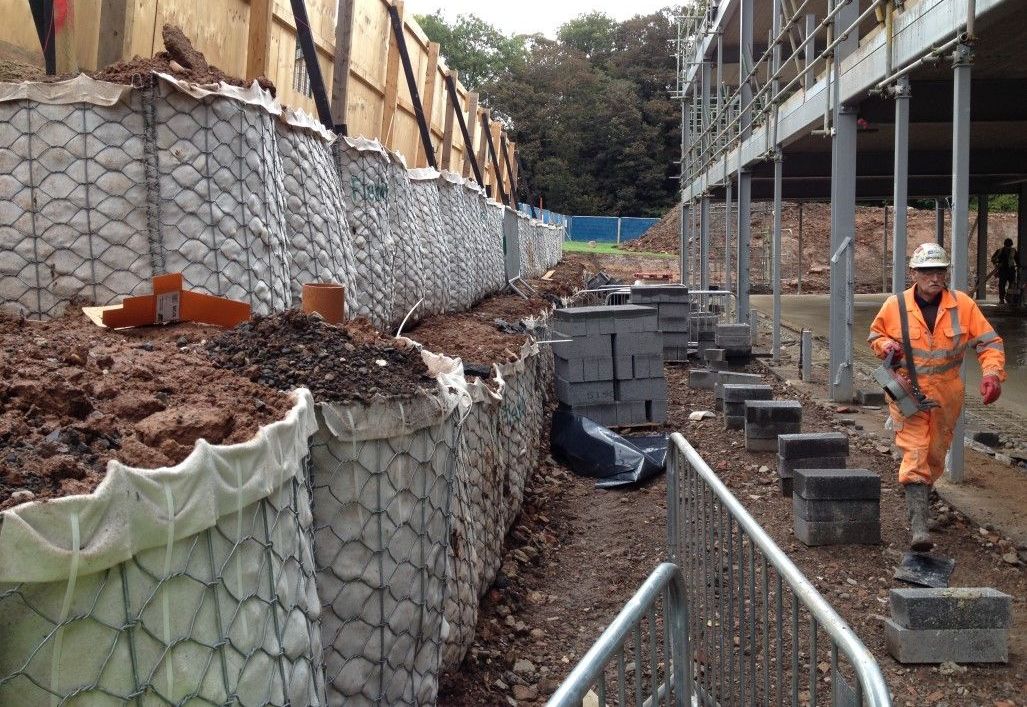
The completed temporary retaining wall following construction
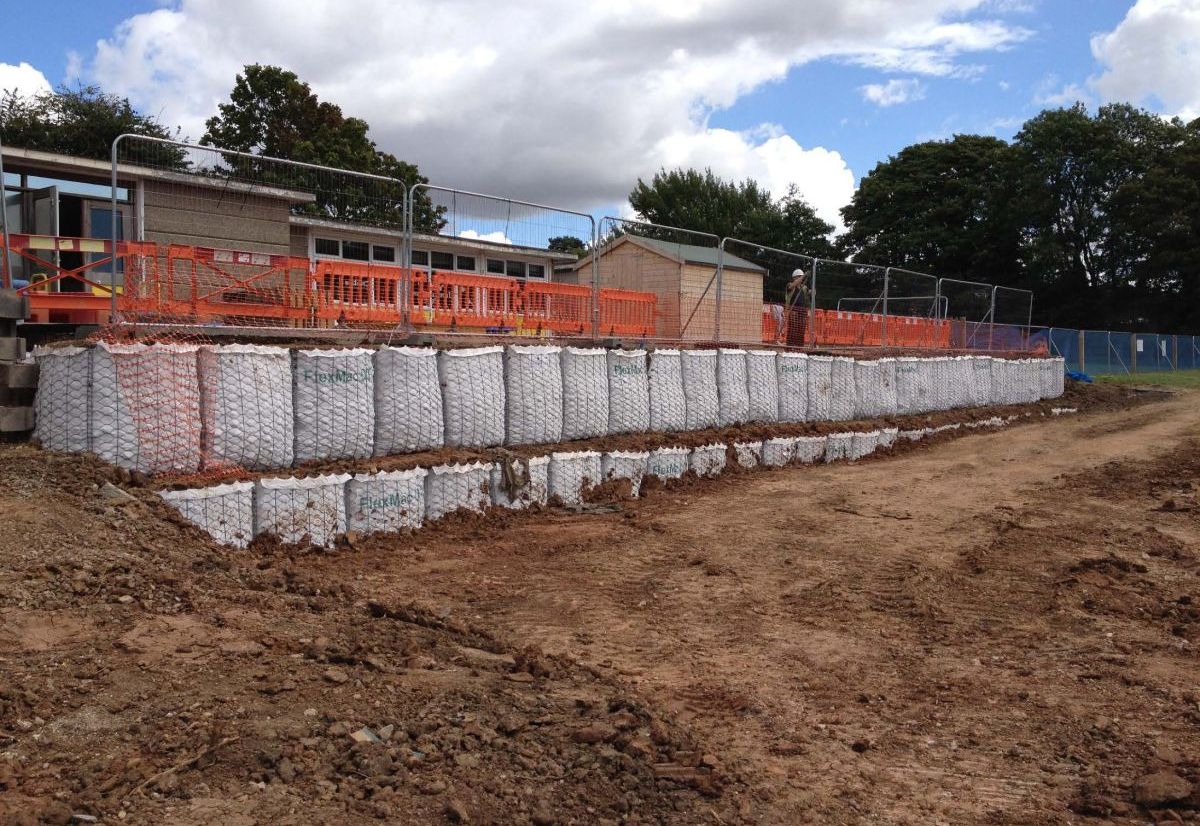
Completed temporary retaining structure, constructed in 3 days
Challenge
Wates Construction was appointed to carry out the phased demolition and reconstruction of the Richard Lee School in Coventry. This complex construction project required one half of the school to remain fully operational while the other half was demolished and rebuilt, creating a highly constrained working environment with strict safety requirements.
During the development of a new building block adjacent to the existing structure, a critical design conflict emerged. The proposed temporary battered slope clashed with the required scaffold base location, significantly reducing the available working space at ground level. This posed both logistical and safety challenges for construction activities.
To overcome this issue, a temporary retaining wall solution was required to maximise usable space and ensure structural stability. The retaining structure also needed to support a playground area above and incorporate a secure fence line to safely separate the live school environment from the active construction site.
Solution
Maccaferri was engaged by Wates Construction to design and supply a cost-effective and efficient temporary retaining wall system. After evaluating the site constraints and project requirements, the FlexMac DT system was selected as the optimal solution due to its speed of installation, flexibility, and suitability for temporary works.
Maccaferri provided full design support for the FlexMac DT retaining wall, enabling the reuse of site-won gravelly clay as backfill material. This eliminated the need for imported fill, significantly reducing both construction costs and programme duration while improving sustainability.
The flexibility of the FlexMac DT system allowed the clay material to be compacted directly within the units without compromising structural integrity. This made it particularly effective in challenging ground conditions and restricted site environments.
The temporary retaining wall was constructed to a height of 2.8 metres, including 500mm embedment, and extended 35 metres in length. Installation was completed by a four-person team in just three days, demonstrating a major time-saving compared to traditional retaining wall systems.
Maccaferri estimated that a comparable structure built using conventional gabions would have taken approximately twice as long to install and could have cost up to five times more. In addition to programme and cost savings, the reuse of 147m³ of site-won material reduced site traffic by approximately 27 truckloads, each carrying 20 tonnes, contributing to a lower carbon footprint and improved site efficiency.
Used Products