2017
Borough Green, Kent
H & H Celcon
CAN Geotechnical Ltd
PBA Peter Brett Associates
Slope Stabilisation of Quarried Rock Face Using Soil Nailing and Rockfall Protection
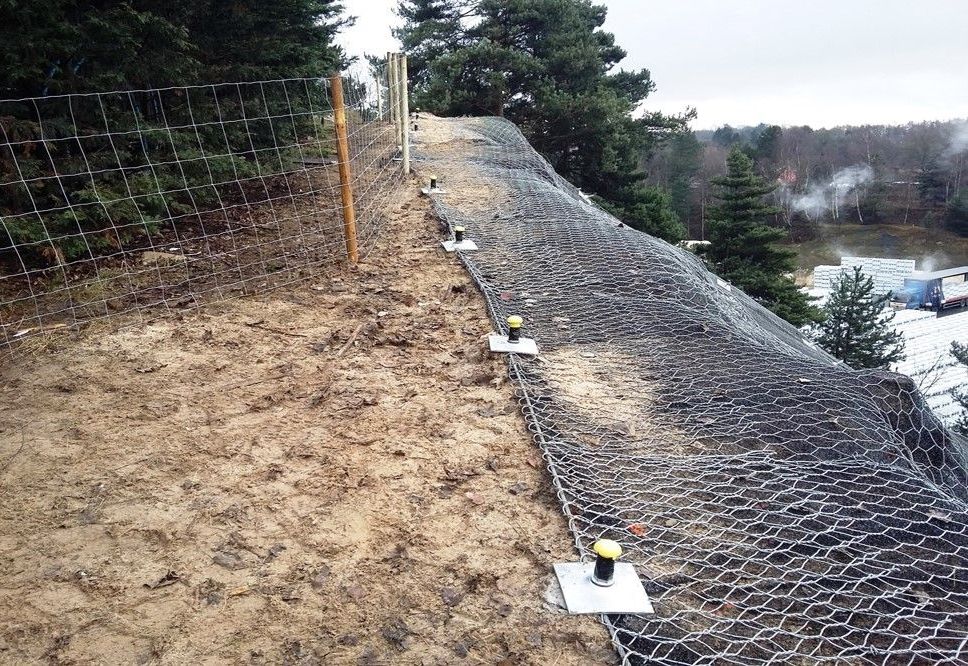
The top of the netting fastened by nailing into the soil structure
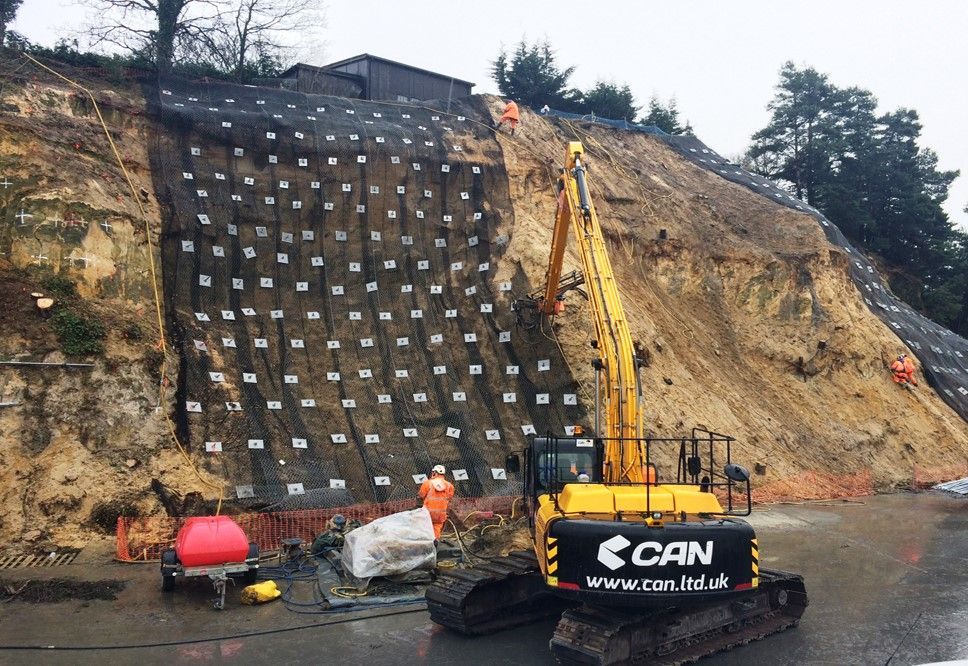
Preparing the netting along the rock face
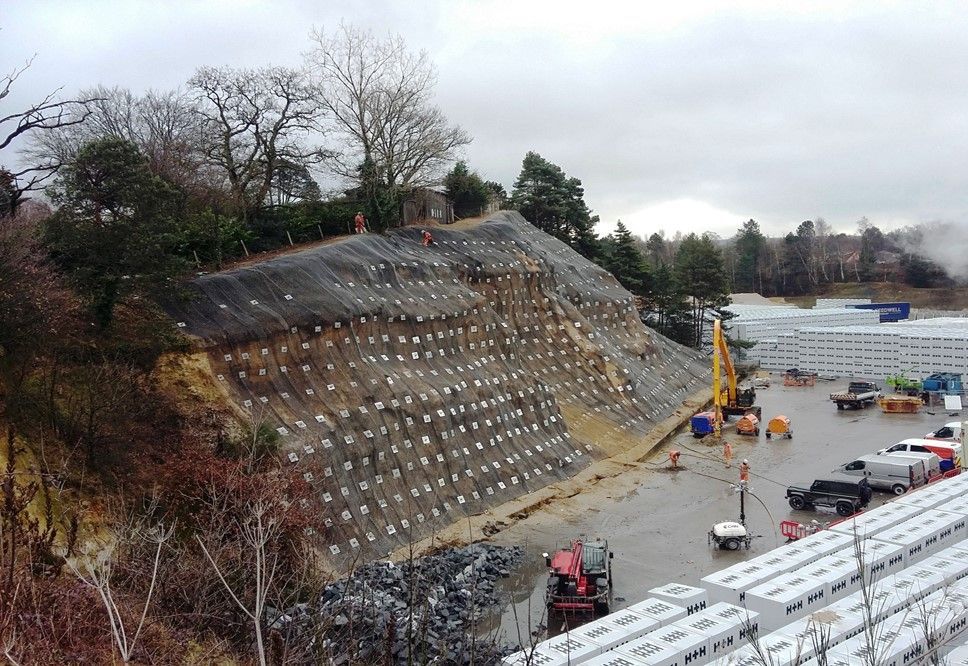
A long distance view of the project
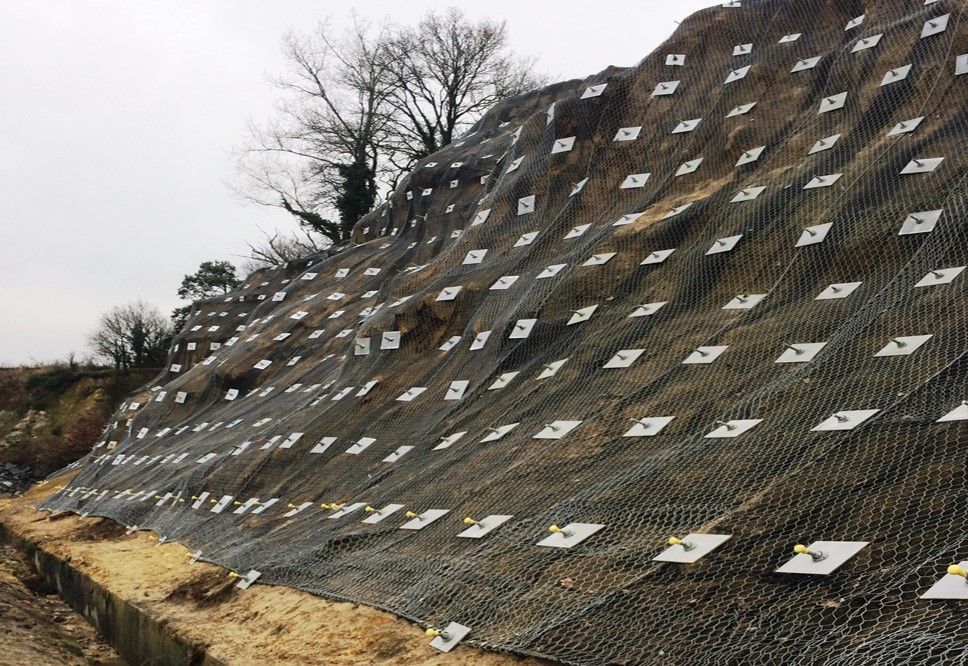
Securely nailed into the structure
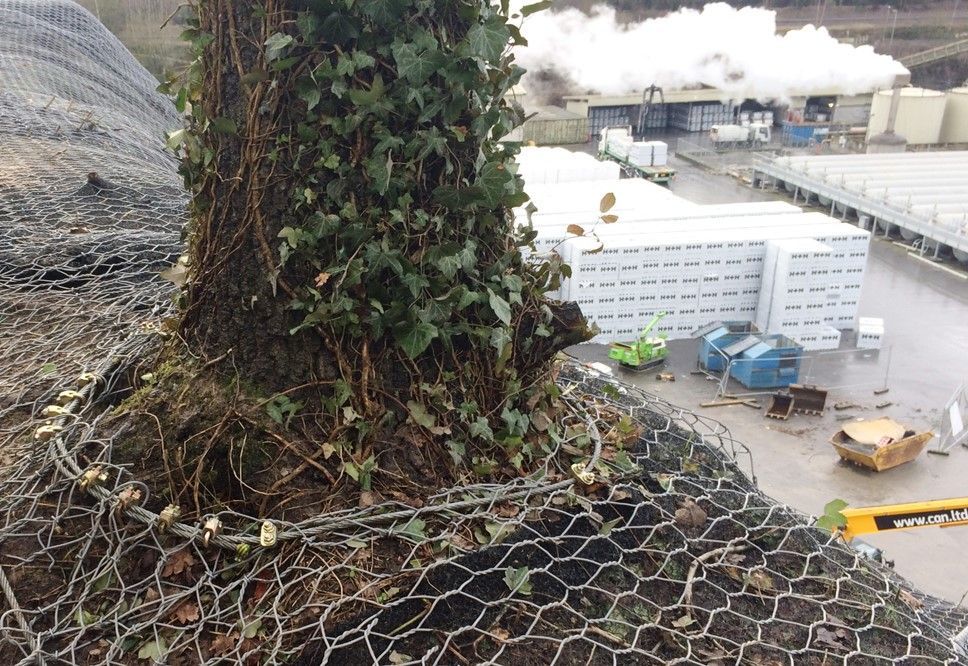
Close up of the netting around an existing tree
Challenge
A major slope instability event occurred on an existing quarried rock face overlooking the H+H manufacturing facility, resulting in a significant slip and raising serious geotechnical concerns. The incident left the slope in a loose and highly unstable condition, increasing the risk of further landslides and rockfall. With the onset of winter and prolonged wet weather conditions approaching, the likelihood of additional slope failures was expected to increase due to water ingress and reduced ground cohesion.
A further challenge involved vegetation removal. While necessary for slope stabilisation works, stripping the entire face posed a risk of further destabilising the already compromised slope. This created a complex scenario requiring a carefully managed approach to ensure both safety and environmental compliance while maintaining operational continuity at the site.
Solution
A phased slope stabilisation strategy was implemented to reduce risk and maintain stability throughout construction. Works were carried out in controlled vertical strips rather than across the full slope face, minimising exposure and preventing further large-scale instability. While effective from a geotechnical perspective, this approach introduced challenges in setting out the soil nail layout, as traditional full-face alignment methods could not be used. Careful surveying and precision engineering ensured accurate placement within each working section.
Due to the steep gradient and height of the quarry face, a combination of specialist access and drilling techniques was required. Long-reach excavators equipped with drill booms were utilised for lower and the middle-slope areas, while A-frame drilling rigs enabled safe installation of soil nails in the upper sections. This multi-method approach ensured full slope coverage and efficient installation.
Environmental considerations were integral to the project. All works were undertaken in collaboration with a local ecologist due to the presence of protected species, including bats, dormice, and great crested newts. This ensured compliance with environmental regulations and minimised ecological impact.
The slope stabilisation works were successfully completed, restoring safety and operational functionality to the site. A total of 959 soil nails were installed in a precise and uniform pattern, forming a robust stabilisation system. The solution was enhanced with Maccaferri polymeric-coated DT rockfall netting and MacMat® erosion control matting, providing long-term slope protection, erosion control, and rockfall mitigation.
This project demonstrates an effective combination of soil nailing, erosion control systems, and environmentally sensitive construction techniques to deliver a durable and sustainable slope stabilisation solution.