2007
Brislington, Bristol
Dean & Dyball Ltd
Network Rail
White Young Green
Rockfall Protection and Slope Stabilisation for Live Railway
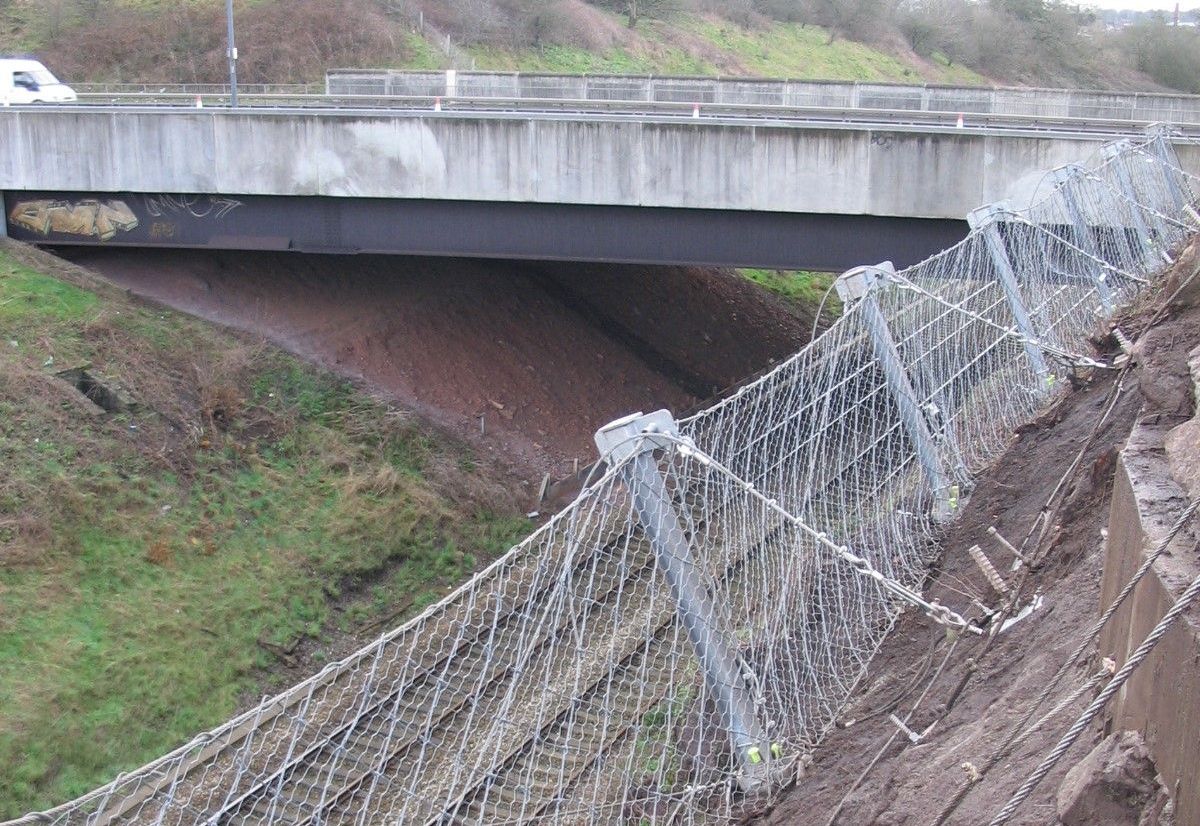
OM250 barrier installed above the Bristol – London train line
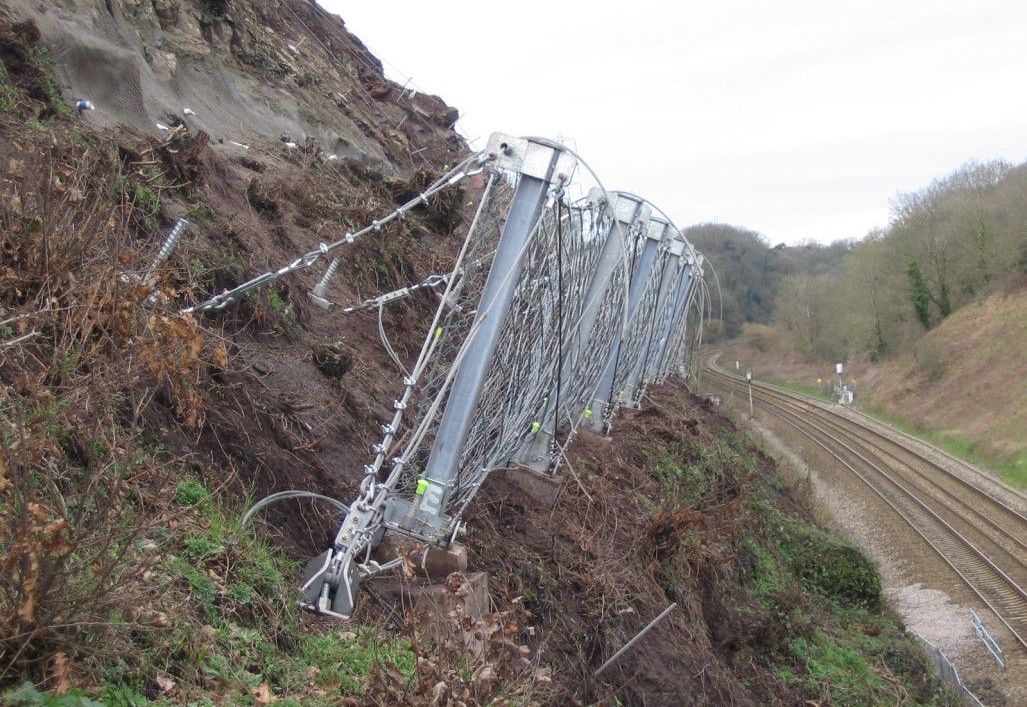
Barrier / Catch fence above railway line
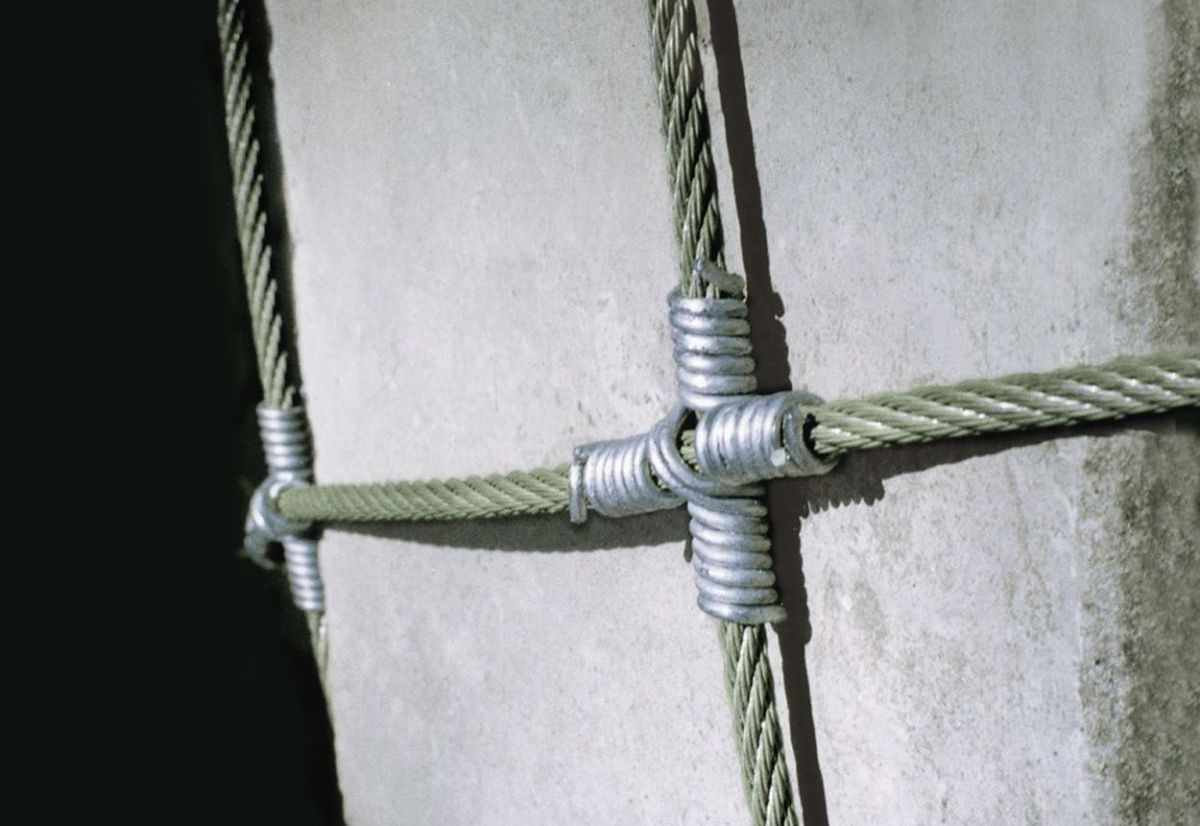
Detail of the cable connection used within the catch fence
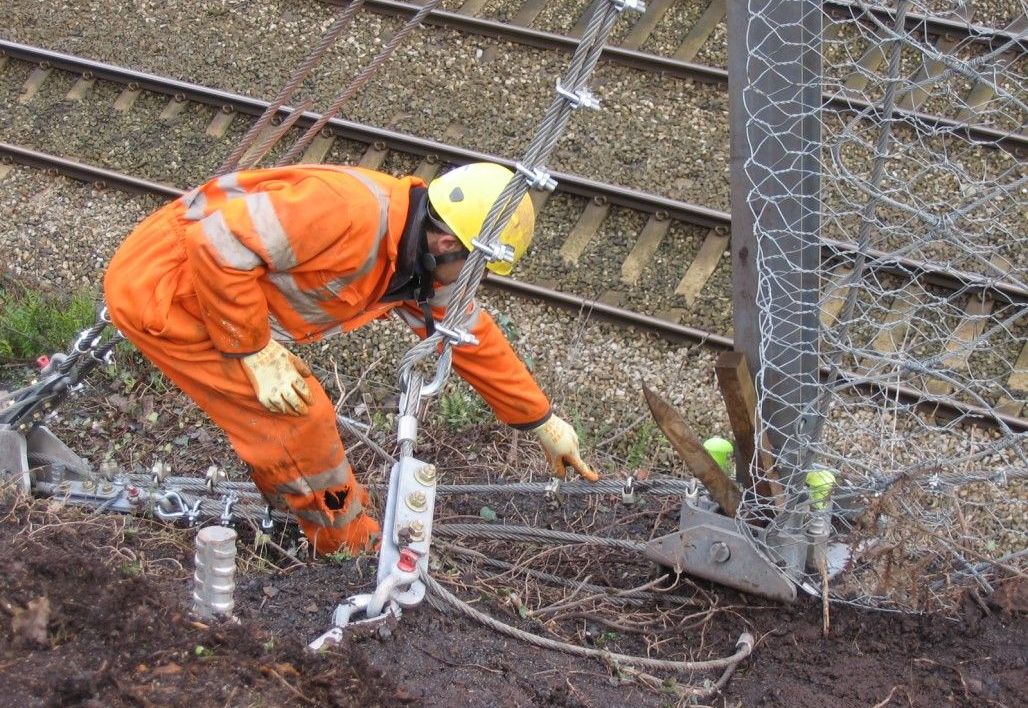
Adjustment of the cables and friction brakes during installation
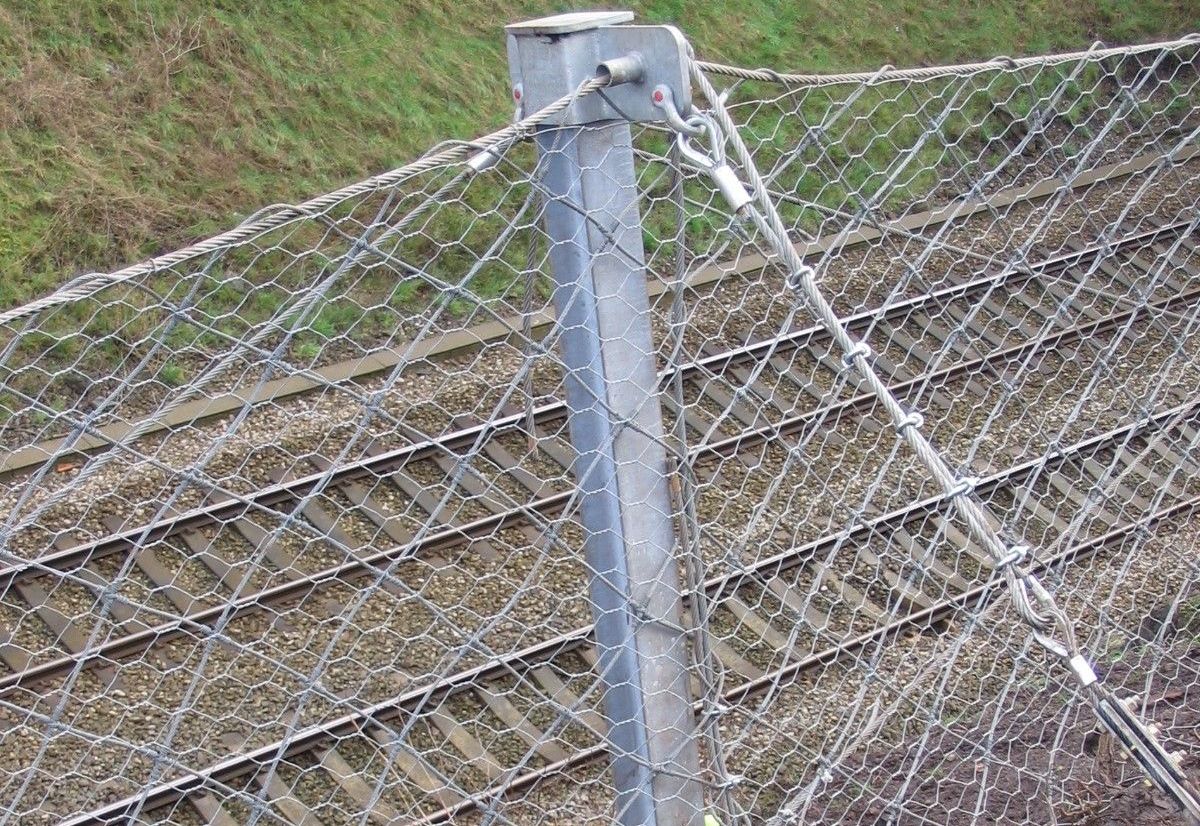
Intermediate fence post head detail
Challenge
In April 2006, essential slope stabilisation works were undertaken to mitigate the risk of falling vegetation and rock debris impacting the main London to Bristol railway line, one of the UK’s busiest high-speed rail corridors. The project involved revegetation and descaling of a sandstone rockface situated directly above the live railway. These works were carried out by Greenman Environmental Management Ltd on behalf of Network Rail’s maintenance contractor, Dean and Dyball.
During the descaling operations, a critical geotechnical hazard was identified. Engineers discovered a large sandstone block separated from the main rockface by an existing tension crack approximately 8 metres long. This instability presented a severe rockfall risk, with the potential for catastrophic consequences should the block detach and fall onto the operational railway below.
To manage this immediate danger, consulting engineers White Young Green (WYG) implemented a rigorous weekly slope monitoring programme to track any movement or deterioration. This monitoring phase was crucial in maintaining safety while a permanent rock stabilisation solution was being designed. A key project constraint was that the railway line had to remain fully operational throughout, with trains travelling at speeds of up to 100 mph. No line closures were permitted, significantly increasing the complexity of both design and installation.
Solution
White Young Green developed a comprehensive rockface stabilisation solution designed to address both the immediate danger posed by the unstable sandstone block and the ongoing risk of smaller rockfall events. To secure the large block, a system of high tensile steel cables was installed and anchored across the rockface, effectively restraining movement and providing long-term slope stability. In addition, a mass concrete support block was constructed beneath the sandstone mass, reinforcing the slope and protecting a weak shale layer located within a concave section of the rockface.
Following the stabilisation of the primary hazard, the focus shifted to implementing a robust rockfall protection system to prevent smaller rocks and debris from reaching the railway. Based on detailed risk assessment, WYG determined that a rockfall barrier capable of resisting impact energies between 100 and 250 kJ would provide adequate protection.
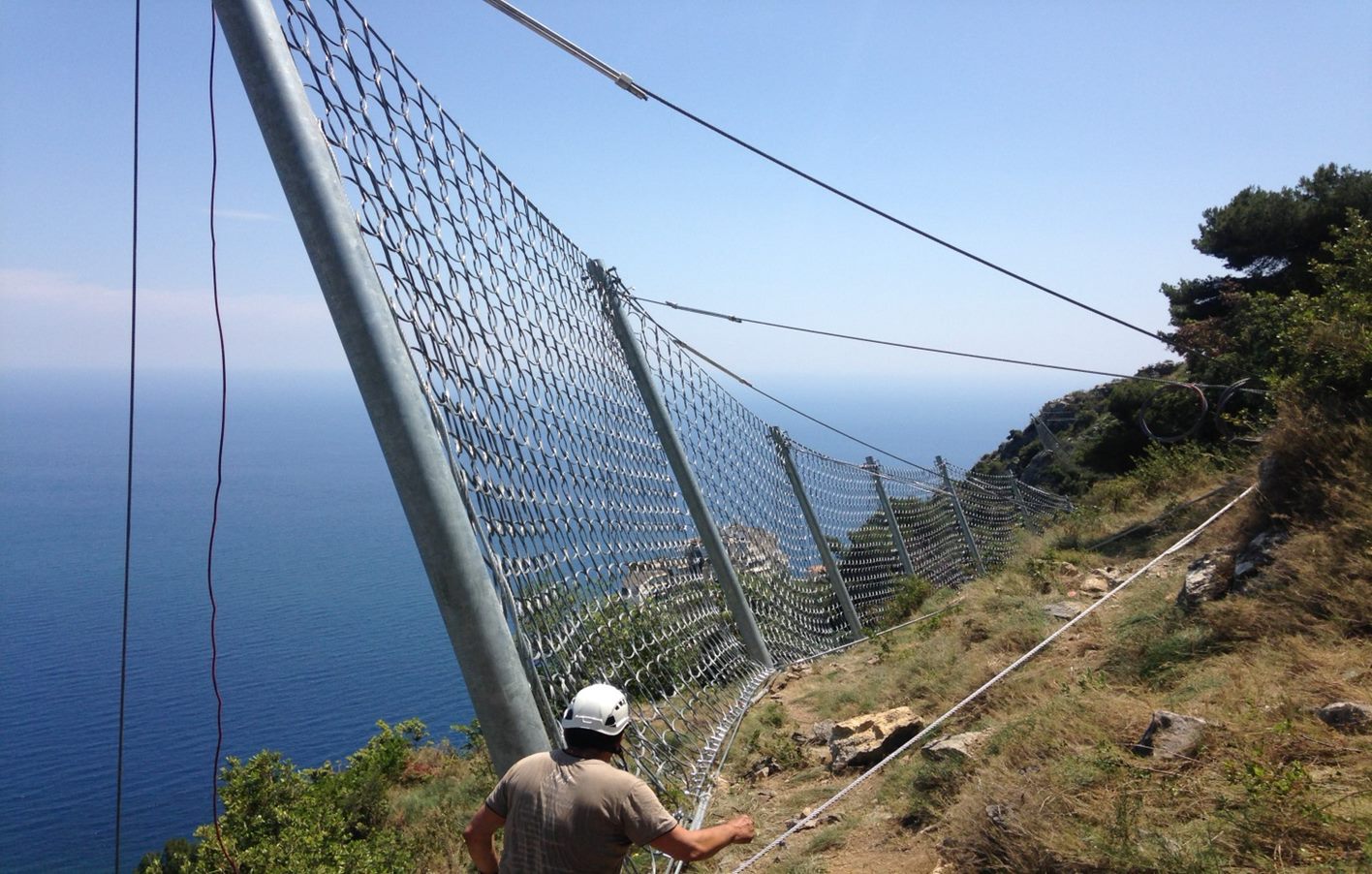
Maccaferri proposed its OM250 Rockfall and Debris Flow Catch Fence, a high-performance rockfall barrier system independently certified to withstand impacts of up to 250 kJ. The system was installed as a 2-metre-high barrier extending 35 metres along the slope, with steel support posts spaced at 5-metre centres. This engineered solution provided a reliable and durable defense against falling debris, ensuring continued safe operation of the railway without disruption.
By combining targeted rock stabilisation techniques with advanced rockfall protection systems, the project successfully reduced geotechnical risk while maintaining uninterrupted service on a critical section of the UK rail network.
Used Products