


River Humber Bank Protection at Brough – Erosion Control Using Gabion Wall System
Challenge
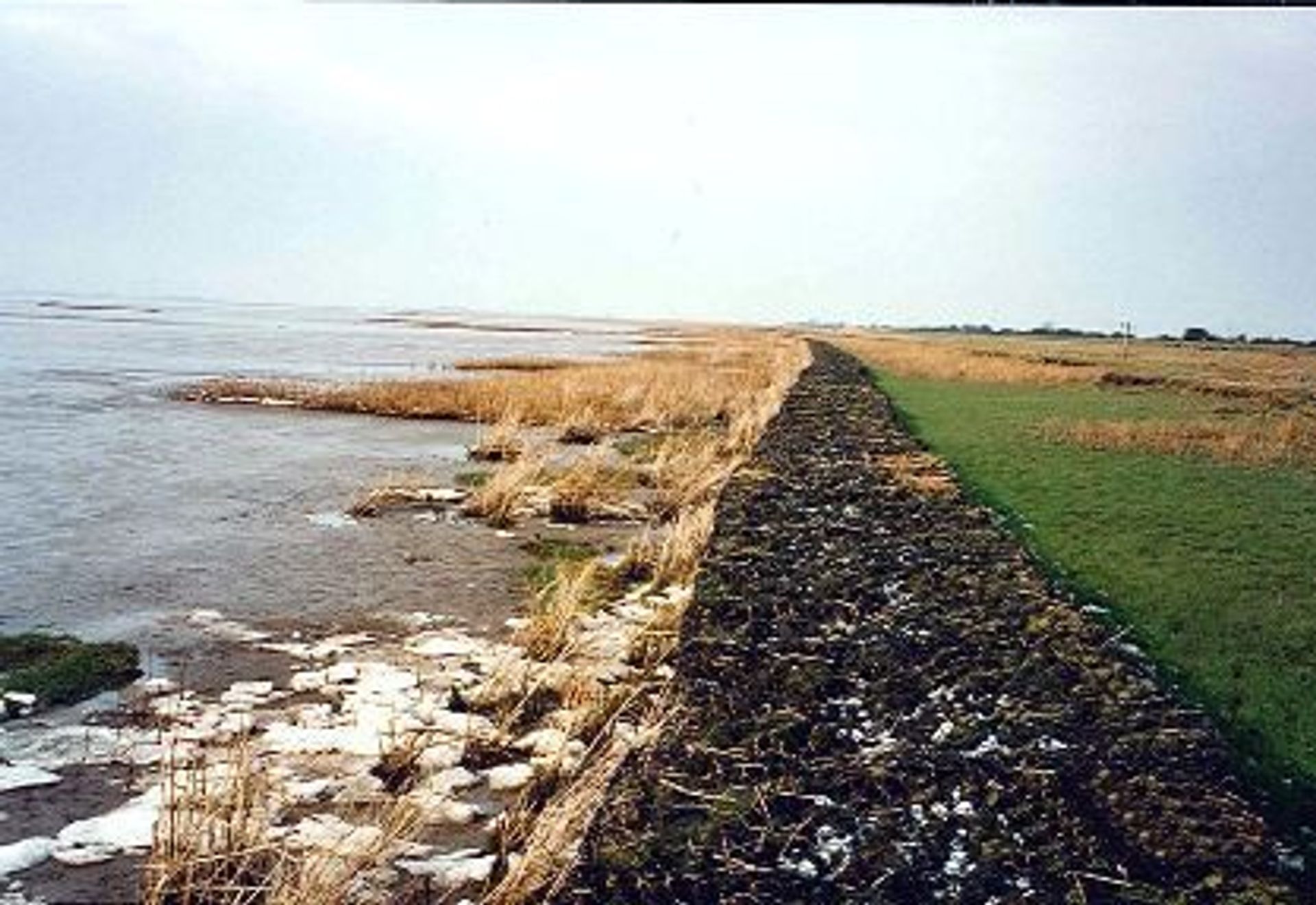
For many years, the north bank of the River Humber at Brough, located approximately ten miles west of Hull, experienced severe and ongoing riverbank erosion. This low-lying area, much of which sits below the level of ordinary spring tides, was highly vulnerable to tidal forces and progressive land loss.
The erosion posed a significant risk to key infrastructure and assets, including agricultural land, the main railway line to Hull, an aircraft manufacturing facility, and a timber yard. All of these were protected only by an earthen flood embankment, which was increasingly at risk of failure due to continued scouring and instability at the toe of the bank.
Recognising the urgency of the situation, the Hull and East Yorkshire River Board assessed multiple coastal and riverbank protection solutions. The objective was to implement a durable and cost-effective erosion control system capable of stabilising the foreshore while protecting critical infrastructure. The final decision was to construct approximately 1,000 yards of half-tide wall combined with a similar length of gabion revetment to provide robust and flexible riverbank protection.
Solution
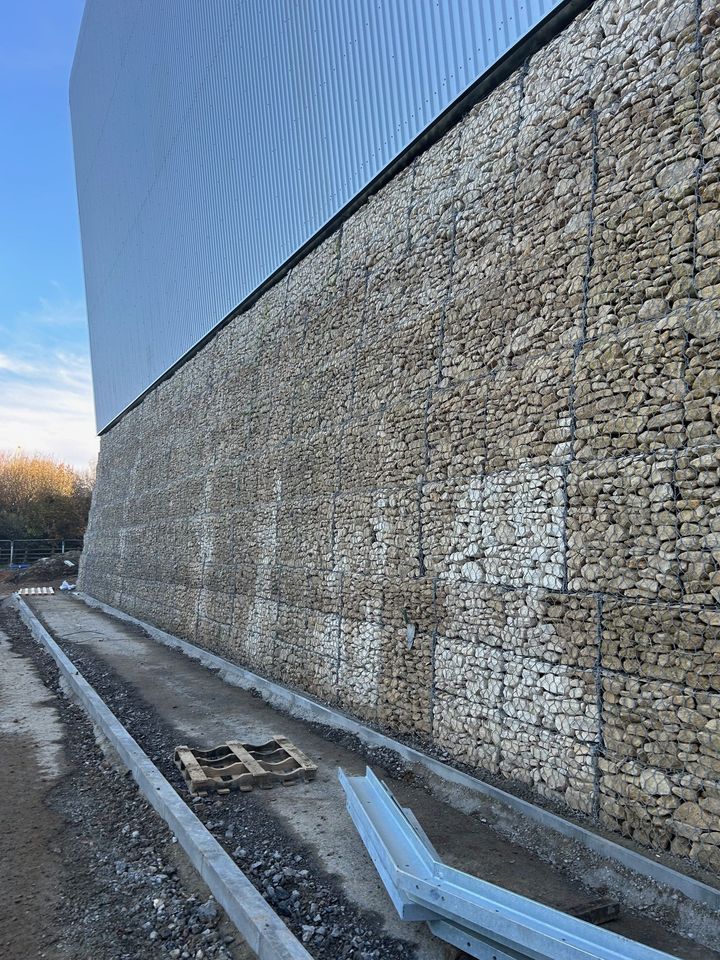
The chosen solution involved the installation of a high-performance gabion wall system designed specifically for marine and tidal environments. The structure consisted of a 2-metre-high half-tide gabion wall supported by a wide gabion apron measuring 18 metres in width and 0.5 metres in thickness. In total, approximately 13,200 cubic metres of PVC-coated gabions were used, featuring 80 x 100 mm mesh with a 2.7 mm wire diameter for enhanced durability and corrosion resistance.
Construction was carefully executed to accommodate tidal conditions. Initial works involved placing 200-ton loads of lump chalk from a hopper barge at high tide to establish a stable base. Subsequent construction phases utilised tipping lorries operating at low tide, allowing efficient and controlled placement of materials across the foreshore.
A key benefit of the gabion revetment system is its flexibility. Unlike rigid concrete structures, the gabion apron was able to conform precisely to the natural profile of the foreshore, ensuring continuous ground contact and reducing the risk of undermining. This adaptability also allows the structure to respond to future changes in the riverbed, maintaining long-term effectiveness even under ongoing erosion pressures. The primary function of the gabion wall was to provide sufficient mass to anchor the apron securely.
PVC-coated gabions, specifically engineered for coastal defence and erosion control applications, were selected to withstand harsh marine conditions. These were filled with blast furnace slag, providing the necessary weight and structural integrity. The project was completed in 1964 with a total cost of £260,000, including £188,000 for the half-tide wall and £72,000 for the gabion platform and revetment.
Importantly, the wall crest was intentionally designed below the high water level to allow controlled overtopping during high tides. This innovative approach encouraged natural silt deposition behind the structure, promoting land reclamation and stabilisation. Over time, significant sediment build-up occurred, and by 1993, the gabion apron was almost entirely covered with silt. As a result, erosion was effectively halted.
In addition to providing long-term riverbank stabilisation, the project delivered environmental benefits by creating a natural habitat for wildlife. Notably, the gabion system has required no maintenance since installation, demonstrating the durability and cost-effectiveness of gabion-based coastal protection solutions.
Our products for
this Success Story
Get in touch with us
[contactForm_txtSuccessSubmit]