1995
Syre, Scotland
Forest Enterprise/Highland Council
Private
Maccaferri Ltd
Reinforcing Rural Roads on Peat Soils in the Scottish Highlands with Steel Mesh Technology
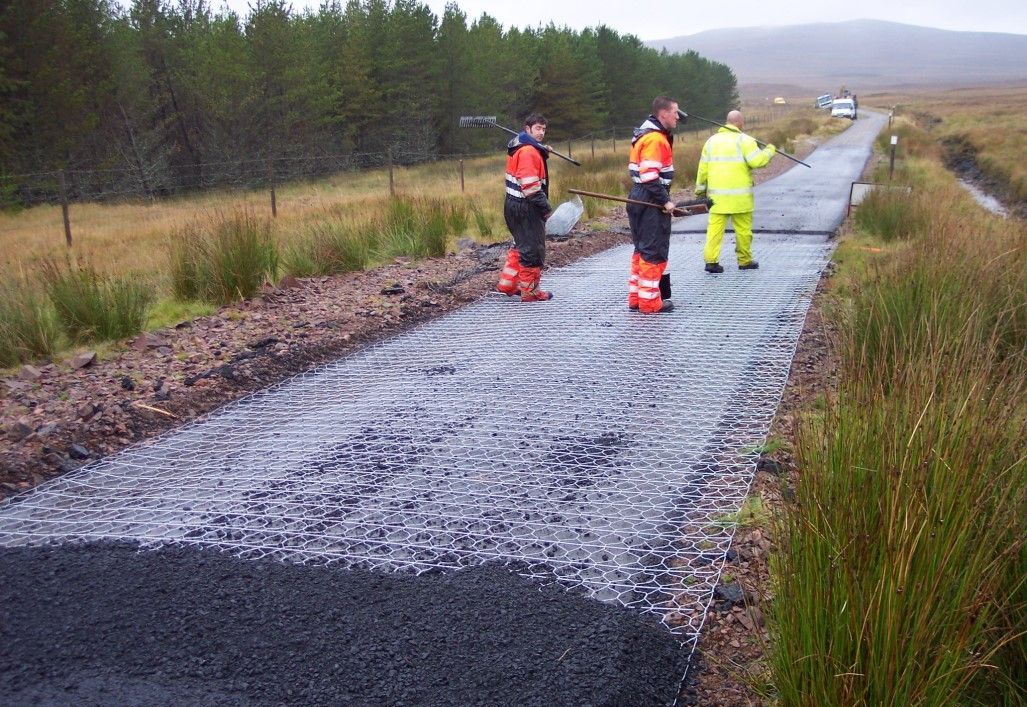
The B873 reconstructed with Road Mesh™
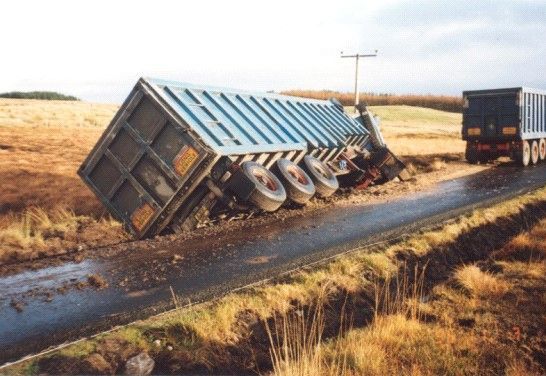
A tipper truck falls off the Floating Road with dramtic results
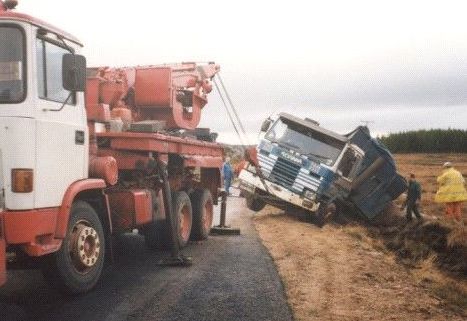
The heavy lift recovery vehicle in action
Challenge
In the Highlands of Scotland, particularly in Sutherland, rural road infrastructure presents a unique engineering challenge. Much of the road network consists of single-track roads constructed over extremely weak ground conditions, primarily peat. These “floating roads” are adequate for light traffic such as passenger vehicles but are not designed to withstand the demands of heavy goods vehicles.
With the growth of the local timber extraction industry, these roads are increasingly required to support heavy forestry vehicles. Under such loading, the existing road structures experience significant issues including rutting, deformation, and long-term settlement. Traditional road strengthening methods—such as excavating peat or importing large volumes of stone road-base materials—are both costly and logistically difficult in remote Highland locations.
Highland Council needed a cost-effective, sustainable road reinforcement solution that could upgrade existing peat roads without extensive excavation or material importation. To address this, they partnered with geotechnical engineering specialists Maccaferri.
Solution
The solution involved the application of reinforced bituminous overlays using Maccaferri Road Mesh™, a high-performance pavement reinforcement system. This approach was implemented on three trial roads serving the communities of Syre, Kinbrace, and Helmsdale in Sutherland.
Road Mesh™ is a double-twist steel wire mesh installed between asphalt layers within the pavement structure. This reinforcement transforms the road into a cohesive structural system, improving its ability to distribute traffic loads across weak subgrades such as peat. By spreading loads over a wider area, the mesh reduces stress concentrations and minimises damage to the underlying ground.
The use of steel mesh reinforcement delivers several key performance benefits. It significantly reduces reflective cracking, enhances load-bearing capacity, and improves resistance to rutting and surface deformation. Additionally, it limits differential settlement, which is a common issue in peat-based road construction. These improvements extend the service life of rural roads while reducing maintenance requirements.
This innovative road stabilisation project was delivered through a partnership between Highland Council and Forest Enterprise, supporting both infrastructure resilience and forestry operations. The trial programme began in 2001 and is designed to run for 25 years, enabling long-term monitoring and performance assessment.
The project is also being evaluated by the Roadex Project, a Northern European collaboration focused on sharing best practices in low-volume road construction and maintenance. The findings contribute valuable insights into sustainable road design solutions for weak ground conditions.
The use of Road Mesh™ pavement reinforcement demonstrates a practical and cost-efficient solution for upgrading rural roads built on peat. By avoiding the need for extensive excavation and imported materials, this approach offers significant environmental and economic advantages. It provides a durable, long-term solution for supporting heavy vehicle traffic in remote areas, making it highly relevant for forestry roads and low-volume rural infrastructure worldwide.