2015
Reading, Berkshire
Network rail
Balfour Beatty
Atkins
Reading Viaduct Reinforced Soil Wall
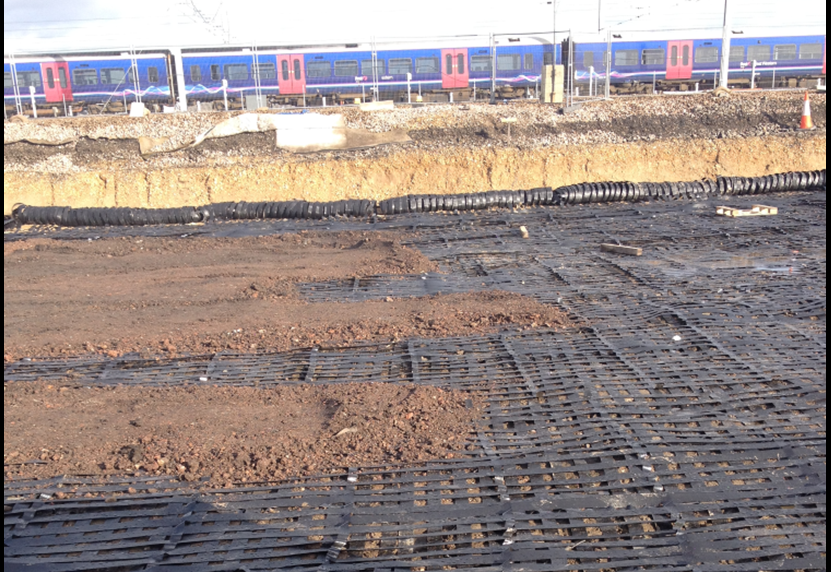
Load Transfer Platform with Paralink – March 2014
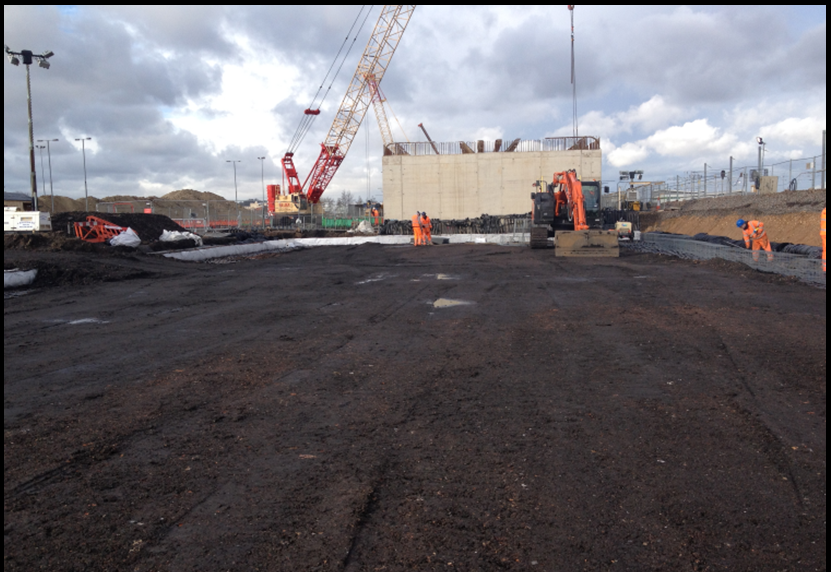
Compacted fill placed over Paralink LTP – April 2014
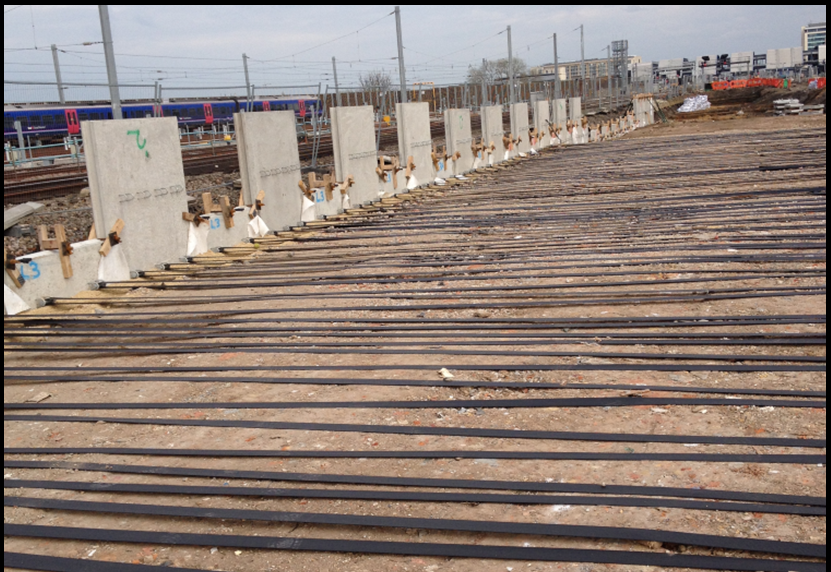
MacRes panels and Paraweb – East ramp during construction
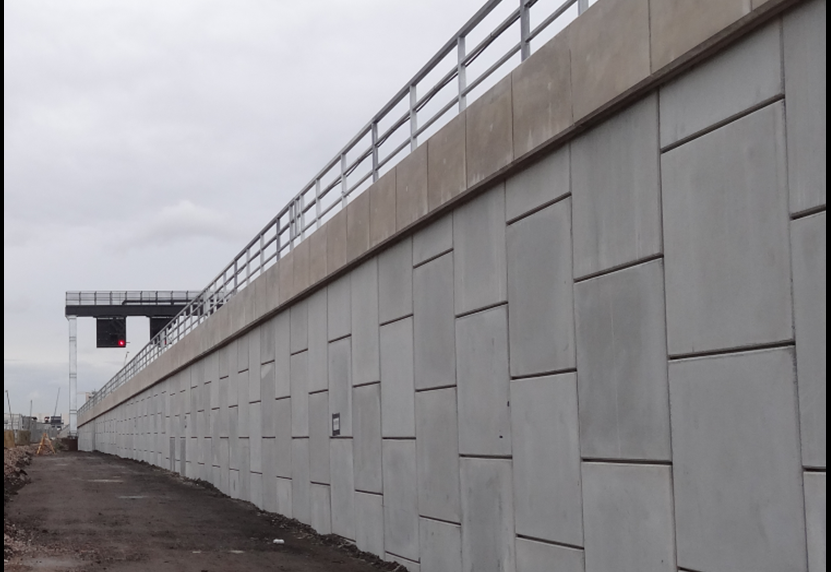
West ramp complete – November 2014
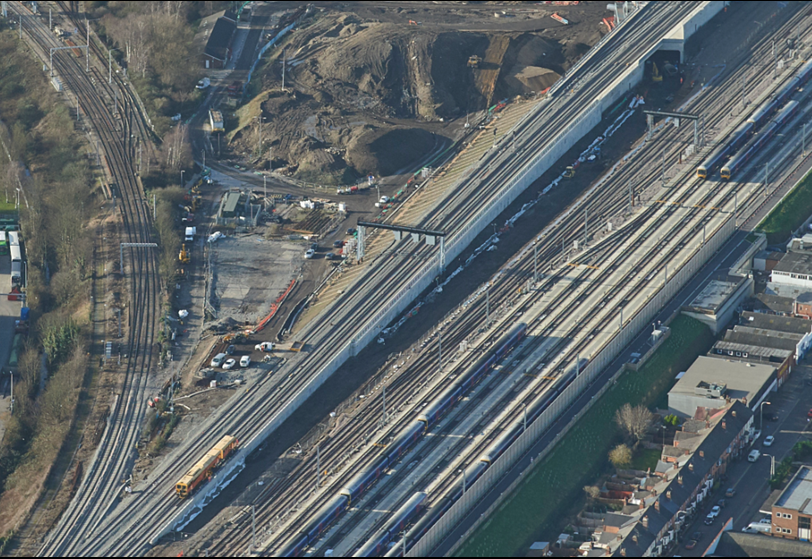
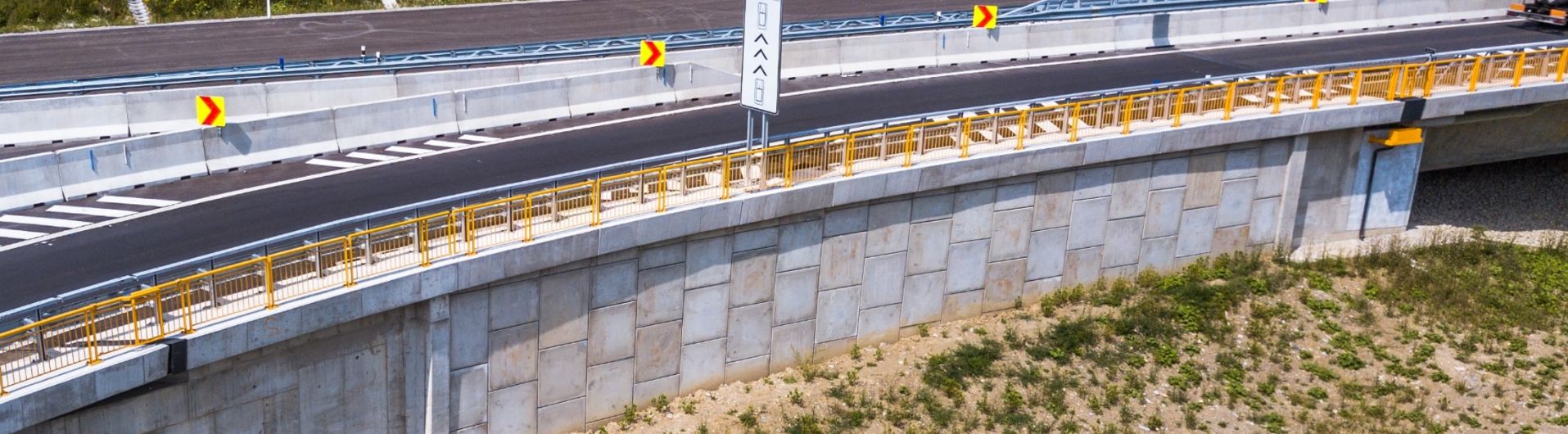
Aerial view of East ramp
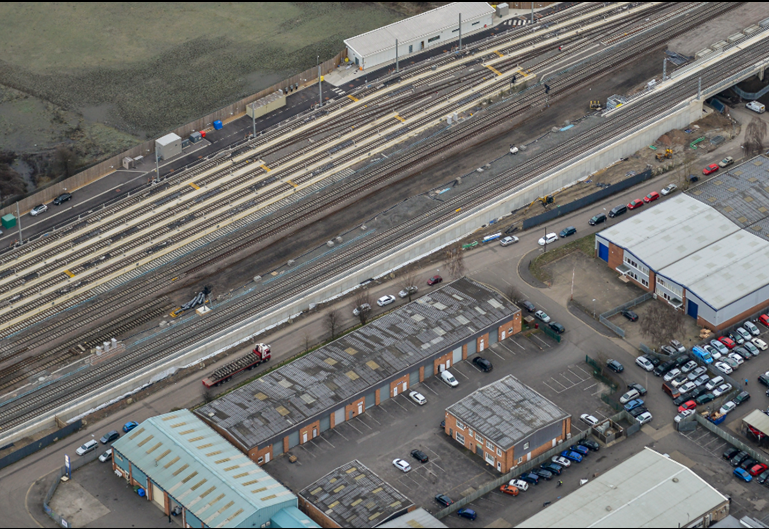
Aerial view of West ramp
Challenge
The Reading Viaduct project stands as a landmark achievement in UK rail infrastructure, representing the first use of a reinforced soil retaining wall (RSW) system with discrete concrete panel facings to support live railway tracks. This £45 million project delivered a 2,000-metre-long concrete viaduct, the longest of its kind in the UK, which became operational on 4th January 2015. Positioned West of Reading railway station, the viaduct was designed to eliminate a critical bottleneck that had long impacted network efficiency, where passenger trains were routinely delayed by slower freight services.
A major engineering challenge involved the construction of approach ramps to elevate the railway line by approximately 6 metres at both ends of the viaduct. However, the project constraints were significant. The works had to be carried out within just 15 metres of an active railway line, making conventional earth embankment construction impractical due to safety, space, and operational limitations. As a result, Balfour Beatty appointed Maccaferri to design and deliver a reinforced soil wall solution that complied with the original tender design by Network Rail’s consulting engineers, Atkins. The challenge required a solution that combined structural performance, minimal footprint, and suitability for live rail conditions.
Solution
To overcome the spatial and geotechnical constraints, Atkins developed an innovative reinforced soil wall design featuring vertical concrete panel-faced walls on one side of the ramp and a 1:2 slope on the other. This approach maximised land use efficiency while ensuring the structural stability required for railway loading conditions. The use of reinforced soil retaining walls allowed construction within tight corridors without compromising safety or performance.
Due to variable ground conditions, a robust ground improvement solution was essential. Atkins specified a system incorporating vibro concrete columns (VCC) combined with a geogrid-reinforced Load Transfer Platform (LTP). This system was designed to distribute the load of the railway embankment effectively and control settlement within the strict tolerances required for live rail infrastructure.
Balfour Beatty Ground Engineering installed approximately 2,300 vibro concrete columns, each 450mm in diameter and 7.2 metres deep, across the three ramp structures, which together extended 705 metres. The Load Transfer Platforms were engineered by Coffey Geotechnics Ltd using ParaLink high-strength geosynthetic geogrids. These geogrids enhanced load distribution by absorbing and spreading vertical forces into the column-supported ground, improving soil arching and increasing overall load-bearing capacity.
This integrated reinforced soil solution not only met the demanding requirements of railway infrastructure design but also enabled efficient construction within restricted working conditions. The result is a high-performance, durable retaining wall system that supports one of the UK’s most significant rail upgrades, improving capacity and reducing delays across the network.
Keywords: reinforced soil retaining wall, Reading Viaduct, railway infrastructure UK, geogrid solution, load transfer platform, vibro concrete columns, Maccaferri UK, rail engineering solutions, retaining wall design, ground improvement techniques
Used Products