2021
Coulsdon, Surrey
Network Rail
Bam Richies
Tony Gee & Partners
Rail Embankment Slope Stabilisation at Netherne Drive, Kent
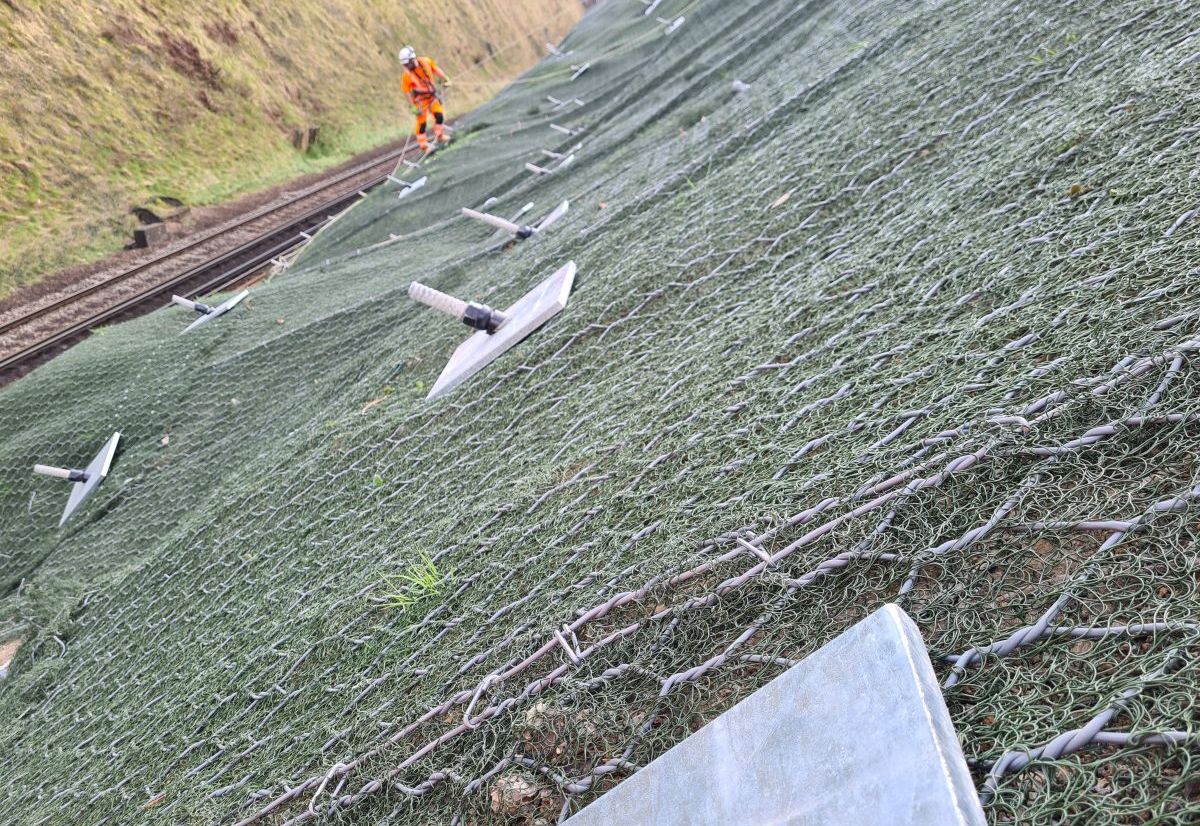
MacMat® R used in conjunction with soil nails
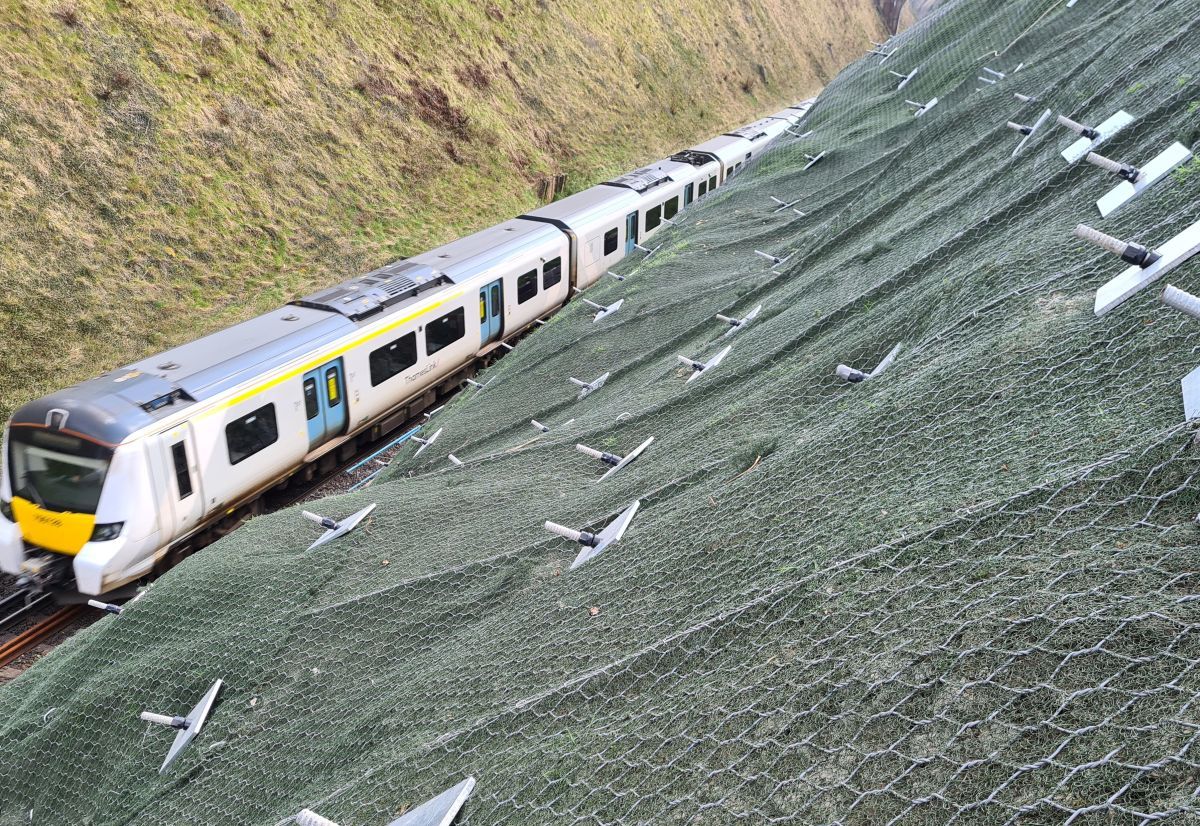
Completed installation before vegetation establishment
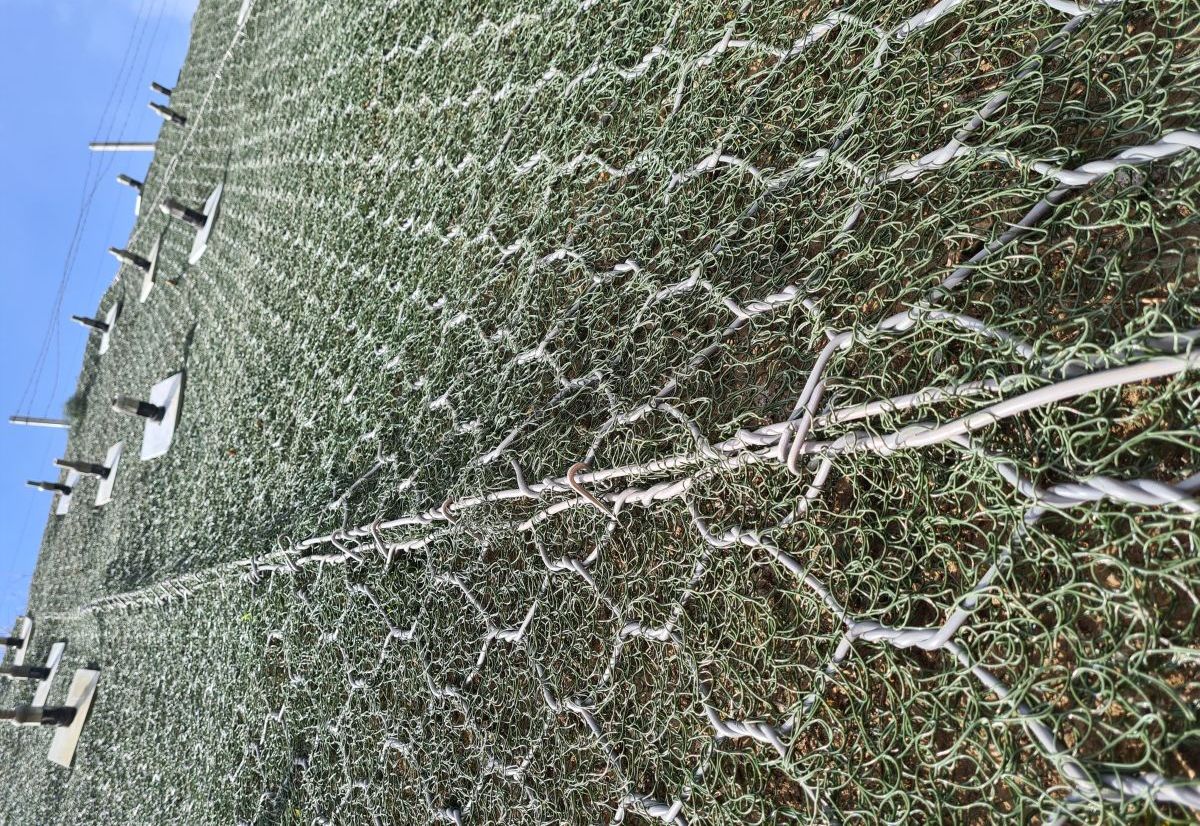
Detail of roll to roll connection using DT Links
Challenge
Network Rail is undertaking major investment in rail infrastructure across Kent and South East London, focusing on critical upgrades to track, signalling systems, structures, stations, and embankments. As part of this programme, maintaining the long-term stability of rail embankments has become increasingly important, particularly in the context of climate change and the growing frequency of extreme weather events.
Embankments are highly vulnerable assets within railway infrastructure. Without regular maintenance and reinforcement, they can deteriorate due to erosion, water ingress, and repeated weather exposure. This deterioration significantly increases the risk of landslips, which can disrupt rail services, compromise safety, and lead to costly repairs.
At the Netherne Drive site, a steep embankment slope had become unstable, presenting a heightened risk of failure. The combination of weak surface soils, erosion, and the slope’s gradient required urgent intervention. A robust and efficient embankment stabilisation solution was needed to mitigate landslip risk while ensuring long-term performance and minimal disruption to rail operations.
Solution
To stabilise the Netherne Drive embankment, consulting engineers Tony Gee designed a soil nailing system tailored to the challenging site conditions. The solution included the installation of 470 self-drilling soil nails, ranging from 2.5 metres to 12 metres in length, across a 50-degree slope. This approach provided structural reinforcement by anchoring the soil mass and improving slope stability.
In addition to deep stabilisation, surface protection was critical. The upper soil layers remained susceptible to erosion and shallow slips between the soil nails. To address this, a high-performance containment and erosion control system was required, one that could prevent surface movement, transfer loads effectively to the soil nails, and support vegetation growth for long-term stability.
MacMat® R was selected as the optimal solution due to its combined functionality as both a steel wire mesh and erosion control system. This innovative product integrates a double twist hexagonal woven steel mesh with a three-dimensional polymeric matrix, delivering both mechanical reinforcement and immediate erosion protection in a single system.
The use of MacMat® R provided significant advantages for the project. By combining two functions into one product, it reduced installation time, labour requirements, and the need for additional materials. This was particularly beneficial on the steep slope, where minimising the time workers spend on-site improves safety and efficiency.
The steel mesh component is manufactured using Maccaferri’s proven double twist technology, offering high strength and flexibility. It is heavily galvanised with a zinc-aluminium alloy and enhanced with a PoliMac® coating, providing superior resistance to corrosion, abrasion, and installation damage. Compared to traditional PVC-coated systems, PoliMac® delivers extended durability and long-term performance, making it ideal for demanding rail infrastructure applications.
Overall, the solution delivered a cost-effective, durable, and safe embankment stabilisation system, helping Network Rail reduce landslip risk while supporting the resilience of its infrastructure in the face of changing environmental conditions.
Used Products