


Prestons Road Flyover Piled Embankment & Geosynthetic Solution to Protect Blackwall Tunnel
Challenge
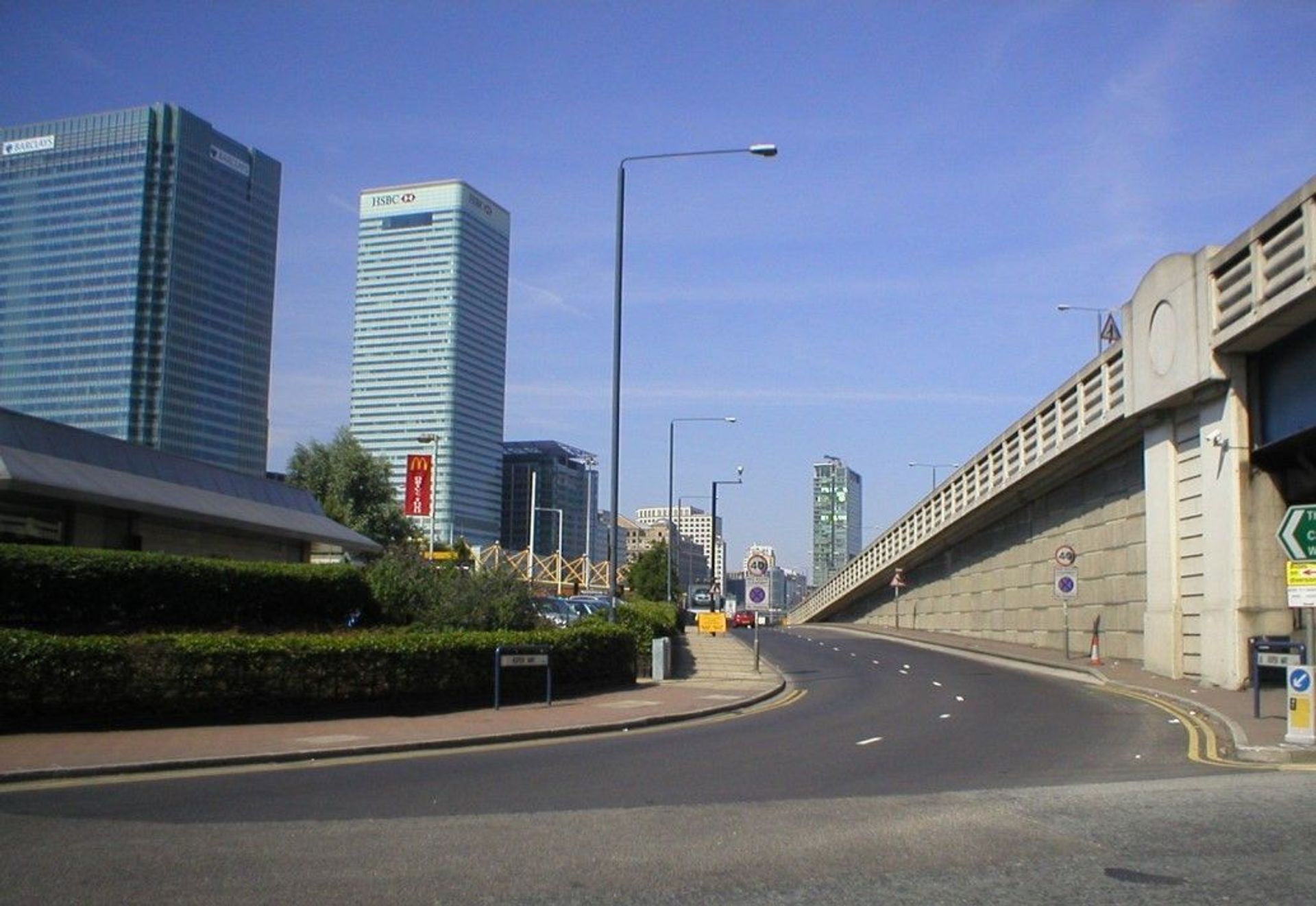
The Prestons Road Flyover, part of the East India Dock Link highway in London, crosses a complex grade-separated junction situated directly above the Blackwall Tunnel. At this critical location, the highway alignment runs between two different tunnel structures: a cast-iron-lined bored tunnel and adjacent brick-built cut-and-cover sections.
This configuration introduced a major geotechnical risk. Any additional surcharge loading from the flyover embankments could induce differential settlement, potentially compromising the structural integrity of the tunnel. Preventing tunnel movement was therefore a key design requirement.
The challenge was intensified by the ground conditions typical of the London Docklands. The site consists of variable-made ground overlying soft, compressible alluvial soils, which in turn sit above London Clay. These weak layers above are highly prone to settlement under load, increasing the risk of uneven movement.
Further constraints included the difficult geometry of the grade-separated junction and the proximity of an elevated Docklands Light Railway (DLR) structure. Together, these factors limited conventional design approaches and required an innovative ground engineering solution.
Solution
To eliminate surcharge loading on the Blackwall Tunnel and mitigate differential settlement, the flyover approach ramps were constructed using a piled embankment solution. This design transferred loads away from the weak above soils directly into deeper, more stable strata.
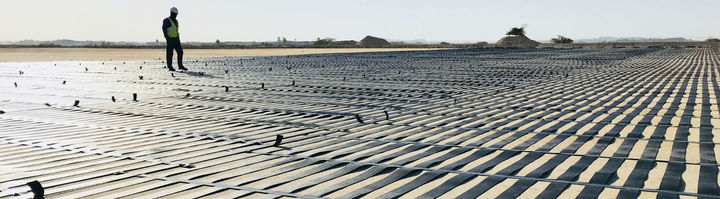
A reinforced granular load transfer platform was installed above the piles. This platform distributed the embankment loads efficiently across the pile system. High-strength Paralink geosynthetic reinforcement was incorporated within the granular mattress to improve load distribution, enhance tensile strength, and ensure long-term stability.
To further optimise the design, lightweight pulverised fuel ash (PFA) was used as fill material for the embankments. This reduced the overall load applied to the ground while maintaining structural performance, contributing to both safety and cost efficiency.
Paralink geosynthetics were selected not only for their strength but also for their proven durability in chemically aggressive environments, such as those associated with industrial by-products like PFA. This ensured long-term performance and reliability of the reinforced soil structure.
The combined use of piled embankments, geosynthetic reinforcement, and lightweight fill successfully eliminated the risk of tunnel surcharge and differential movement. The solution delivered a stable, durable, and economical outcome within a highly constrained urban environment.
Our products for
this Success Story
Get in touch with us
[contactForm_txtSuccessSubmit]