
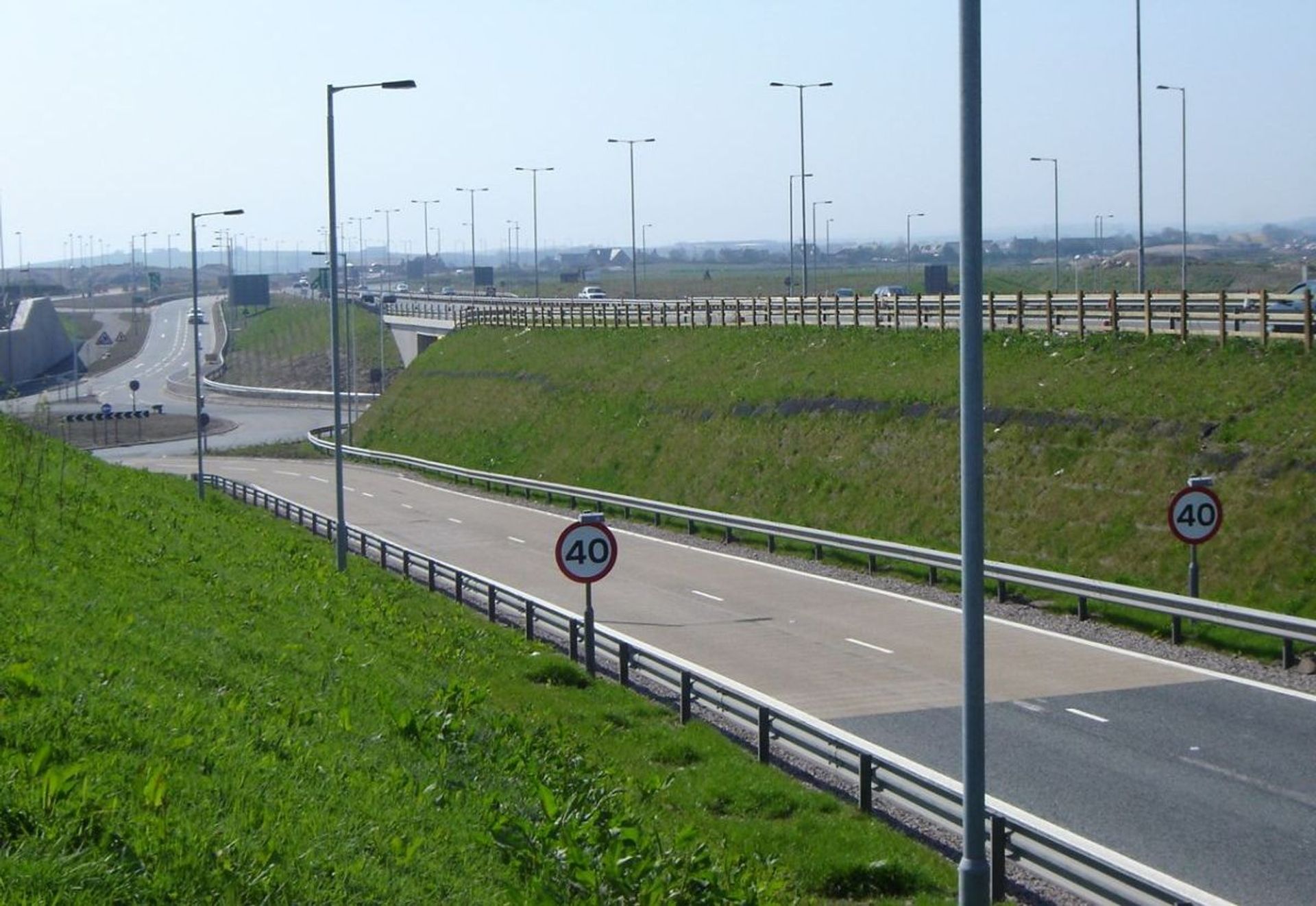
Portlethen Interchange Slope Stabilisation Using Geomac System
Challenge
The £12 million Portlethen Interchange on the A90 trunk road was developed to support a major residential, commercial, and retail expansion in Portlethen, located eight miles south of Aberdeen. With over 800 new homes being constructed by Stewart Milne Group, the project required robust infrastructure capable of handling increased traffic demand while fitting within a constrained environment.
A significant engineering challenge arose due to the close proximity of existing housing, which limited the available space for construction. This restriction led to the requirement for a steep 65-degree embankment on the southbound off-slip road. Such steep slopes posed serious risks related to slope instability and erosion, particularly in an area with variable ground conditions.
Transport Scotland required a slope stabilisation solution that would not only ensure long-term structural integrity but also provide a natural, aesthetically pleasing finish to blend into the surrounding landscape. Additional complexity was introduced by the presence of a high groundwater table within a cutting reaching depths of up to seven metres. The need to maintain live traffic flow throughout construction further increased the technical demands of the project.
Solution
Fairhurst Partners, the consulting engineers for the project, selected a soil nailing solution combined with the Maccaferri Geomac System, a proven technology for slope stabilisation and erosion control.
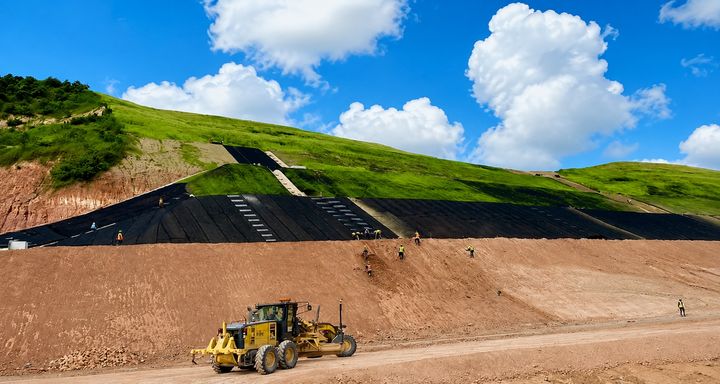
The Geomac system consists of large mattress units measuring 6m x 2m x 0.23m, formed from wire mesh cages similar to gabions. These units are lined with filter fabric and filled with stone and soil, creating stable erosion protection layers. Once installed and seeded, the system promotes rapid vegetation growth, making it ideal for both wet and dry slopes, including the steep embankments at Portlethen.
Construction was carried out using a cut-and-cover approach, with the southbound carriageway installed first, followed by the northbound carriageway, while maintaining continuous traffic flow. Due to the high groundwater levels, extensive groundwater control measures were implemented throughout the excavation process.
The excavation was undertaken in controlled 1.5 metre stages, allowing for the progressive installation of the Geomac mattresses. To provide structural reinforcement, Dywidag soil nails ranging from 8 to 10 metres in length were installed through the mattresses and anchored into the slope. This created a mechanically stabilised system that ensured long-term slope stability.
The combined soil nailing and Geomac solution delivered a durable, engineered embankment stabilisation system while achieving the client’s requirement for a natural, vegetated appearance. This approach provided an effective balance between performance, sustainability, and visual integration, making it an ideal solution for infrastructure projects in environmentally sensitive or space-constrained locations.
Our products for
this Success Story
Get in touch with us
[contactForm_txtSuccessSubmit]