2017
Bexhill-On-Sea, East Sussex
Sea Change Sussex
Breheny Civil Engineering
Campbell Reith
North Bexhill Access Road Geogrid Working Platform & Embankment Solution
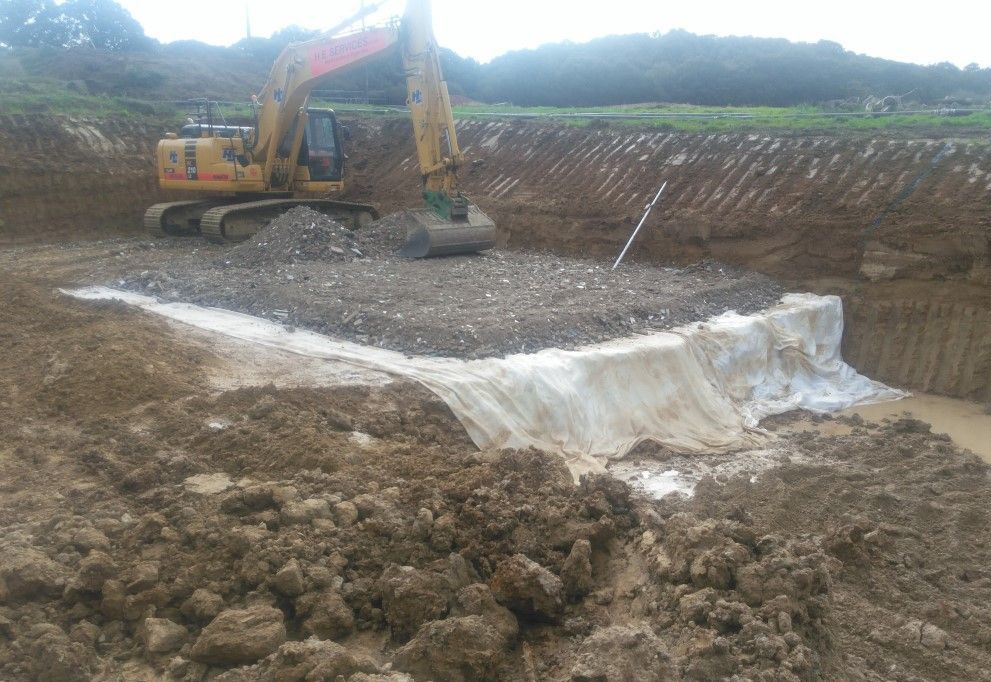
Well graded granular material placed over Mactex W2 S
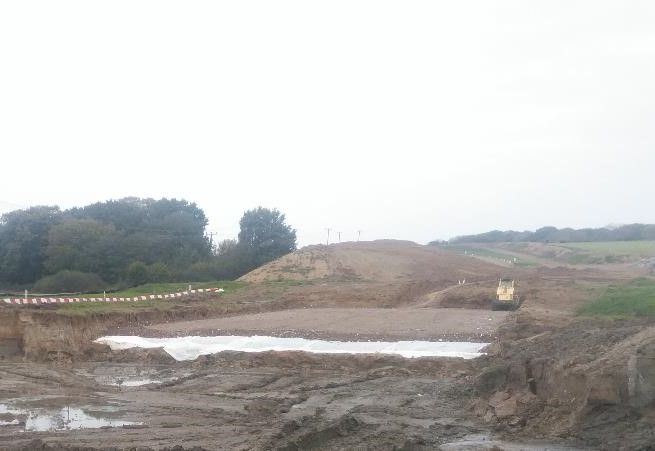
General view of the first layers of Mactex W2 S laid
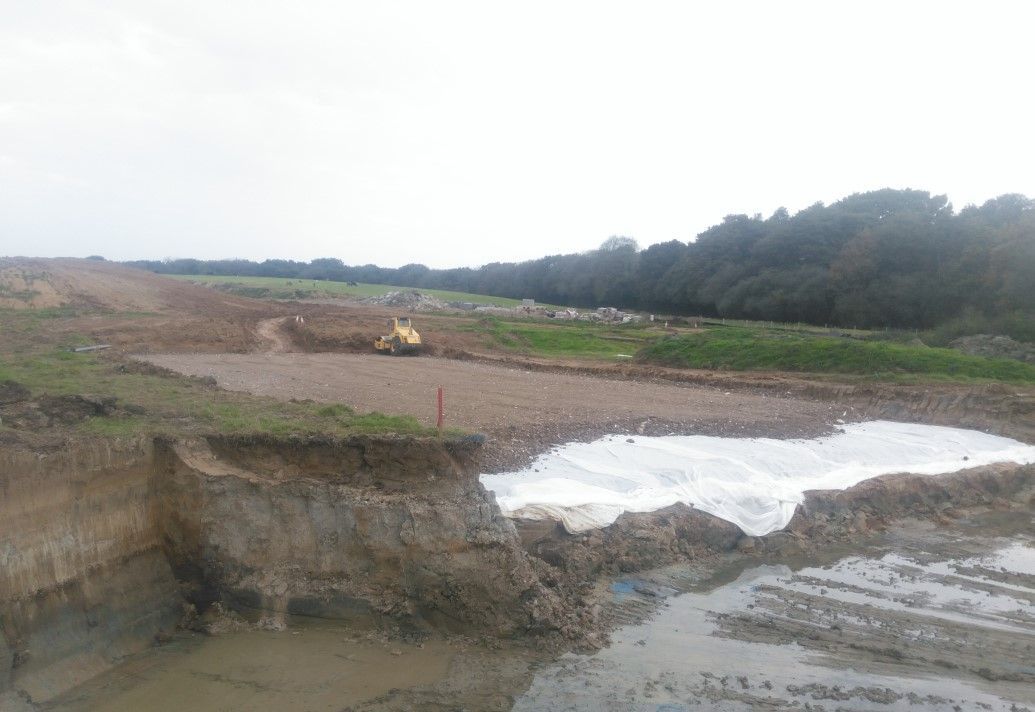
Mactex W2 (in white) installed over the soft clay sub-strata
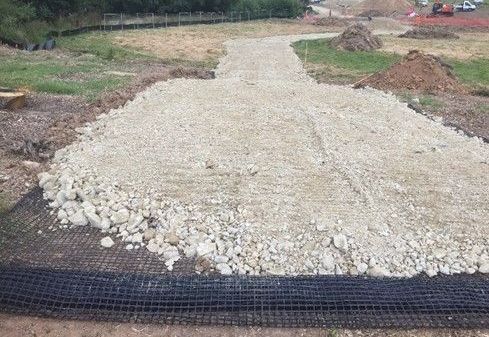
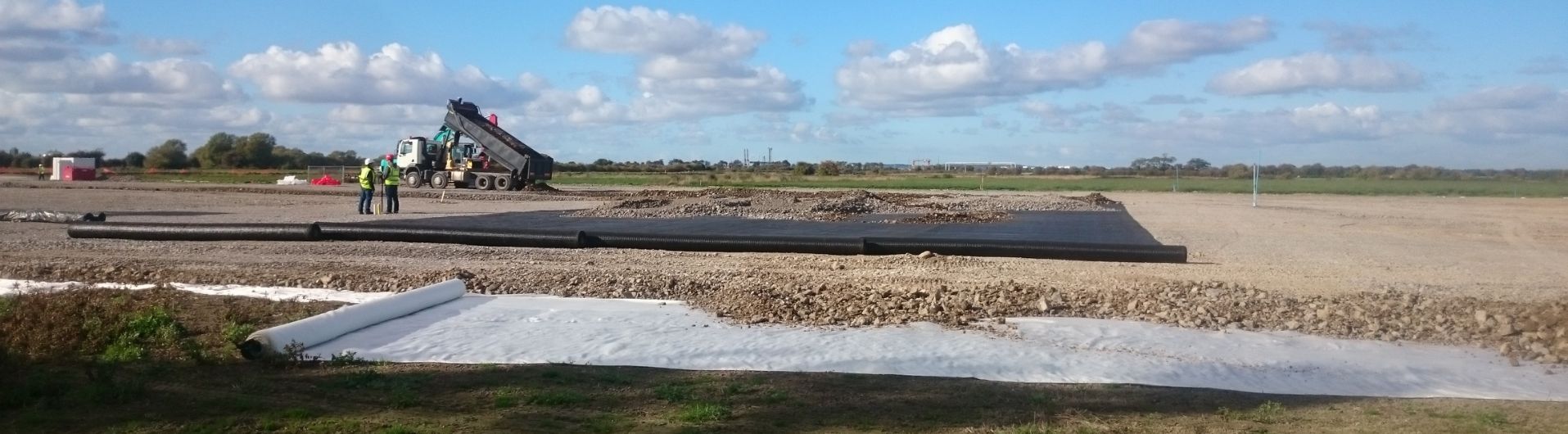
Macgrid WG S geogrids designed and installed for the haul access roads
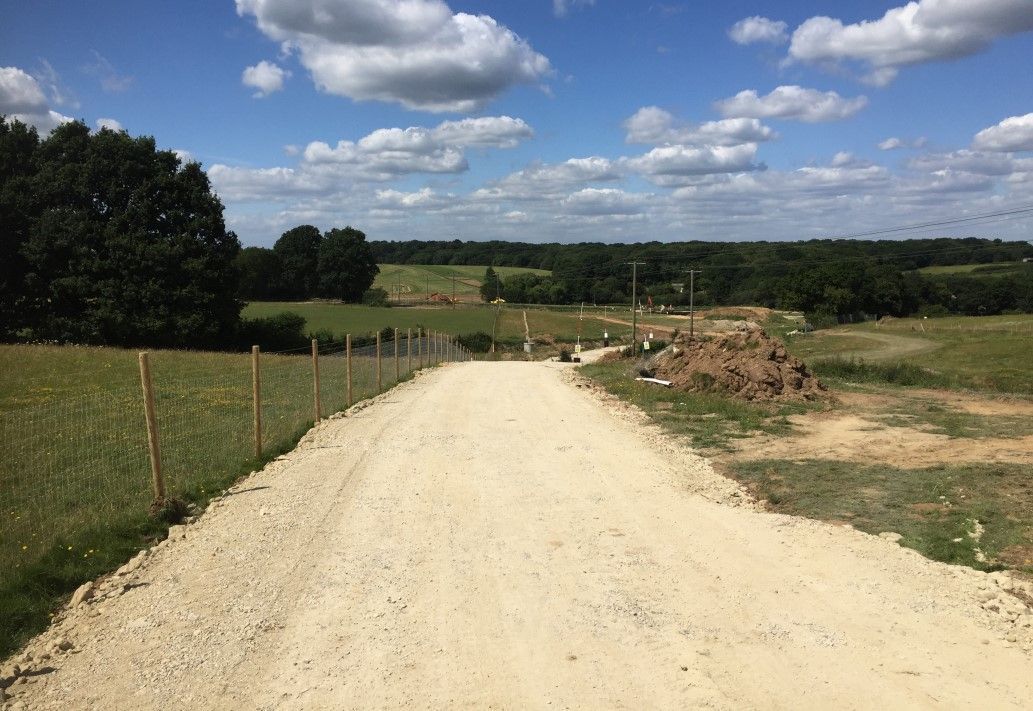
Macgrid WG S geogrids designed and installed for the haul access roads
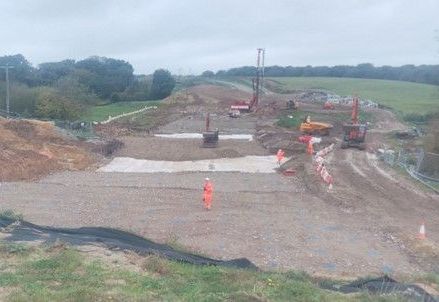
Working platform during the final stages of construction
Challenge
The North Bexhill Access Road is a 2.4 km single-carriageway infrastructure project located in East Sussex, South East England. Designed to unlock future employment land and stimulate economic and housing growth around Bexhill-on-Sea, the scheme represents a critical investment in regional development. Construction began in July 2016, progressing in phases with completion targeted for late 2018.
A key engineering challenge on the project was the construction of road embankments over weak and highly variable ground conditions. In Phase 1, completed in winter 2016, the embankment was founded on soft soils and required basal reinforcement using high-strength uniaxial geogrids (Paralink) to ensure long-term stability.
Phase 2 introduced even more complex geotechnical conditions, with deep alluvial deposits and peat lenses present across the site. To address these issues, the embankment design incorporated ground improvement columns combined with a Paralink geogrid acting as a load transfer platform, enabling the safe distribution of loads over compressible soils.
In addition to embankment construction, the project required the safe operation of heavy construction plant, including mobile cranes and piling rigs. This created a demand for robust temporary haul roads and working platforms capable of supporting high loads without excessive settlement or failure. The underlying soil profile, consisting of soft-made ground, silty clay, alluvium, and peat layers extending to depths of over 8 metres, posed significant risks to construction safety and programme delivery.
Solution
To overcome the challenging ground conditions and ensure safe plant operations, the Static Method was adopted for the design of temporary haul roads and working platforms. Detailed site investigations revealed a complex stratigraphy, including soft alluvial deposits with fibrous peat layers encountered between approximately 4.70 m and 5.20 m below ground level, as well as thinner peat pockets throughout the profile. Beneath these weak layers, firmer clay and weathered mudstone were identified.
Geotechnical testing confirmed very low undrained shear strength values (cu) ranging from 10 kPa to 20 kPa, highlighting the need for a carefully engineered solution. These parameters were used to inform the Static Method design, which determines the required thickness of a working platform to safely distribute loads from heavy construction equipment.
The final solution comprised a variable thickness working platform constructed from 500 mm to 900 mm of compacted granular material, depending on local ground conditions and loading requirements. To enhance performance, two to three layers of Mactex W2 S geotextile were incorporated within the platform. This geosynthetic reinforcement improved load distribution, increased stability, and reduced the risk of bearing failure.
The result was a safe, cost-effective, and efficient working platform solution that enabled continuous construction operations across difficult ground conditions, supporting heavy plant while maintaining project timelines.
Used Products