2016
Gwynedd, Wales
DwR Cymru/Welsh Water
J N Bentley
MMB - Mott MacDonald Bentley
Llyn Bodlyn Reservoir Dam Remedial Works
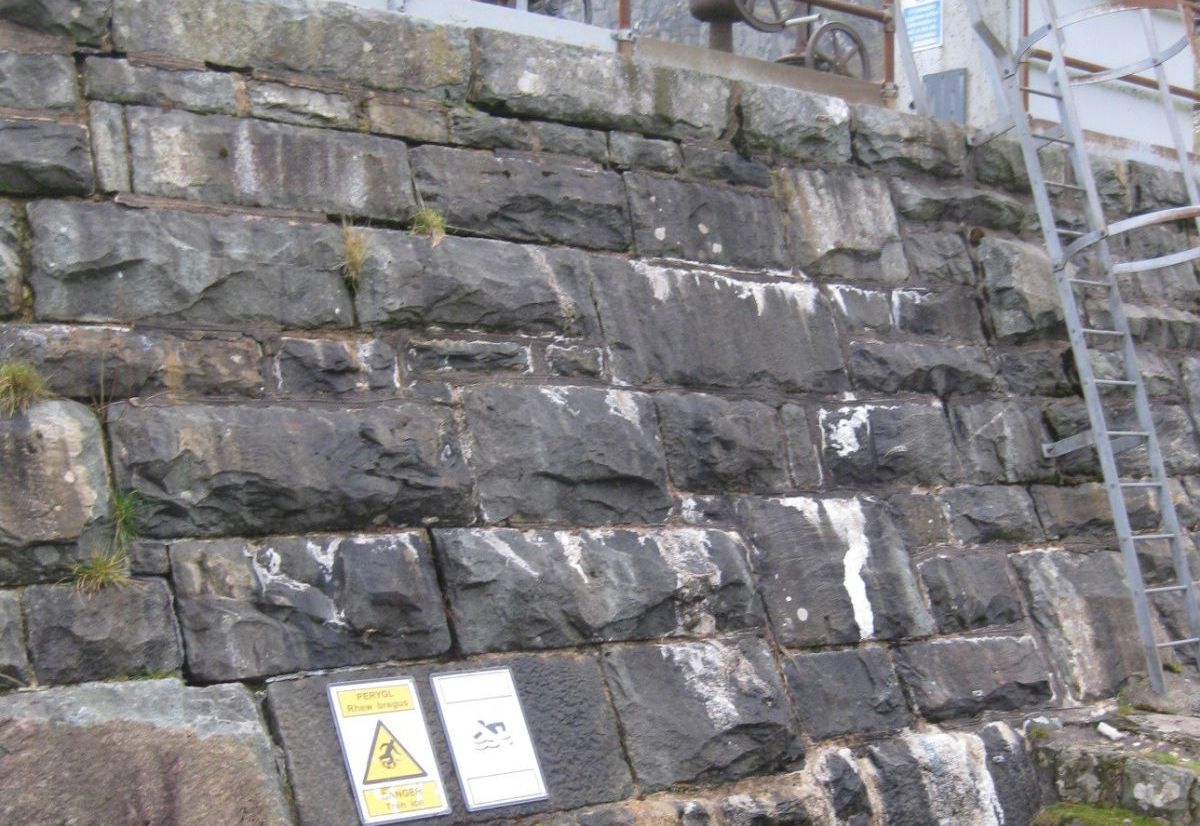
Downstream face of the dam to be supported by the proposed berm
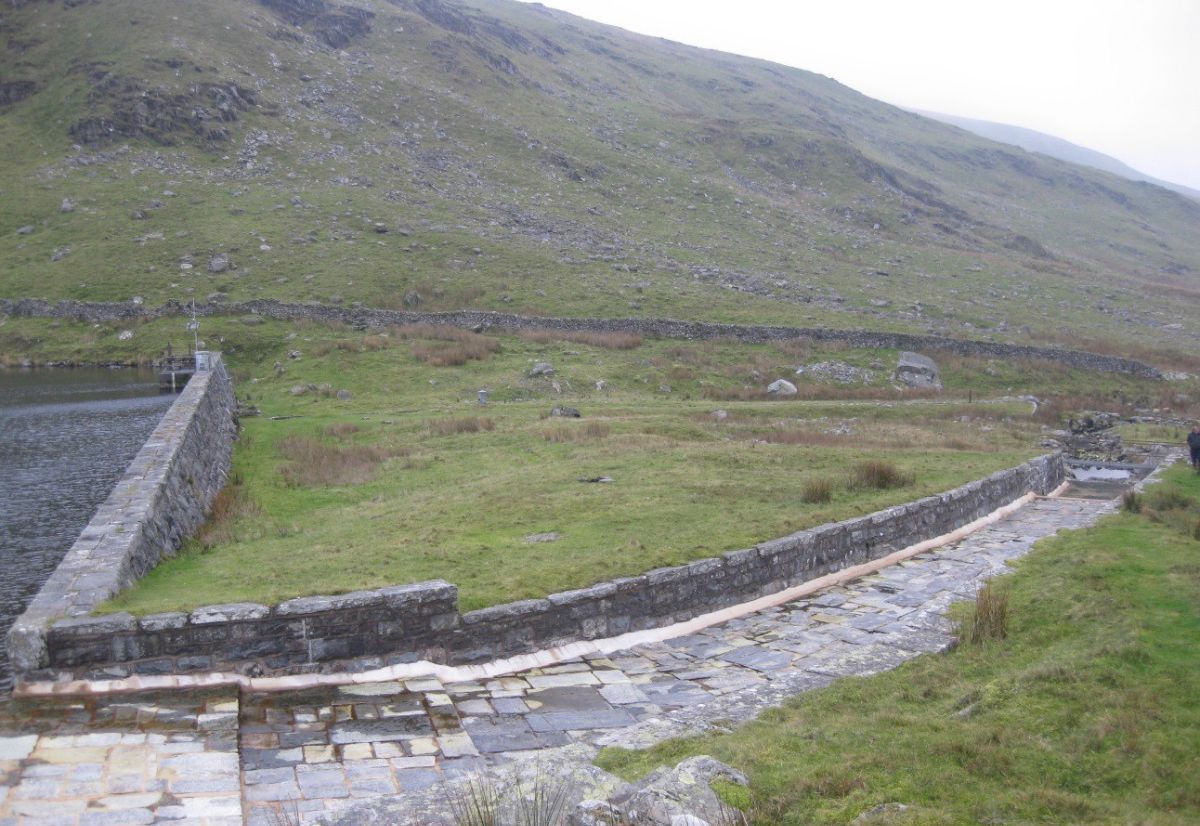
View along the dam
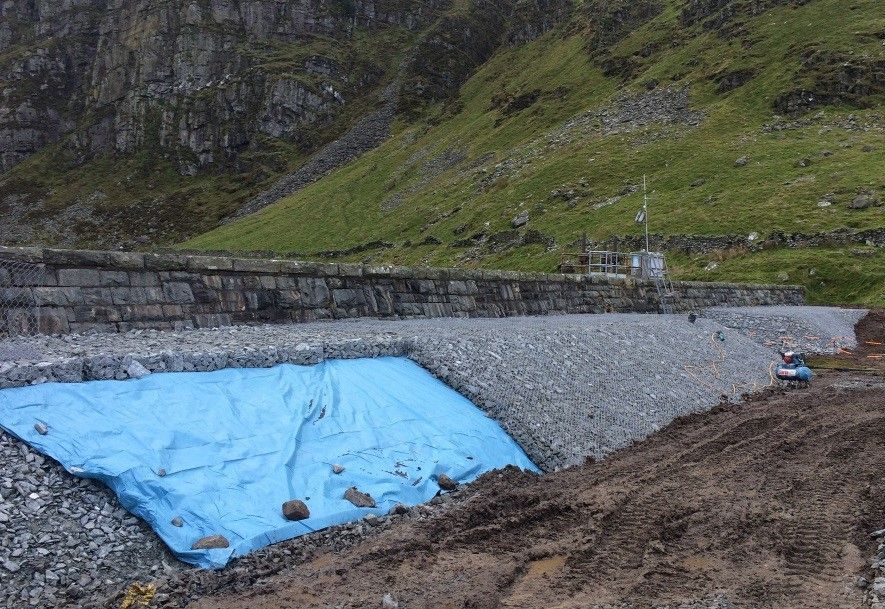
During construction maintence
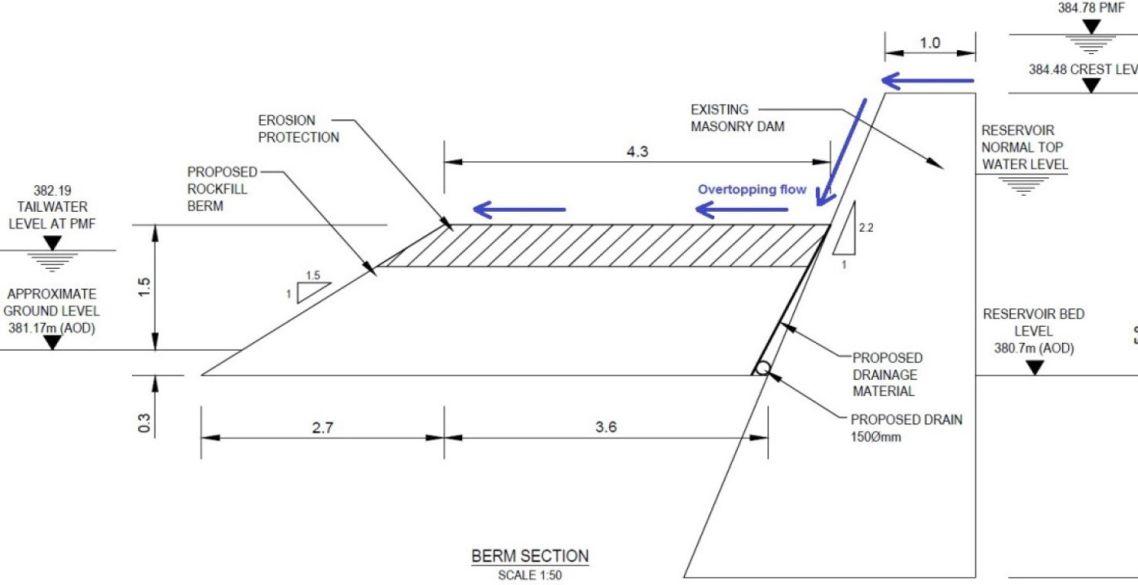
Typical section of the proposed repair works
Challenge
Llyn Bodlyn Reservoir is situated above the village of Tal-y-Bont, near Barmouth in Gwynedd, and is accessed via an approximately 5 km long stone-surfaced track extending from a minor road off the A496. The reservoir is owned and operated by Dŵr Cymru / Welsh Water. The existing structure is a masonry gravity dam with a crest width of approximately 1.10 metres, featuring a vertical upstream face and a downstream face inclined at a batter of 1 horizontal to 2.2 vertical. The dam has a maximum height of around 3.25 metres above downstream ground level and extends roughly 100 metres in length, excluding the spill weir which aligns with the crest.
During a routine site supervision, significant seepage was observed through the masonry structure. In addition, the downstream toe of the dam was found to be persistently wet underfoot, indicating ongoing leakage and saturation of the foundation area. These conditions raised concerns regarding the structural integrity and long-term stability of the dam, particularly under hydraulic loading conditions. The presence of uncontrolled seepage suggested potential internal deterioration and an increased risk of instability or progressive failure if left unaddressed.
Solution
Mott MacDonald Bentley (MMB) was commissioned by Dŵr Cymru Welsh Water to design and implement remedial works to improve the stability and performance of the dam. Following assessment of feasible options, the construction of a rockfill stabilising berm along the downstream face was identified as the most suitable solution.
The proposed berm is designed to be approximately 6 metres wide at its base and extend along roughly 80 metres of the dam’s downstream length. It will have a height of approximately 1.5 metres above existing ground level, with a top width of about 4.3 metres. In addition to providing structural support and counteracting hydraulic forces, the scheme includes the installation of a drainage channel to intercept and safely convey seepage flows away from the dam structure, thereby reducing pore water pressures and improving overall stability.
A critical aspect of the design was the protection of the berm’s surface against erosion, particularly in the event of overtopping. The erosion control system was therefore developed to resist the impact of high-velocity water jets flowing over the dam crest, as well as wave action and associated scour effects. Several options were evaluated during the design process, including articulated concrete block mattresses (ACBM), geocell systems, and geosynthetic concrete lining combined with sacrificial stone riprap. These alternatives were assessed based on their hydraulic performance, constructability, durability, and suitability for the site conditions to ensure a robust and long-term solution.
Used Products