2013
NORTH HYKEHAM - LINCOLNSHIRE - United Kingdom
Lincolnshire County Council
CNIM/Clugston Joint Venture
ARUP
Lincolnshire EfW Drainage Solution High Groundwater Lagoon Design with MacLine® GCL
LINCOLNSHIRE EFW
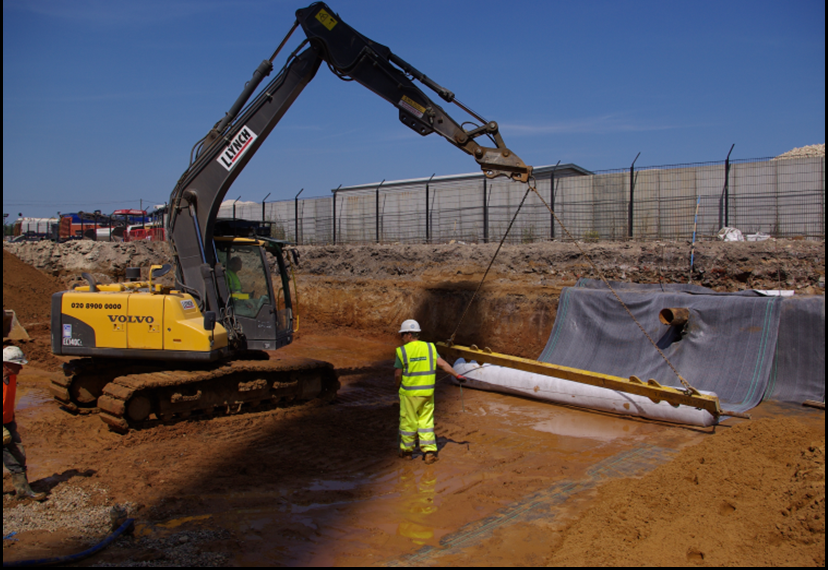
MacLine® during installation
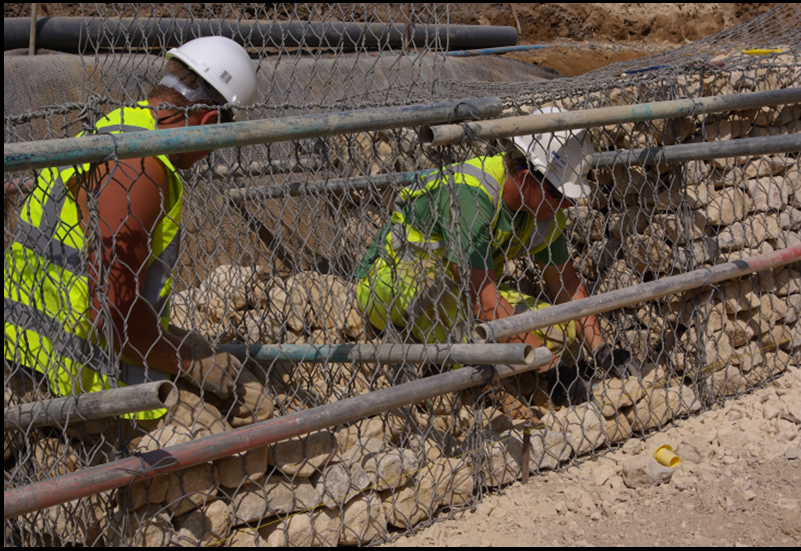
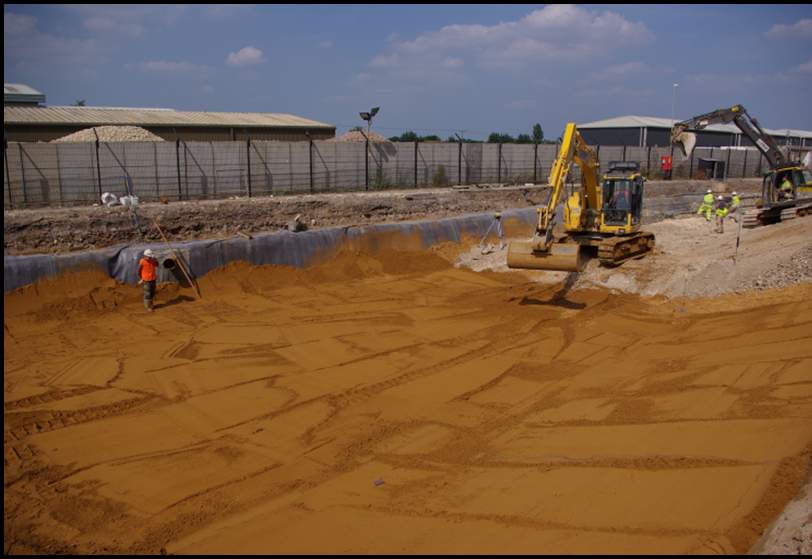
MacLine® and Gabion installation
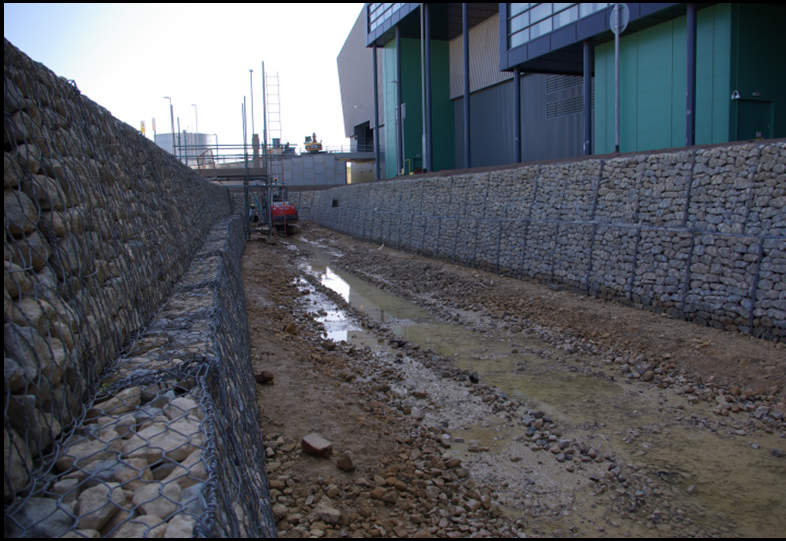
Installation of double twist gabions
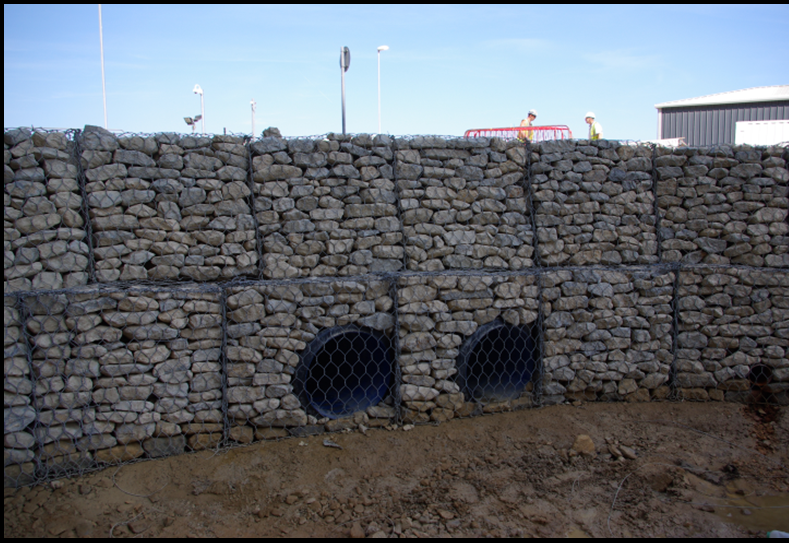
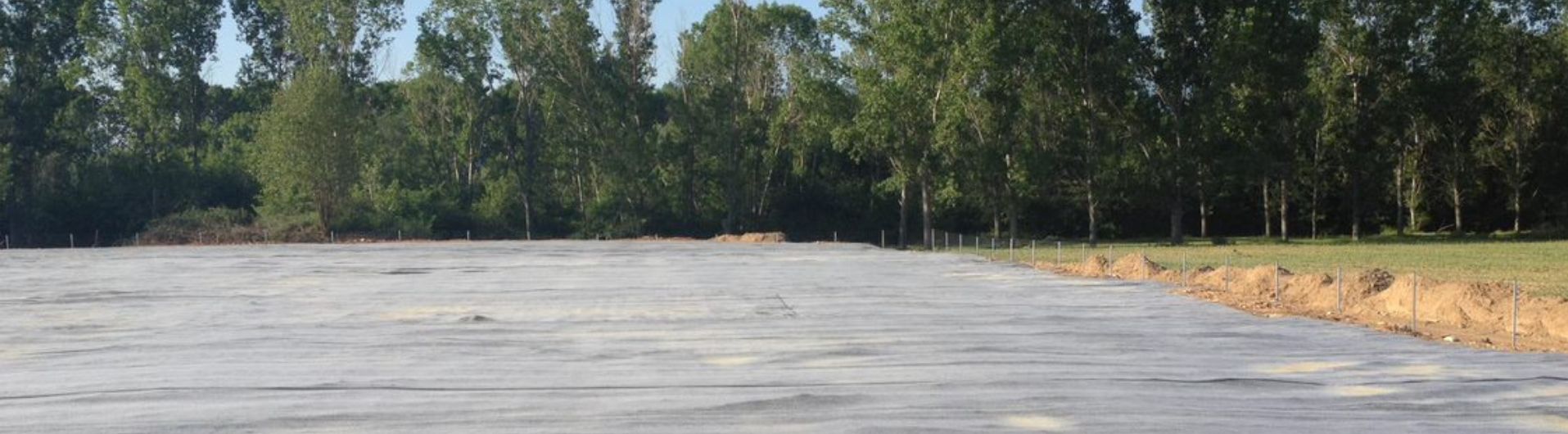
Completed Pond
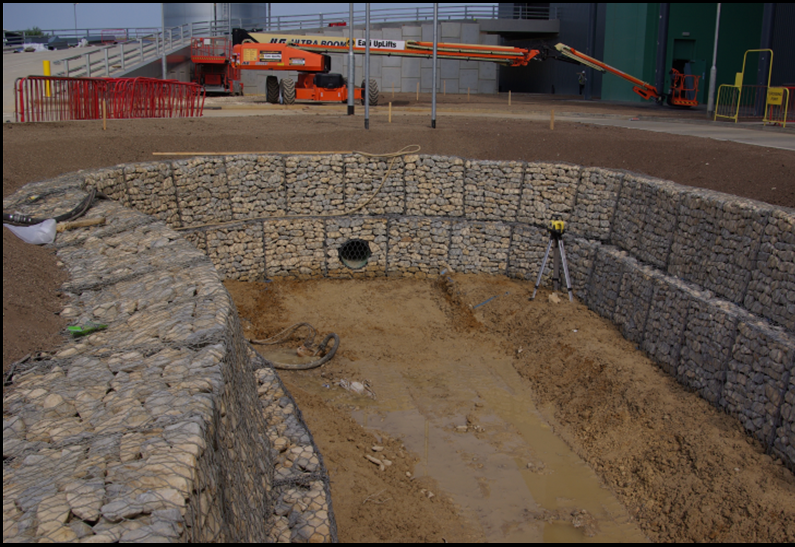
Completed Pond
Challenge
The construction of Lincolnshire’s state-of-the-art Energy from Waste (EfW) recycling facility at North Hykeham, Lincoln, presented complex drainage and water management challenges due to difficult ground conditions. The site is located on low-lying brownfield land with a consistently high groundwater table, significantly restricting conventional approaches to surface water control.
Under normal circumstances, a Sustainable Drainage System (SUDS) would be implemented using large attenuation ponds to manage surface water runoff from buildings and hardstanding areas. These systems depend on natural infiltration and controlled discharge into surrounding watercourses. However, the high groundwater levels at this site made infiltration ineffective, while the limited available space ruled out the installation of large ground-level attenuation ponds.
Alternative solutions, such as above-ground attenuation ponds designed for gravity-assisted drainage, were also considered. However, these options were deemed cost-prohibitive and unsuitable given the site constraints. As a result, the project required an innovative, space-efficient, and cost-effective stormwater management solution capable of operating independently of subsoil percolation.
Solution
To overcome these challenges, consulting engineers Arup designed a two-stage lagoon drainage system that delivers effective surface water management within the constraints of a high groundwater environment. The system consists of interconnected wet and dry attenuation lagoons, both constructed at ground level and engineered for controlled water flow and storage.
The lagoons were lined with Maccaferri MacLine® Geosynthetic Clay Liner (GCL), providing a robust and impermeable barrier to prevent seepage and protect surrounding ground conditions. Each lagoon is enclosed by 2.0m high gabion retaining walls, constructed using stone-filled, double twist wire mesh for durability and structural stability.
The design utilises the site’s natural topography, with the smaller, elevated wet lagoon capturing the initial stormwater surge. Water is then transferred via gravity through a pipe system into the larger, lower dry lagoon, which provides high-capacity water storage and enables the controlled discharge of surface water into nearby watercourses. This staged approach ensures efficient stormwater attenuation without relying on ground infiltration.
MacLine® GCL is specifically engineered for landfill and lagoon lining applications, featuring a core of natural Wyoming sodium bentonite encapsulated between woven and non-woven geotextiles. This structure delivers key performance benefits, including self-sealing properties, excellent chemical resistance, strong slope stability, and long-term durability in harsh environmental conditions. Supplied in 5.0m wide rolls, it allows for efficient and cost-effective installation using standard construction plant.
To enhance performance and durability, the MacLine® liner at the site was protected with a 300mm layer of sharp sand, followed by a 200mm layer of compacted site-won fill. These layers help regulate bentonite hydration, prevent excessive swelling, and reduce the risk of liner uplift caused by groundwater pressure, while also providing mechanical protection.
The lagoon walls were constructed using Maccaferri’s BBA-certified gabion systems, filled with locally sourced stone to optimise sustainability, reduce costs, and ensure long-term structural integrity.
This engineered solution delivered a high-performance, cost-efficient drainage system tailored to challenging ground conditions, ensuring reliable stormwater management, environmental protection, and regulatory compliance for the Lincolnshire EfW facility.