2014
Oreston, Plymouth, Devon
Canna Homes
CGL (Card Geotechnics Ltd)
Maccaferri Ltd
Karstic Limestone Ground Improvement for Housing Development
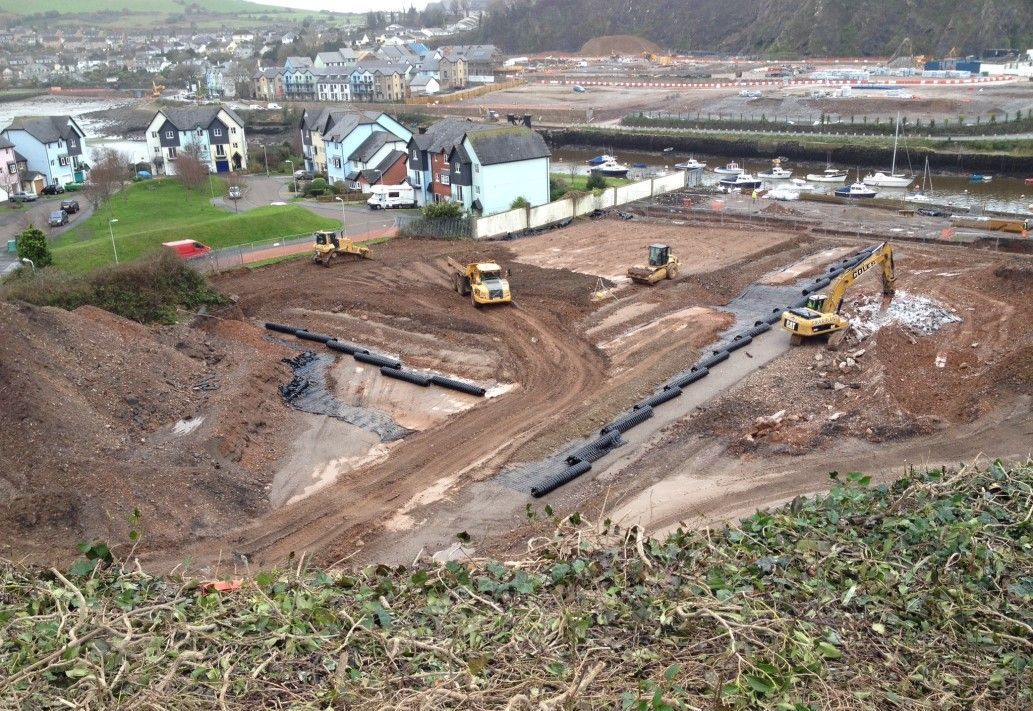
View of the construction site for Cavanna Homes development
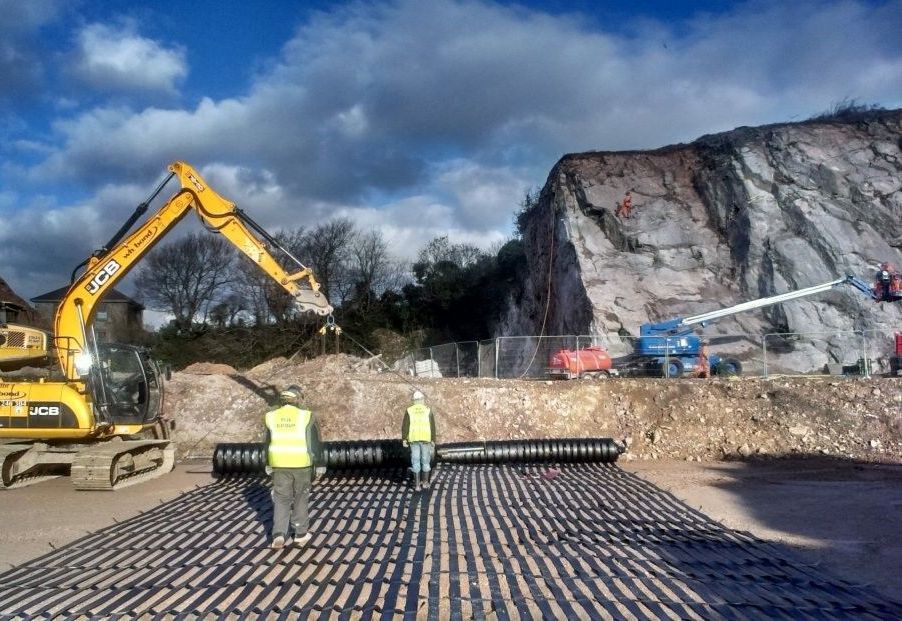
ParaLink® during installation: No overlapping required
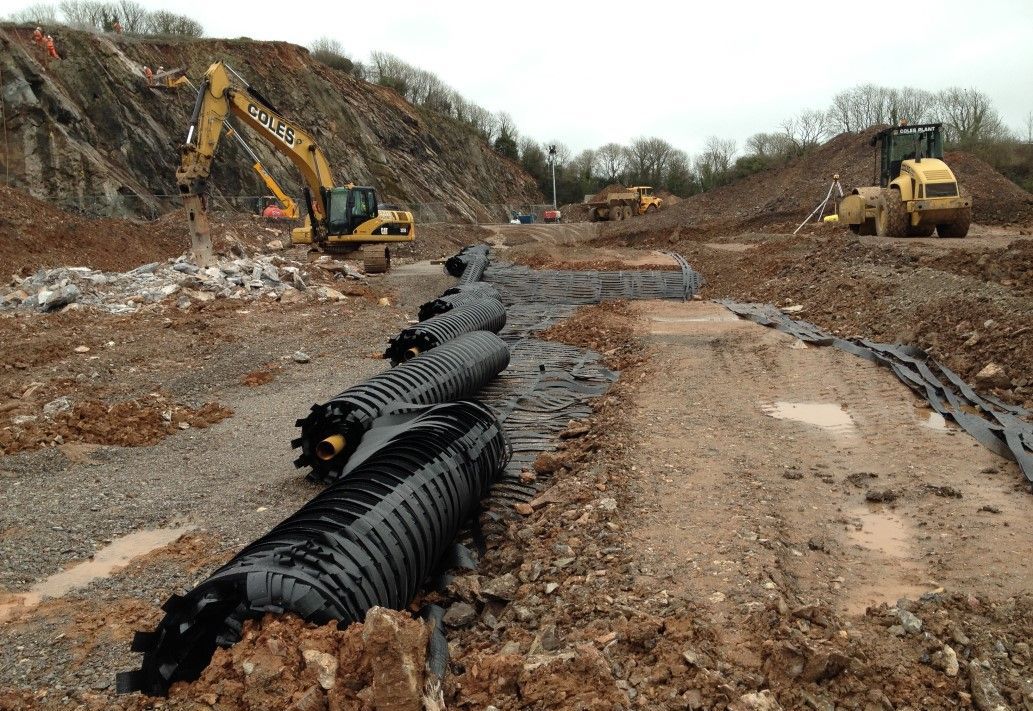
Class 1A fill over ParaLink® 400
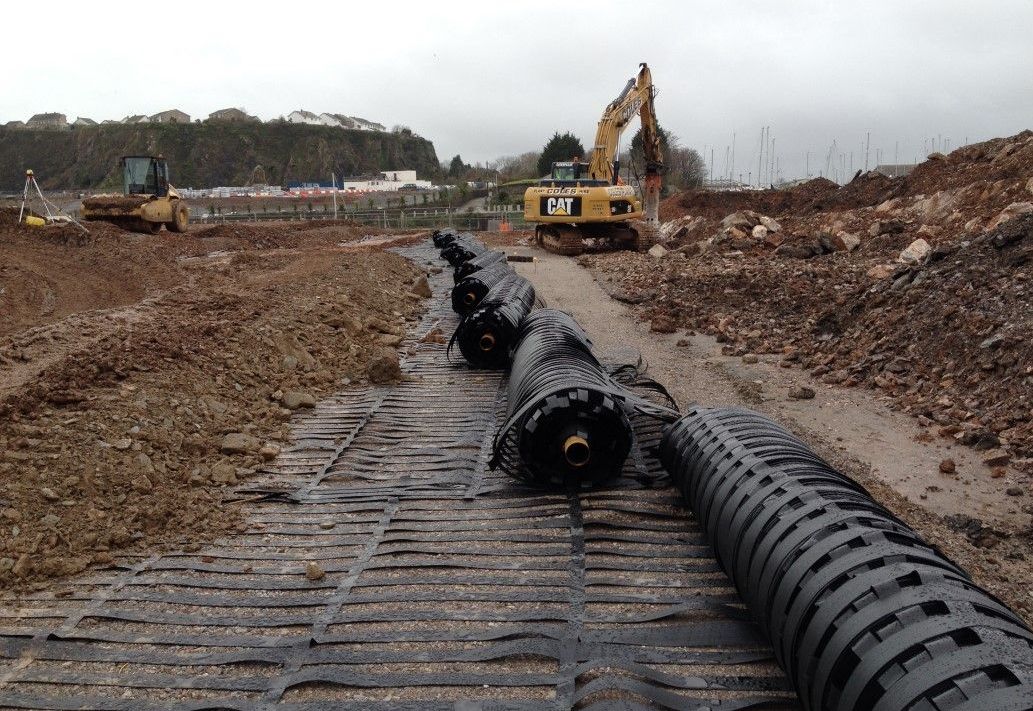
ParaLink® 400 ready to be laid and installed
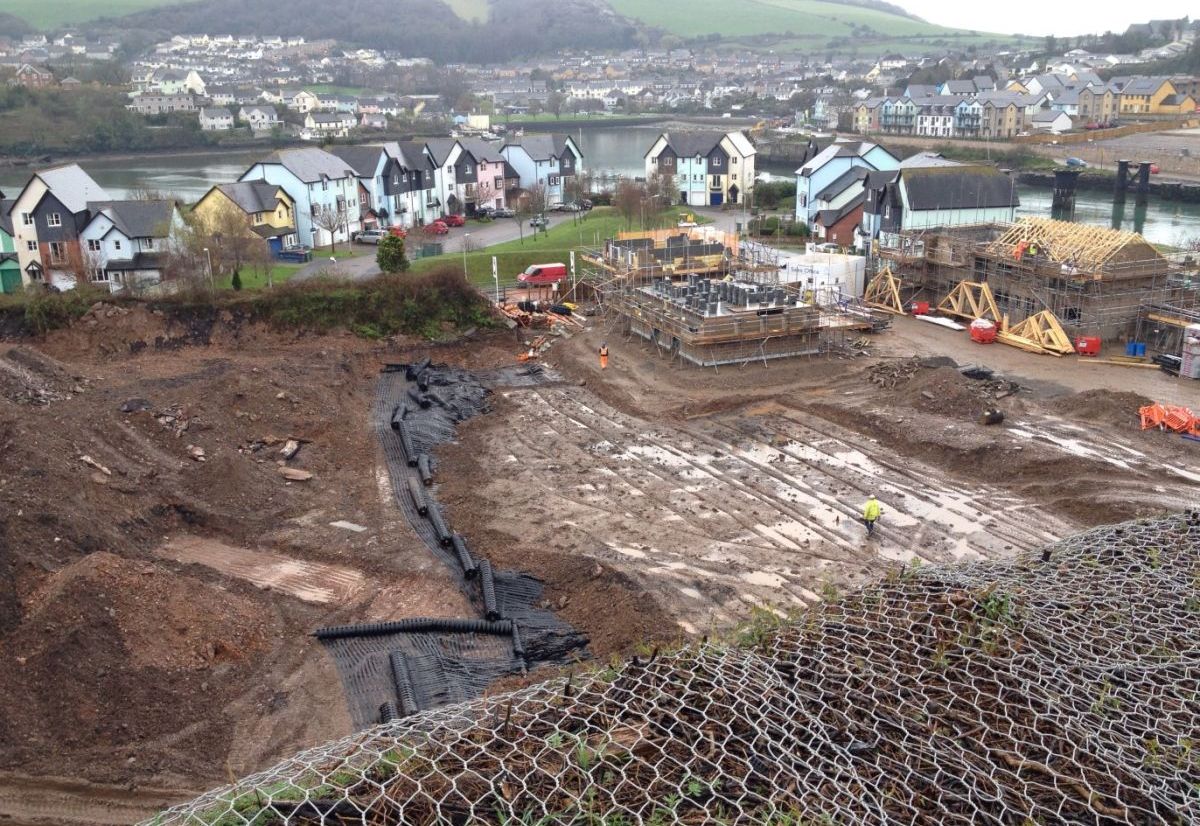
Housing construction phase starting over the ParaLink® load transfer platform
Challenge
Cavanna Homes identified this challenging brownfield site for a residential development of 53 new homes. Located on a former limestone quarry that had been in-filled after the Second World War, the site presented significant geotechnical risks associated with variable ground conditions. The land had a complex history of industrial use, including mineral extraction, timber treatment, and sawmill operations. A historic rail link once served the site but was decommissioned in the early 1950s, after which access relied solely on local road infrastructure. More recently, the site had been utilised as a boatyard.
A key engineering challenge was the presence of karstic limestone beneath the site. Karst geology is highly susceptible to dissolution, leading to the formation of voids and unpredictable ground stability issues. This posed a significant risk of subsidence and differential settlement, making conventional shallow foundation solutions unsuitable without ground improvement. To enable safe residential construction, a robust solution was required to mitigate the risk of void formation and ensure long-term ground performance.
Solution
CGL was appointed as the principal designer to deliver a detailed geotechnical design and provide engineering supervision throughout the construction phase. A reinforced load transfer platform (LTP) was developed using site-won quarry fill in combination with high-performance geogrid reinforcement, providing an efficient and sustainable ground improvement solution.
The design strategy incorporated reinforced house foundations constructed on a minimum thickness of 1.0 metre of engineered Class 1A fill, specified to achieve a minimum friction angle of 35 degrees to ensure adequate shear strength. The existing Made Ground was proof-rolled to confirm its suitability, followed by the installation of a 100mm thick regulating layer of crushed Type 1 granular material to create a stable working platform for the geogrid system.
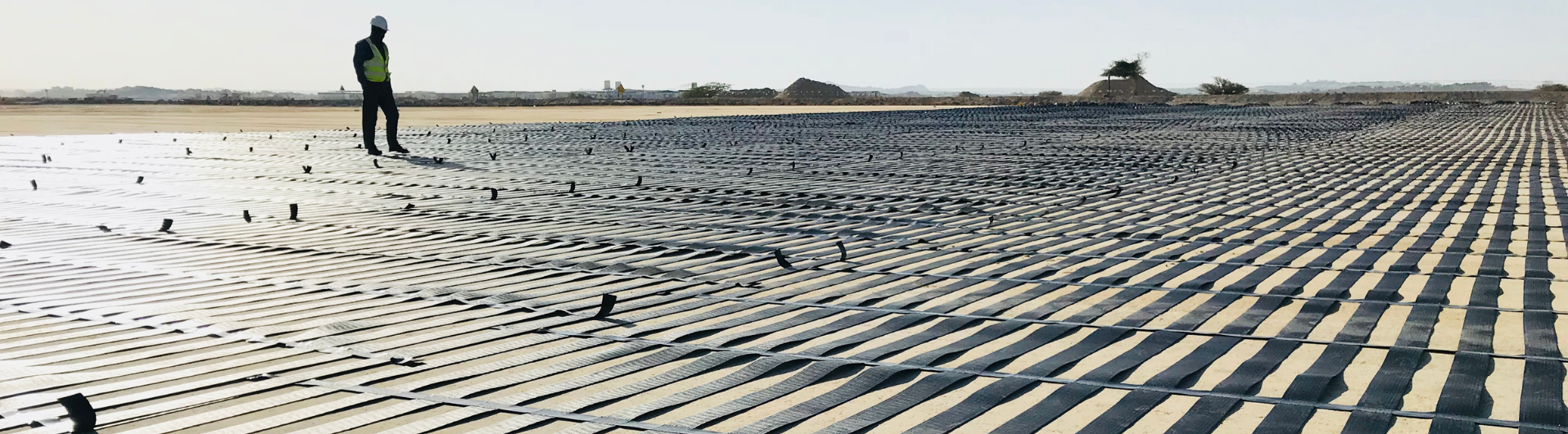
To manage multi-directional tensile forces and enhance load distribution, two layers of Paralink® geogrid reinforcement were installed within the LTP. These layers were separated by 300mm of engineered Class 1A fill, forming a reinforced soil structure capable of spanning potential subsurface voids. The platform was designed to accommodate a maximum surcharge loading of 80kPa.
Strict serviceability criteria were applied to control settlement performance. Differential settlement was limited to 0.5%, equating to a maximum surface deformation of approximately 20mm, ensuring the protection of residential structures. A design void diameter of 1.5 metres was adopted, based on probabilistic analysis and experience from similar karstic ground conditions. The design assumed that any void could propagate through the Made Ground up to the underside of the reinforced platform.
The load transfer platform was designed in accordance with BS8006 using Paralink® 400 geogrid. The reinforcement was selected based on serviceability limit state requirements to minimise surface settlement in the event of void formation. This engineered solution provided a cost-effective, sustainable, and technically robust approach, enabling the successful redevelopment of a complex brownfield site into safe, high-quality residential housing.
Used Products