
2011
Northolt Embankment, West London
Network Rail
BAM Nutall
Aktins
Increasing Rail Capacity in London Embankment Stabilisation with Gabions and Soil Nails
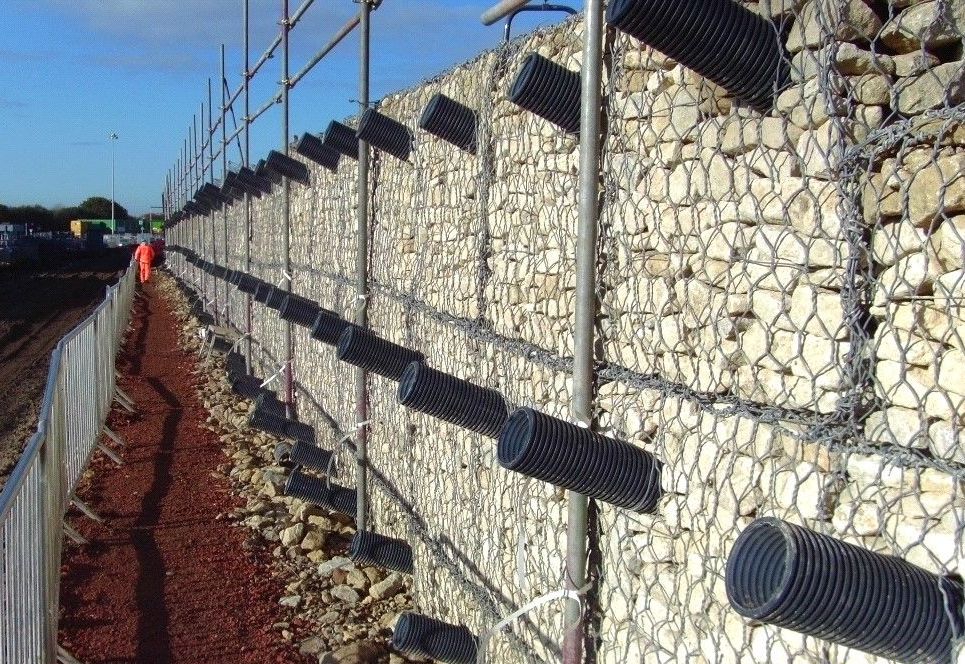
Immediately after construction, before soil nailing
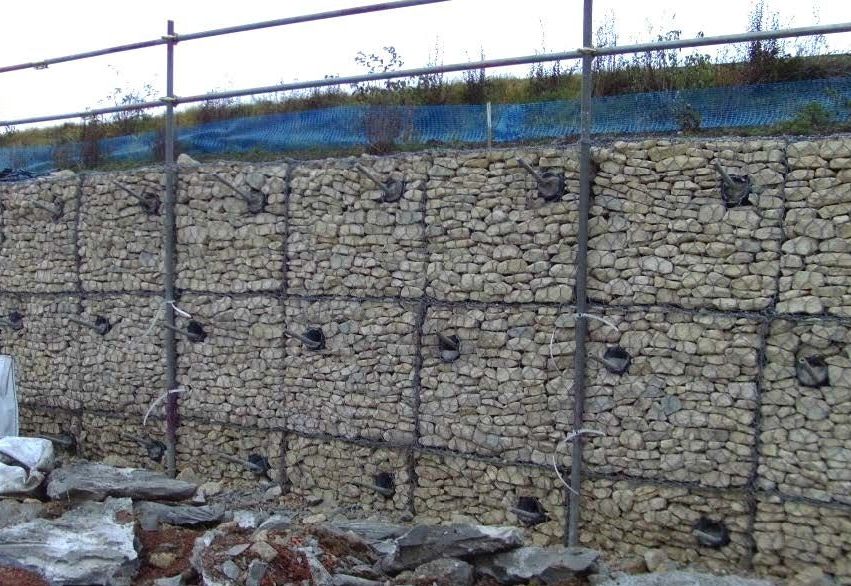
Immediately after soil nail installation
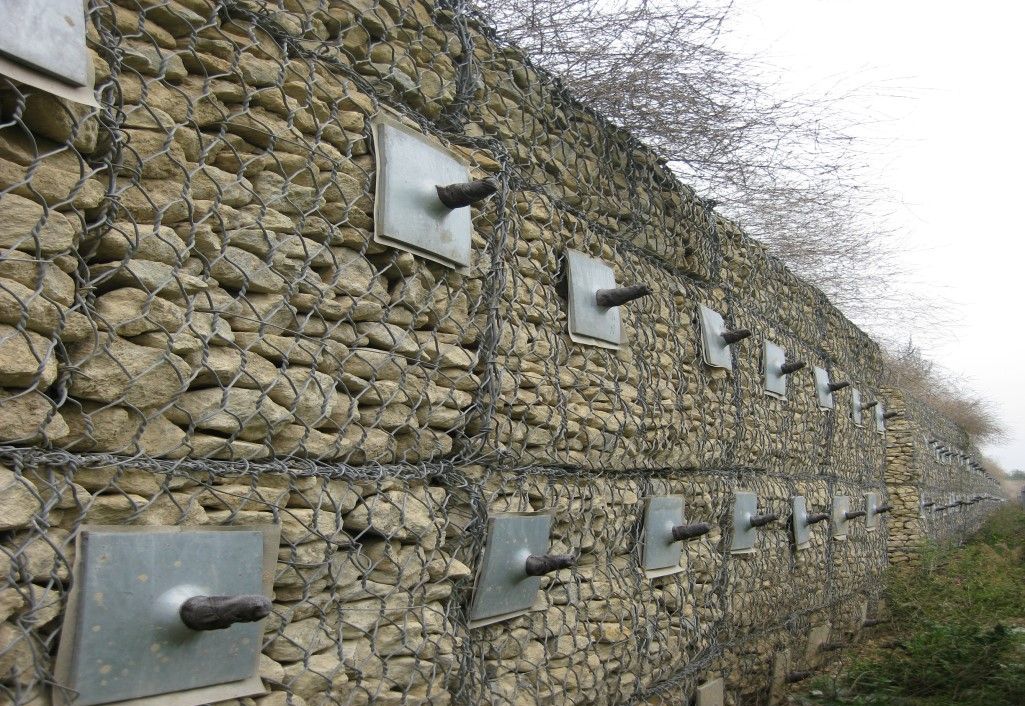
After construction
Challenge
The London to Oxford Chiltern Rail line is a critical transport corridor, and at Northolt in West London, it encounters a historic bottleneck that limits rail capacity. To meet growing demand, engineers were required to widen an existing 3.0m high railway embankment to accommodate an additional track within an already constrained rail corridor.
The project presented significant engineering challenges. Space at the site was extremely restricted due to the presence of an access road at the base of the embankment, preventing the use of traditional slope widening techniques. In addition, the embankment was founded on London clay, a geotechnically sensitive material known for its potential instability under increased loading conditions. This raised concerns about slope failure and long-term embankment stability, particularly under the demands of expanded rail infrastructure.
These combined constraints meant that a conventional solution, such as a battered slope or standard retaining structure, was not feasible, requiring an innovative ground engineering approach to ensure both safety and performance.
Solution
To overcome the spatial and geotechnical challenges, consulting engineers Atkins designed a near-vertical retaining wall system using stone-filled woven mesh gabions integrated with a soil nailing solution. The retaining wall, approximately 3.0m high, enabled the embankment to be widened within the tight rail corridor while maintaining structural stability.
The construction process involved the staged installation of gabion baskets, allowing for controlled backfilling and compaction behind the wall as work progressed. Soil nails, each extending 14.0 metres into the embankment, were installed through pre-formed apertures in the gabions and then grouted in place. This method ensured effective reinforcement of the soil mass and enhanced the overall stability of the embankment.
The extended length of the soil nails was a key design feature, as it allowed reinforcement beyond the critical failure plane within the London clay, significantly reducing the risk of slope instability and long-term movement. To facilitate installation and protect the gabion structure, the drill apertures were lined with twin-walled drainage pipes set at precise angles. This innovative detail enabled smooth insertion of the soil nails while preventing damage to the woven mesh.
Careful hand placement of stone infill around the apertures ensured there were no voids within the gabion baskets, preserving their structural integrity and performance. In total, three sections of composite retaining wall were constructed, covering a combined length of 300 metres.
This engineered solution successfully delivered railway embankment stabilisation and widening within a highly constrained environment, enabling increased rail capacity on the Chiltern Line while ensuring long-term durability and safety.
Used Products