2017
North Sea
Dong Energy
J Murphy & Sons Ltd
Maccaferri Ltd
Hornsea Offshore Wind Farm Temporary Access Solution with Flexmac DT
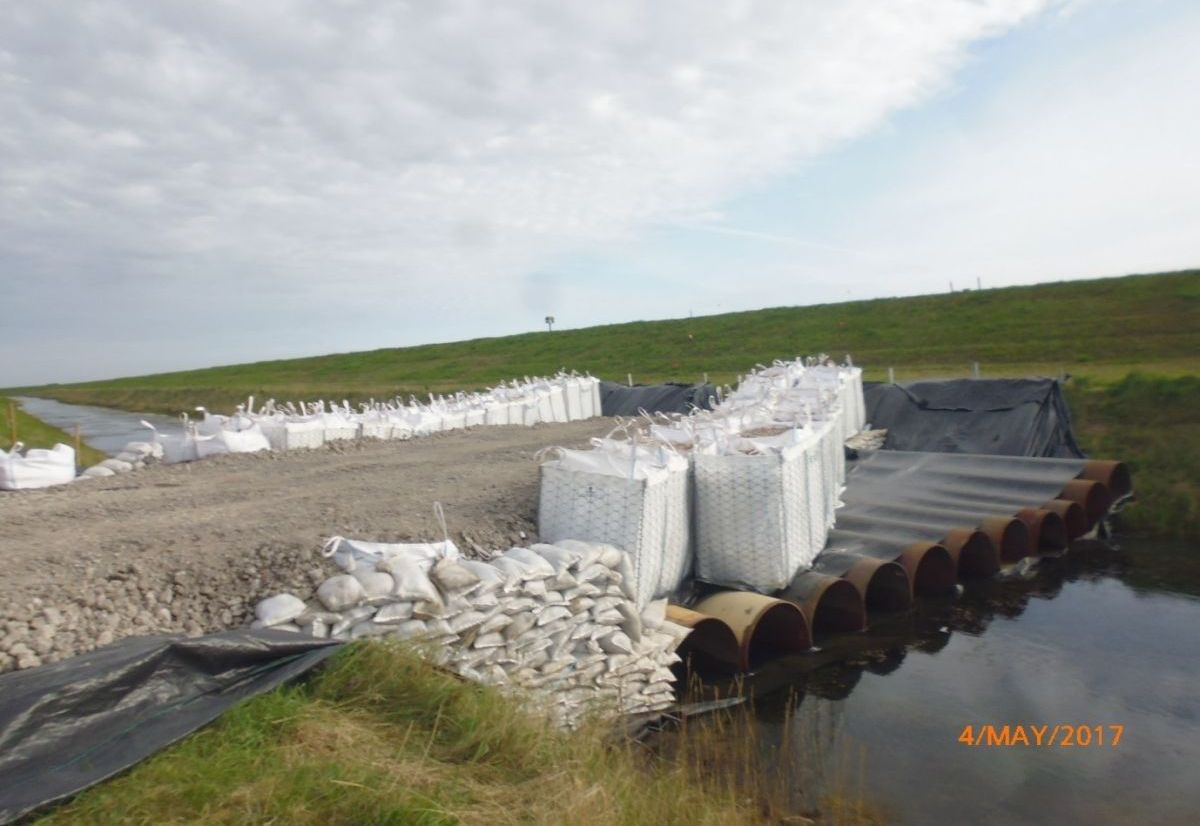
Initial phases of the works
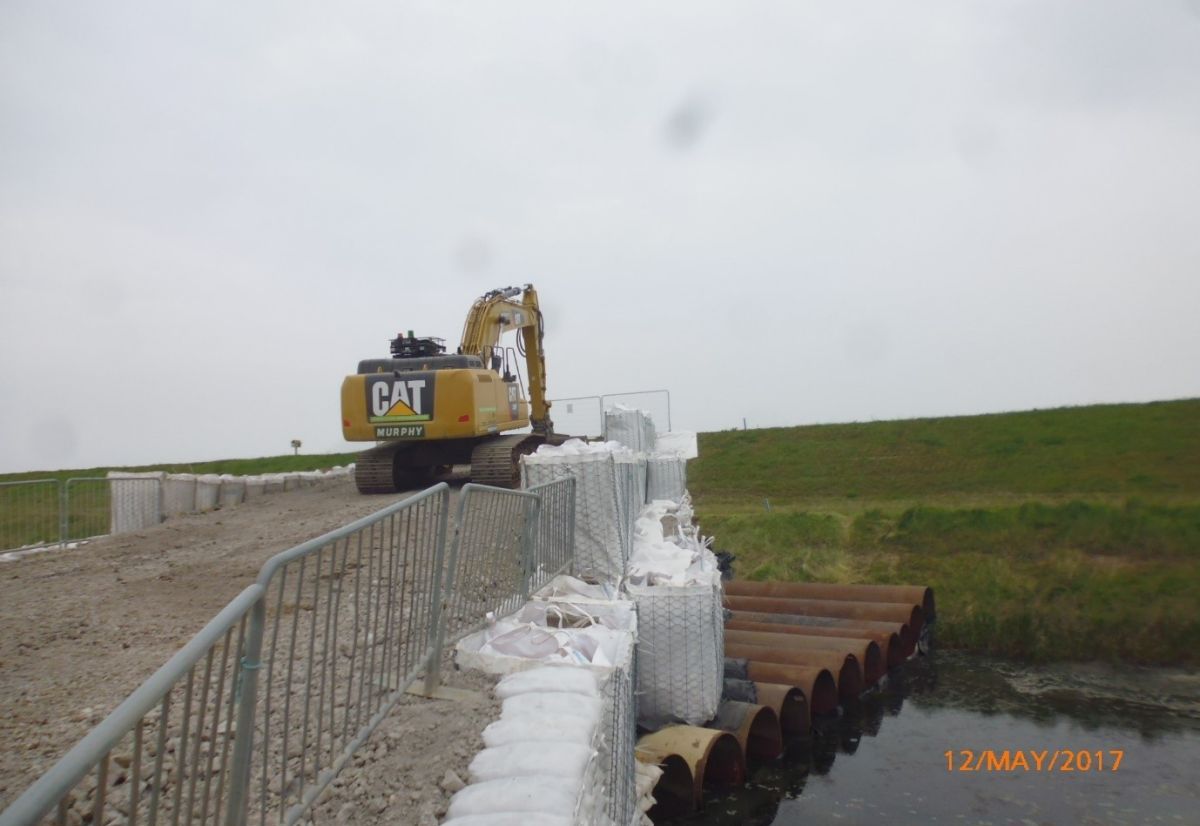
Flexmac DT units are machined filled
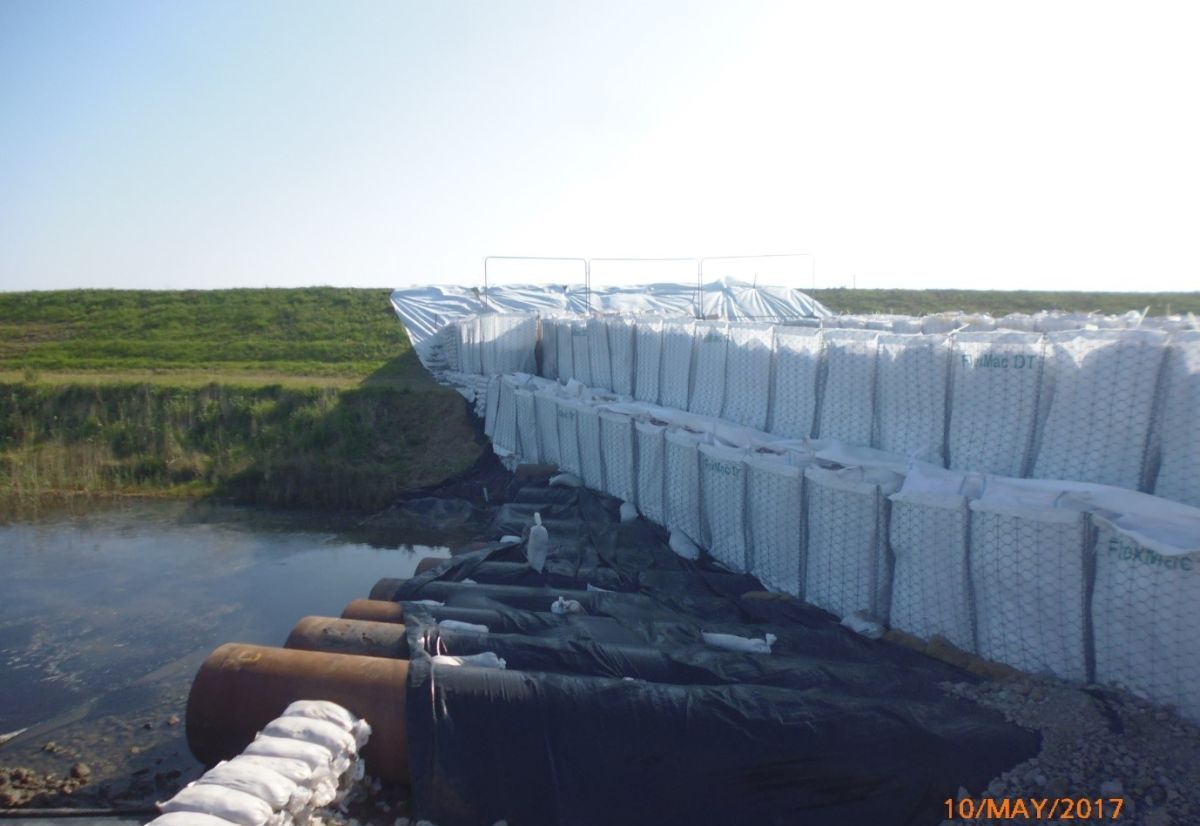
FlexMac units crossing drainage tubes
Challenge
Hornsea Offshore Wind Farm, located in the North Sea off the Yorkshire coast, is one of the largest offshore wind farm developments in the world. Comprising three major projects, the site is set to become the world’s biggest offshore wind farm, generating enough renewable energy to power over one million homes. Covering an area of 407 square kilometres, around five times the size of Hull, the project features 7MW wind turbines standing 190 metres tall.
In April 2017, contractor Murphy was appointed by Ørsted (formerly Dong Energy) to install underground cabling connecting the offshore wind farm to a new substation at Killingholme, located 38km inland. A key engineering challenge involved drilling beneath an existing sea defence wall to route the cables.
To enable safe access for heavy drilling equipment to the beach, a temporary access ramp over the sea defence was required. This created a need for a reliable temporary retaining wall solution capable of supporting the ramp on both the landward and seaward sides. The solution needed to be quick to install, structurally stable, and easily removable after project completion, while also withstanding harsh coastal conditions.
Solution
Murphy partnered with Maccaferri to develop an effective temporary works solution using Flexmac DT, a high-performance modular system designed for temporary retaining wall applications.
Flexmac DT units were installed in multiple stacked layers to achieve the required height for both retaining the access ramp and forming protective barriers along either side. Once in position, the units were filled in situ using site-won material, creating a strong, stable, and adaptable structure suitable for the demanding offshore construction environment.
The Flexmac DT system provided several key benefits, including rapid installation, flexibility to suit site conditions, and the ability to utilise locally available fill material—reducing costs and environmental impact. Upon completion of the works, the units were easily removed by lifting them and allowing the fill material to discharge from the base, ensuring an efficient and sustainable decommissioning process.
This solution enabled safe and efficient access for construction activities while minimising disruption to the existing sea defence infrastructure, demonstrating the effectiveness of Maccaferri’s temporary retaining wall systems in complex coastal engineering projects.
Used Products