2009
Gatwick, Sussex
BAA Airports Ltd
Carillion
Scott Wilson
Gatwick Airport Bund Expansion for Airbus A380 Accommodation
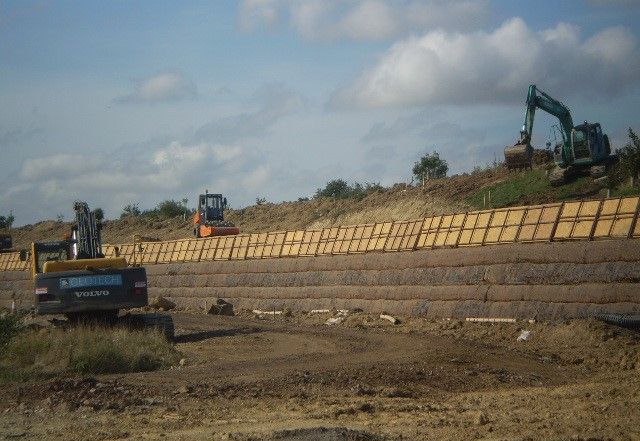
Lower courses of acoustic bund
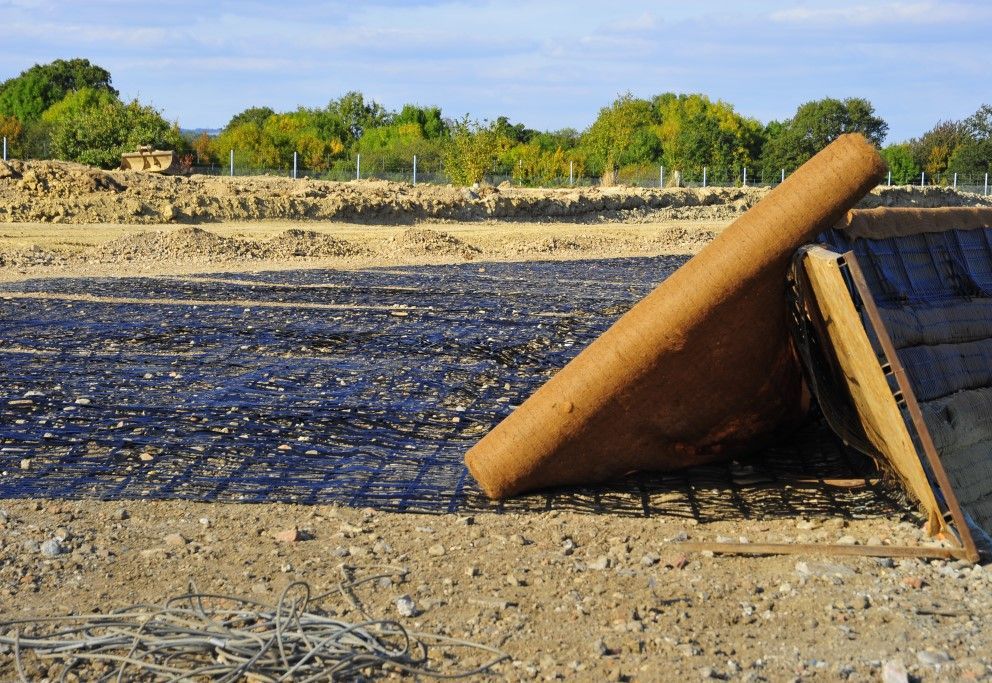
Section showing Biomac C, Paragrid and face formwork
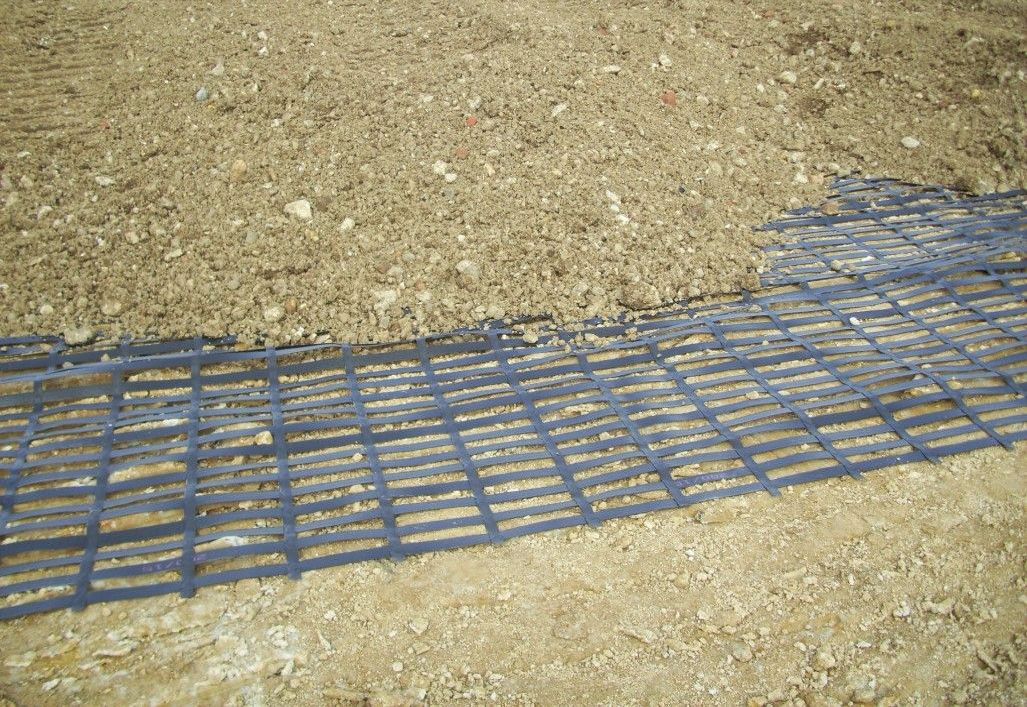
Recycled granular fill was used at the base of the bund
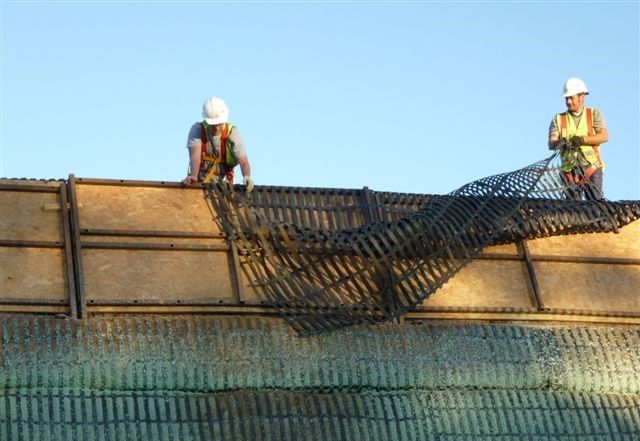
Wrapping Paragrid geogrid back to form face of bund
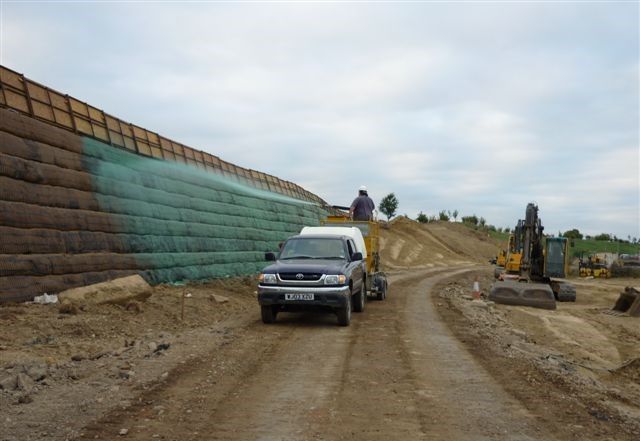
Hydroseeding the bund during construction
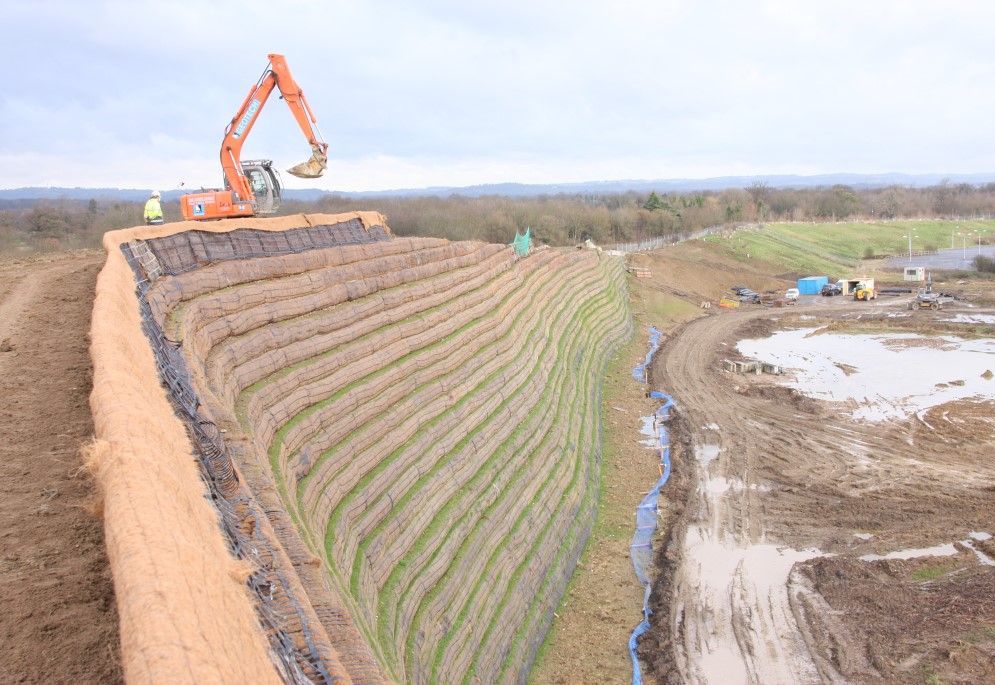
The bund nearing full-height
Challenge
Gatwick Airport required a major infrastructure upgrade to support increased air traffic capacity and to accommodate the introduction of the Airbus A380, one of the largest commercial aircraft in operation. This development included the construction of approximately 100,000 m² of new aircraft stands and taxiways on the north-western side of the airport.
A key challenge associated with this expansion was the visual and acoustic impact on nearby residential areas. The existing earth bund at Gatwick Airport, standing at just 8 metres high, was insufficient to screen the significantly taller tail fins of the Airbus A380. As a result, local communities would be exposed to increased visual intrusion and potential noise impact.
BBA Airports Ltd, the airport operator at the time, was committed to sustainable airport development and minimizing environmental and community impact. In collaboration with local authorities and stakeholders, it was determined that the bund height needed to be increased to 16 metres to provide effective visual and acoustic screening.
In addition to environmental considerations, the project required a cost-effective and sustainable construction approach. The bund was to be built primarily using site-won materials generated from other works across the Gatwick Airport campus. However, land availability constraints meant the structure needed to maximise usable space, leading to the requirement for a soil reinforced slope with a steep 63° face on the airside and a landscaped, shallow gradient on the public-facing side.
This created a complex geotechnical engineering challenge involving slope stability, material performance, drainage, and construction efficiency.
Solution
To deliver a safe, sustainable, and cost-effective solution, consulting engineers Scott Wilson and geotechnical specialists Maccaferri collaborated with main contractor Carillion plc, soil reinforcement installer PML Geotech, and fill supplier P.J. Brown.
The project team developed an optimised reinforced soil bund design that balanced geometry, material availability, geogrid reinforcement efficiency, and construction methodology. Advanced finite element analysis was undertaken to assess the performance of the proposed fill materials and structural behaviour during construction.
Initially, the use of site-won Class 7C1 clay was considered for the entire bund to maximise sustainability and reduce material import costs. However, geotechnical analysis identified a critical issue: the potential build-up of pore water pressure within the clay during staged construction. This could lead to short-term instability and increase the risk of slope failure before consolidation and drainage could occur.
To overcome this, the design was refined to incorporate recycled granular fill in the lower sections of the bund, particularly in the tallest areas where stability risks were highest. This material provided improved drainage and reduced pore water pressure build-up, ensuring stability during construction while maintaining the project’s sustainability goals.
The final reinforced soil solution enabled the construction of a 16-metre-high bund with a steep reinforced face, optimising land use while effectively delivering visual and acoustic screening for local communities. The project successfully combined geotechnical engineering expertise, sustainable construction practices, and stakeholder collaboration to support Gatwick Airport’s expansion and future-proof its operations for next-generation aircraft.
Used Products