


Embankment Construction over Soft Estuarine Clay
Challenge
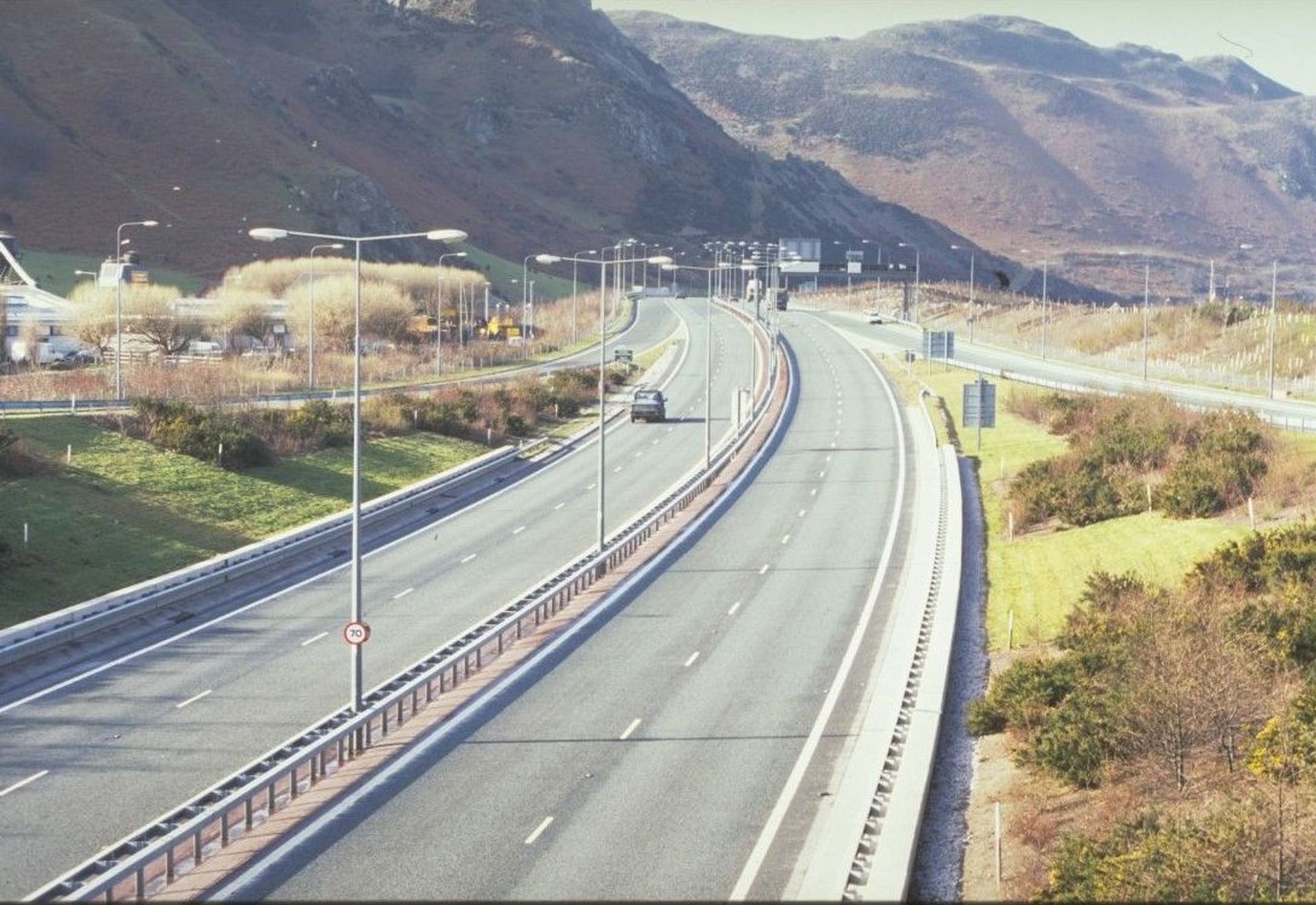
As part of a major infrastructure programme to create a continuous grade-separated carriageway along the North Wales coastline, this project aimed to improve transport connectivity between Ireland (via Holyhead) and key Channel ports. A critical section of the scheme involved constructing the approach to an immersed tunnel beneath the Conwy estuary.
The primary engineering challenge was the construction of an 8-metre-high road embankment over extremely poor ground conditions. The subsoil consisted of soft alluvial estuarine clay, known for its low strength and high compressibility, making it highly susceptible to settlement and instability. Compounding the issue was an overlying layer of heterogeneous refuse material, ranging from 1 to 4 metres in thickness, which further reduced ground reliability and increased the risk of differential settlement.
Without appropriate ground improvement and reinforcement, the embankment could have experienced excessive settlement, uneven deformation, and potential structural failure, posing serious risks to the long-term performance of this critical transport link.
Solution
A tailored geotechnical solution was implemented to address the varying ground conditions across the site, combining ground improvement techniques with geosynthetic reinforcement to ensure stability and durability.
In areas where the alluvial clay layer was relatively shallow, the unsuitable refuse material was excavated and removed. A high-performance separator geotextile was then installed to act as a filtration and separation layer, preventing intermixing of materials while maintaining drainage efficiency. Above this, a drainage blanket of single-sized 37.5 mm crushed rock was placed to enhance load distribution and facilitate water movement.
In zones with deeper clay deposits, a different approach was adopted. A 0.4-metre-thick drainage blanket was placed directly onto the prepared ground surface. To accelerate soil consolidation and reduce long-term settlement, vertical band drains were installed to depths of between 6 and 10 metres. These prefabricated vertical drains significantly shortened the drainage path within the clay, enabling rapid dissipation of excess pore water pressure under embankment loading.
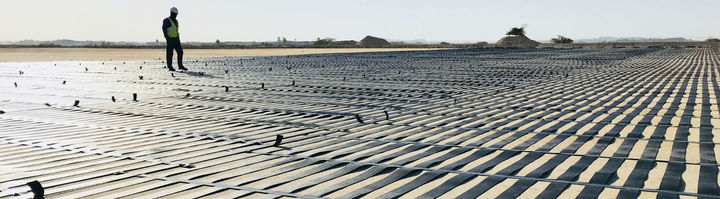
To further improve embankment stability and manage differential settlement, Paralink 300 geosynthetic reinforcement was installed. This high-strength reinforcement layer was designed to absorb and redistribute stresses caused by ground movement. The embankment was then constructed in controlled layers, with an additional 2.2 metres of drainage stone placed incrementally to maintain stability throughout the build process.
Comprehensive geotechnical instrumentation was installed beneath the embankment to monitor settlement, lateral displacement, and pore water pressure in real time. The monitoring data confirmed minimal movement and no significant displacement, validating the effectiveness of the combined ground improvement and geosynthetic solution.
Our products for
this Success Story
Get in touch with us
[contactForm_txtSuccessSubmit]