2016
Dunball, Somerset
Somerset County Council & Somerset Rivers Authority
Dyer & Butler
Scour Protection
Dunball Bridge Erosion Protection and King’s Sedgemoor Drain Improvement
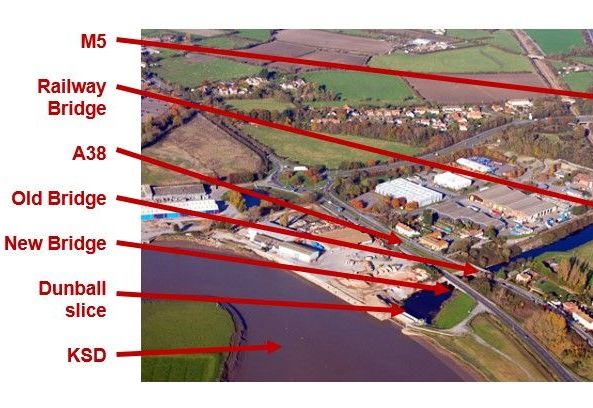
Location of the project
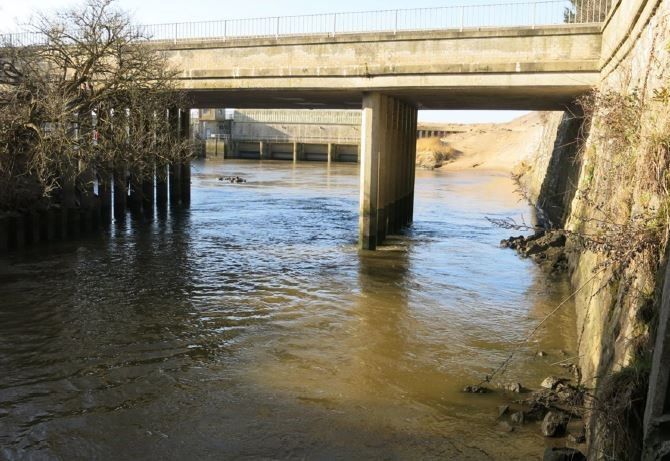
Dunball New Bridge – prior repair works
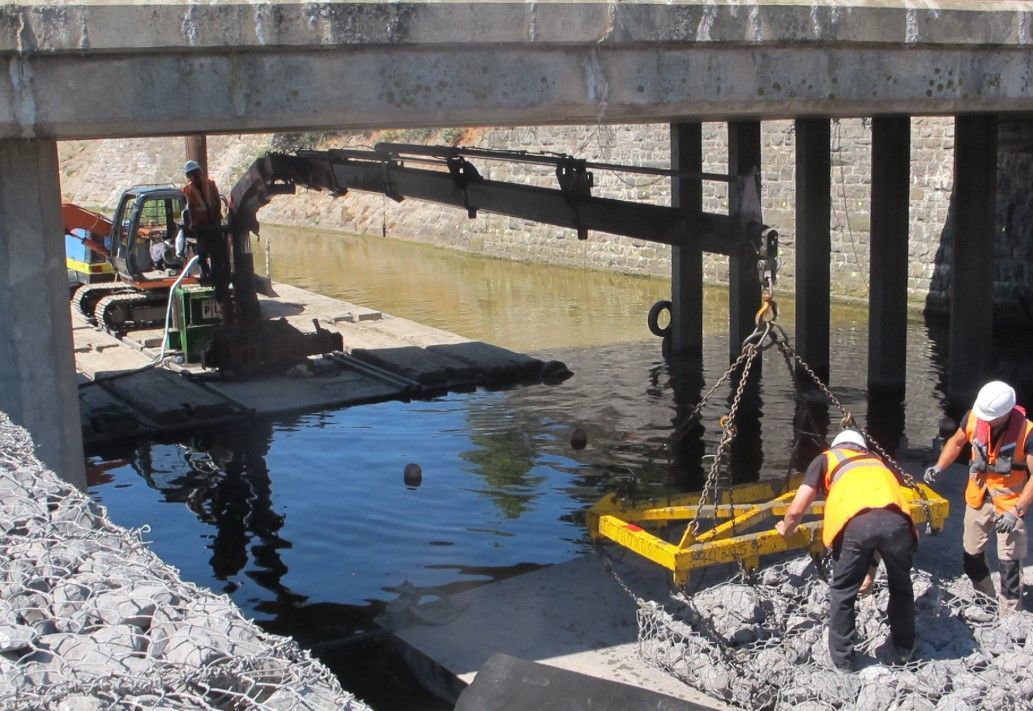
Prefilled gabion on the pontoon ready to be placed on the channel bed
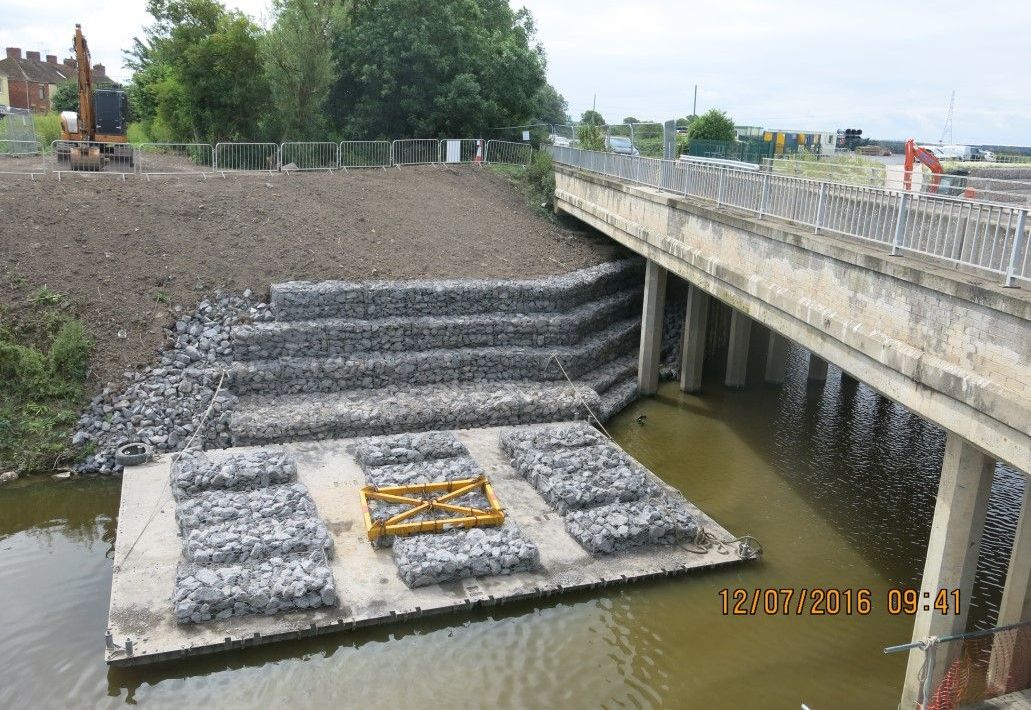
General view during construction – July 2016
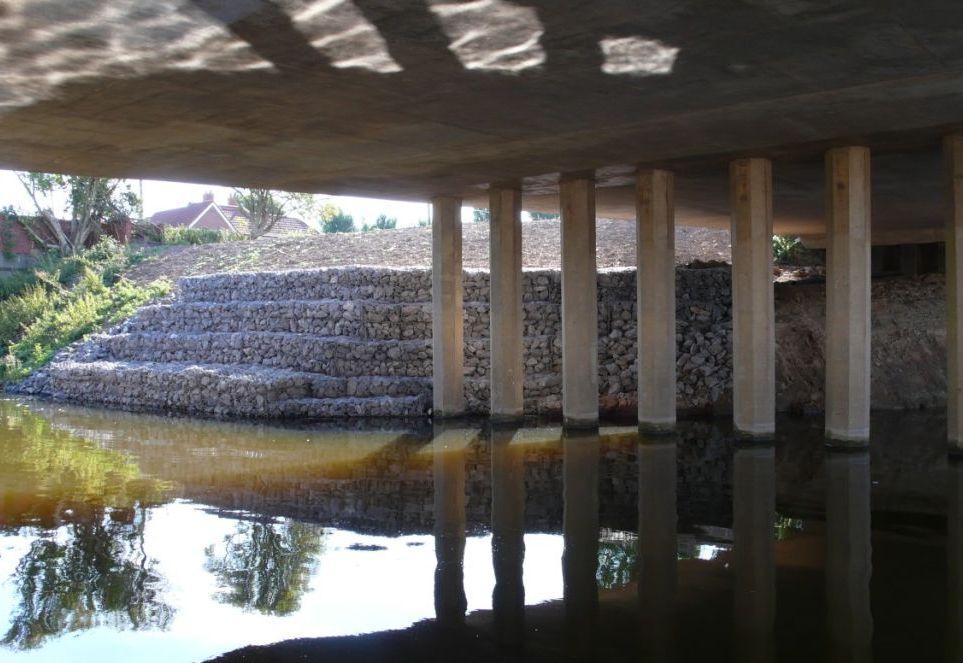
PA6 gabion bank protection complete in August 2016
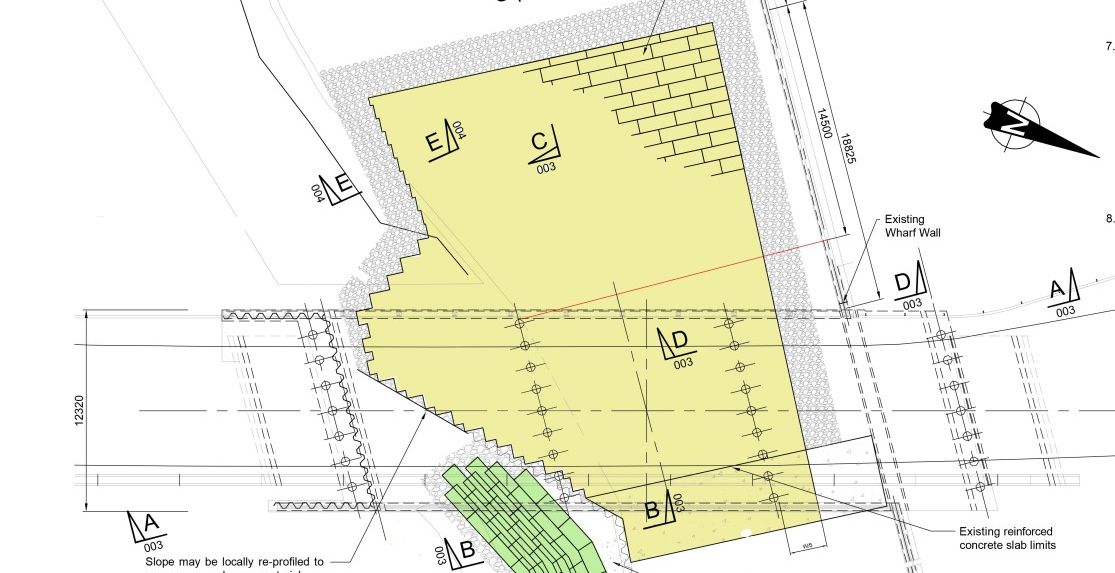
Schematic drawing of the project
Challenge
The King’s Sedgemoor Drain (KSD), a critical watercourse within the Somerset Levels and Moors, has long experienced a significant hydraulic restriction near Dunball. When the Sowy–KSD drainage scheme was developed in the 1960s, engineers recommended that the original A38 bridge at Dunball, now carrying southbound traffic into Bridgwater, should be replaced with a wider-span structure. This upgrade was intended to prevent a bottleneck in the channel. However, the replacement was never implemented, leaving a constricted section of approximately 200 metres upstream of Dunball Sluice.
Dunball Sluice is the only discharge point for the KSD into the River Parrett and ultimately to the sea, making it a vital component of regional flood management. Efficient water flow through this structure is essential to protect the low-lying Somerset Levels. During the severe UK floods of 2013/14, the impact of this restriction became clear. High flow velocities and turbulent conditions downstream of the constriction caused significant scour around the foundations of Dunball New Bridge, which carries northbound A38 traffic. This erosion threatened the stability of the bridge piers, highlighting the urgent need for a robust and long-term river engineering solution to manage flow, prevent further scouring, and safeguard critical infrastructure.
Solution
To resolve these issues and enhance the resilience of the drainage system, Somerset County Council commissioned a targeted bridge protection and channel stabilisation scheme following earlier works at Dunball Old Bridge. The solution, designed by WSP/PB, focused on reducing hydraulic turbulence and preventing further erosion at this key pinch point in the drainage network.
The engineering approach involved installing a double layer of 300 mm thick gabion baskets to protect both the bridge piers and the channel bed. This method provides durable scour protection while maintaining permeability, which is essential for effective water management in high-flow conditions. The bridge embankment was also reconstructed using a gabion retaining wall, ensuring long-term bank stability and resistance to erosion.
High-performance PA6 woven gabions were selected due to their enhanced durability, flexibility, and superior drainage characteristics. These properties help dissipate energy within fast-flowing water, reducing turbulence and minimising the risk of further channel degradation. Given the restricted headroom beneath Dunball New Bridge, traditional rock armour placement was not practical. Instead, prefilled gabion baskets were used, allowing for faster installation and a more efficient construction programme while overcoming site constraints.
This solution has successfully improved flow conditions at the Dunball Sluice outlet, reducing turbulence and protecting bridge foundations from future scour. The project represents a critical flood defence improvement for the Somerset Levels, ensuring more reliable water conveyance and enhancing the long-term resilience of key infrastructure along the River Parrett corridor.
Used Products