


Colley Lane Southern Access Road, Bridgwater Load Transfer Platform & MSE Wall Solution on Soft Ground
Challenge
The Colley Lane Southern Access Road (CLSAR) project in Bridgwater is a major £18.4 million infrastructure development designed to improve access to the Colley Lane Industrial Estate from the south. The scheme includes the construction of 840 metres of new carriageway, two bridges, and integrated cycle and pedestrian routes to support sustainable transport.
A primary objective of the CLSAR scheme was to reduce traffic congestion along Taunton Road and Broadway by linking Parrett Way to Marsh Lane. In addition, the project plays a key role in unlocking brownfield development land between the River Parrett and the Bridgwater & Taunton Canal, enabling future housing and commercial development.
One of the most significant challenges on the project was the difficult ground conditions. The site is located on the River Parrett floodplain and is underlain by deep, highly compressible alluvial soils, along with areas of infilled clay pits. These weak ground conditions posed a high risk of excessive settlement and differential movement, particularly between the embankments and the bridge structures.
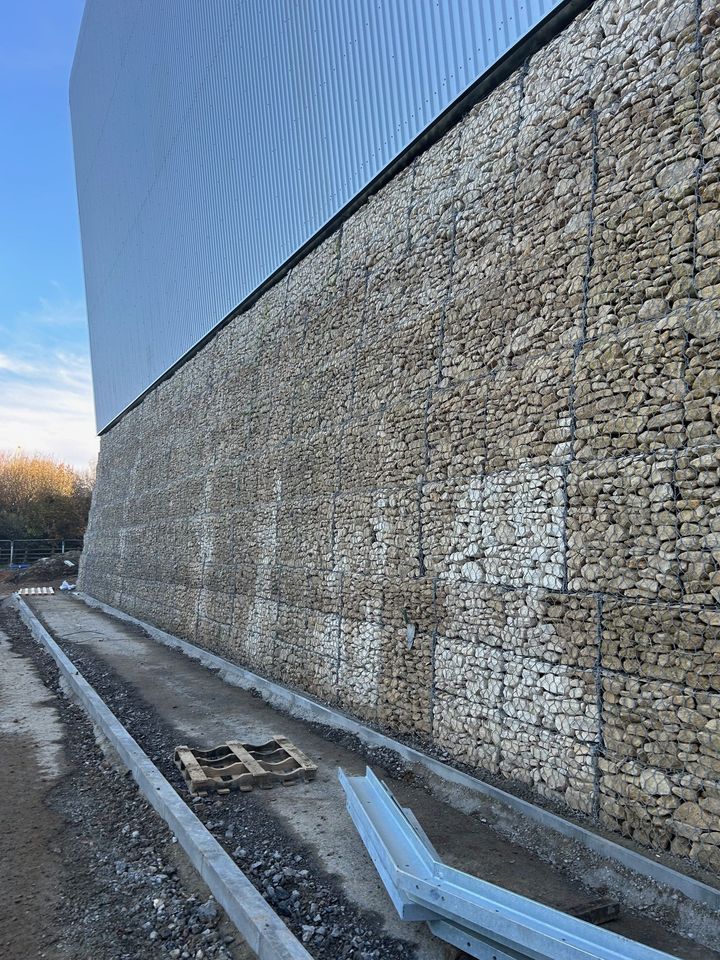
The bridge abutments were designed as mechanically stabilised earth (MSE) walls, similar to Macwall systems, supported on piled foundations. This required the implementation of an effective load transfer solution to safely distribute loads while accommodating high load requirements, future traffic increases, and potential structural widening.
Solution
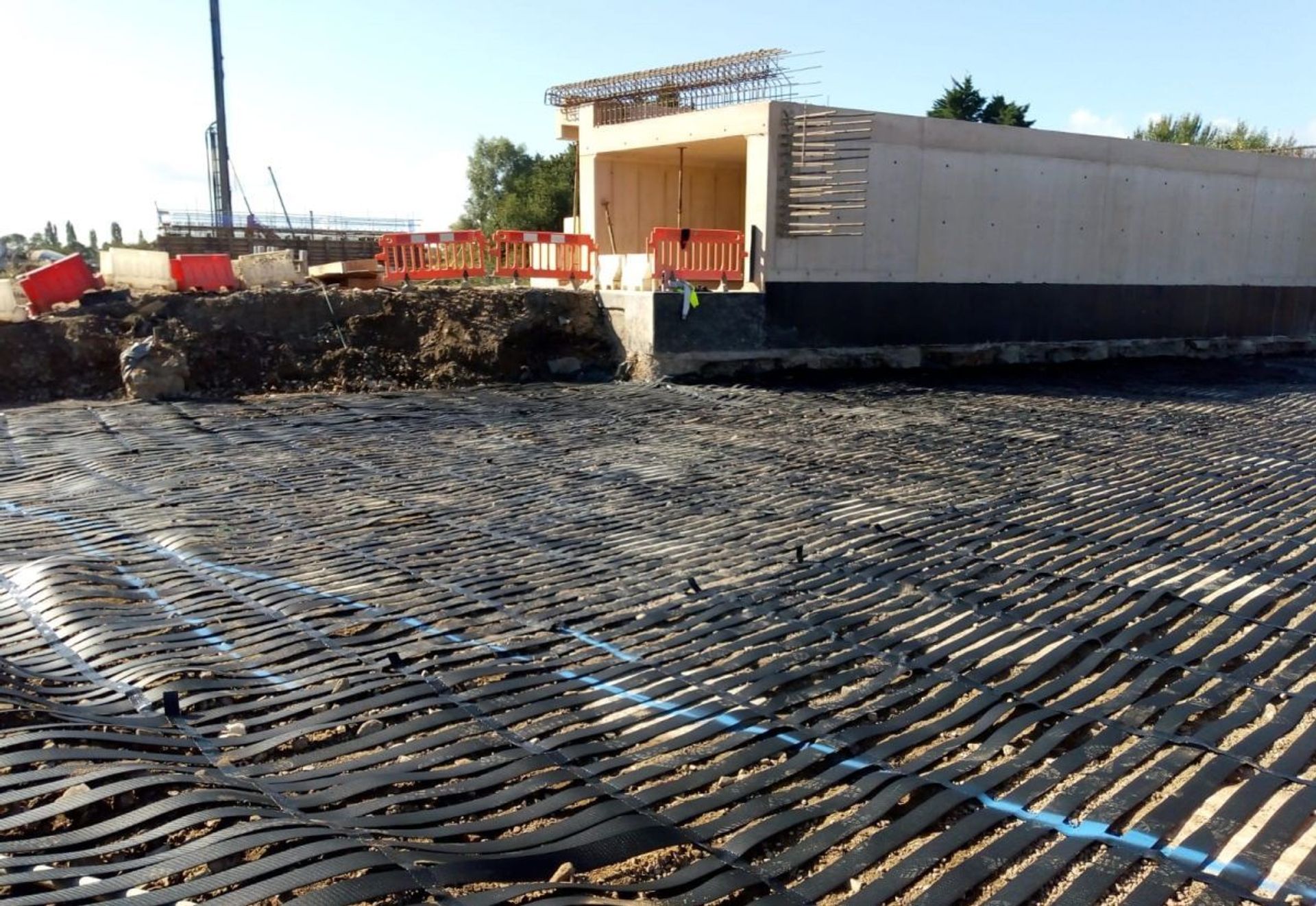
To address the geotechnical challenges and ensure long-term stability, a ParaLink load transfer platform (LTP) solution was implemented. The ParaLink system was used to transfer loads from the mechanically stabilised earth (MSE) walls efficiently into the underlying pile foundations, minimising differential settlement and improving overall performance.
The reinforced soil walls reached heights of up to 4 metres above the load transfer platforms. To suit the varying site conditions and loading requirements, four bespoke ParaLink LTP designs were developed and installed across the project.
The foundation system incorporated 600 mm diameter edge piles and 450 mm diameter internal piles, each fitted with 900 mm diameter circular pile caps. The use of ParaLink geosynthetic reinforcement enabled increased pile spacing of up to 2.5 metres, delivering both engineering efficiency and cost savings by reducing the total number of piles required.
The load transfer platforms were constructed using Class 6I granular fill, providing a stable and free-draining working platform. A combination of ParaLink reinforcement grades was used to optimise performance, with ParaLink 800 installed in the transverse direction to manage higher loads, and ParaLink 400 and 500 used longitudinally to provide effective reinforcement along the structure.
Construction of the key load transfer platforms, LTP03 and LTP04, was completed in 2018. The final solution delivered a robust, cost-effective, and future-proof foundation system capable of supporting both current infrastructure demands and potential future expansion.
Get in touch with us
[contactForm_txtSuccessSubmit]