2007
MABLEDON, DARTFORD, UNITED KINGDOM
Highways Agency
Costain Civil Engineering Ltd
Jacobs
A2/A282 Junction Widening Sustainable Embankment Solution Protecting Biodiversity
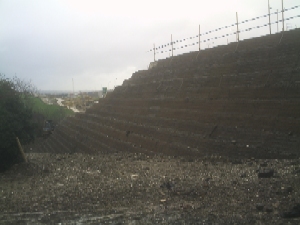
Green Terramesh reinforced slope under construction
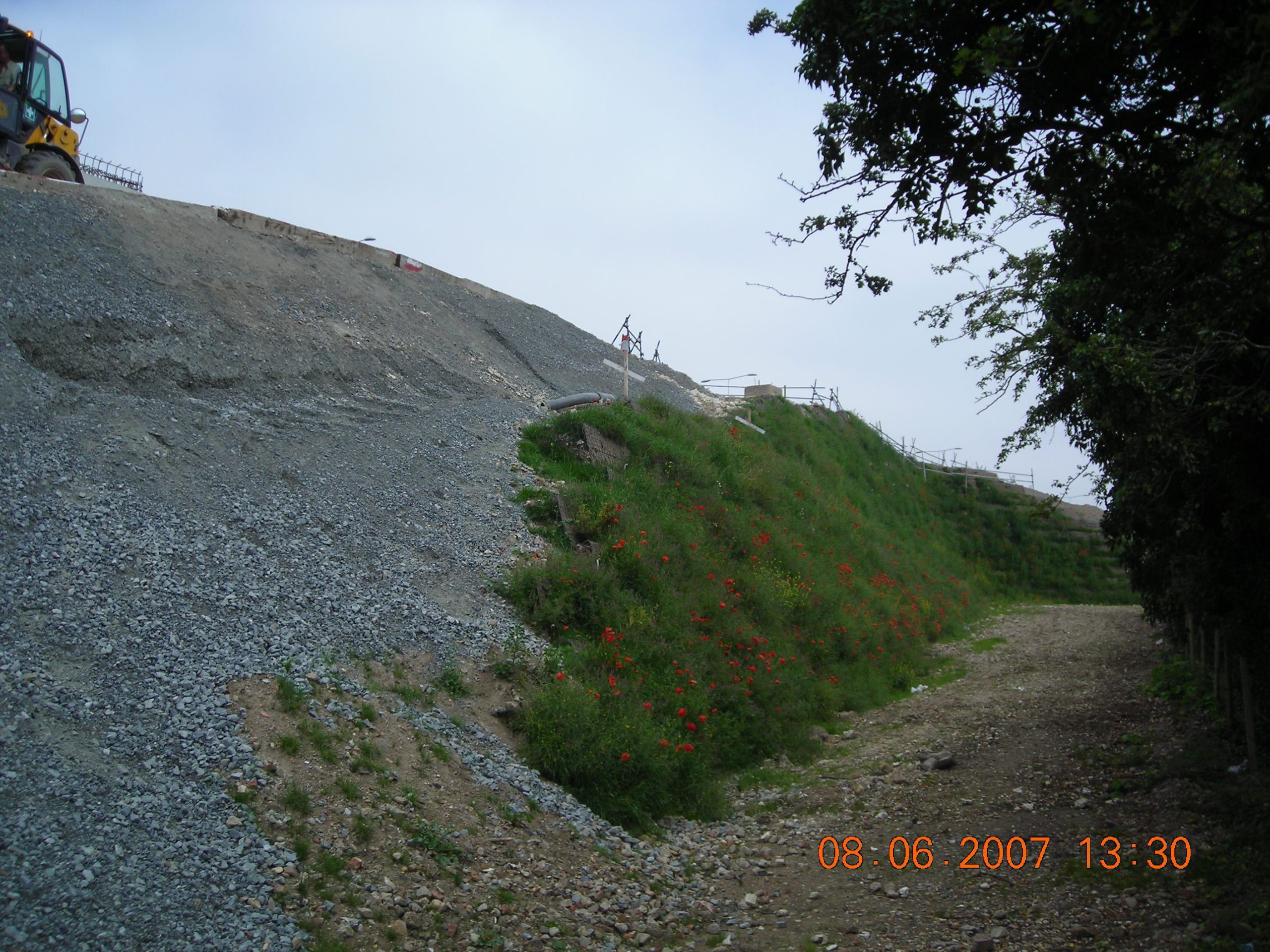
Green Terramesh reinforced slope under construction
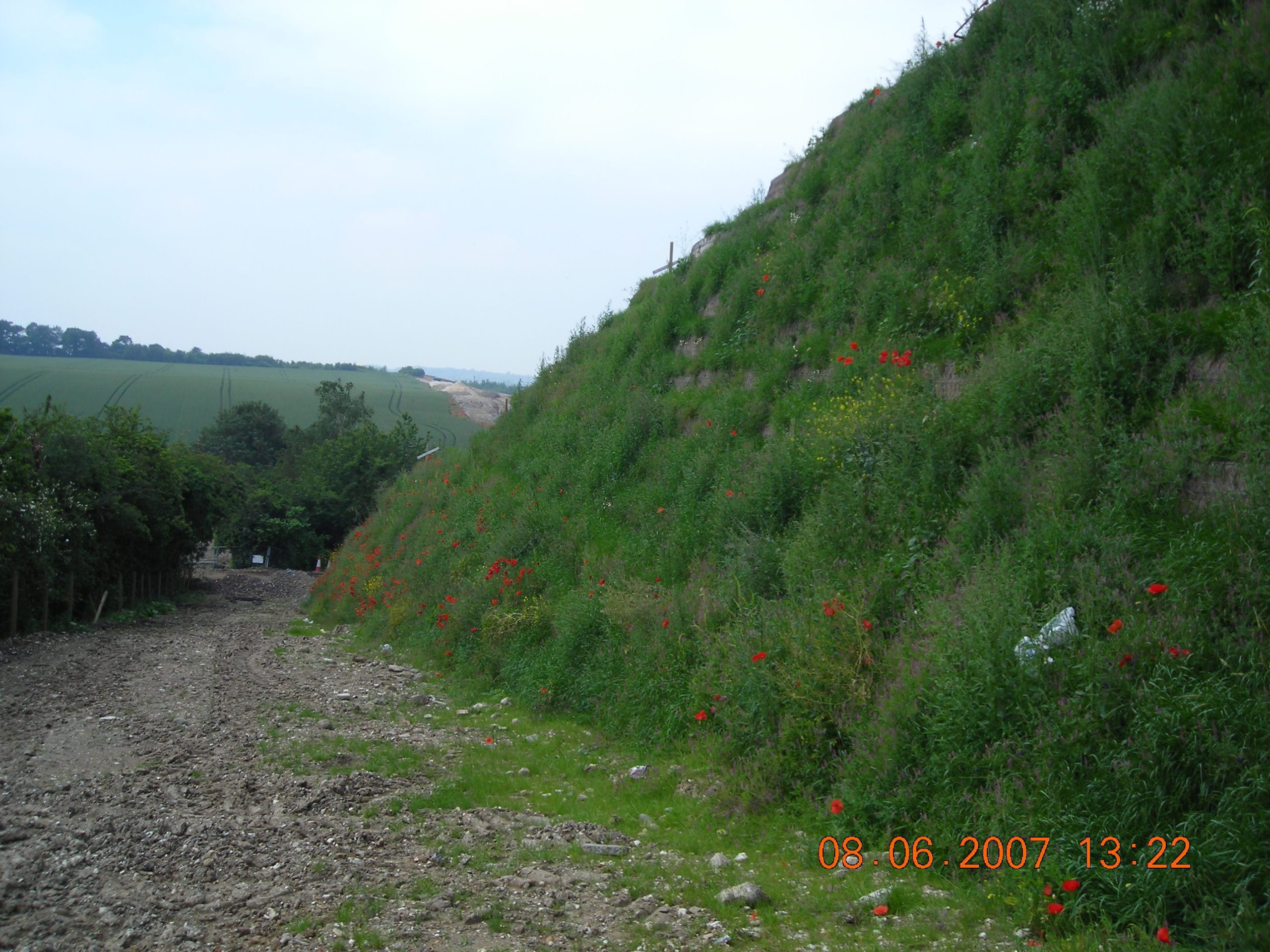
Green Terramesh slope showing early vegetation
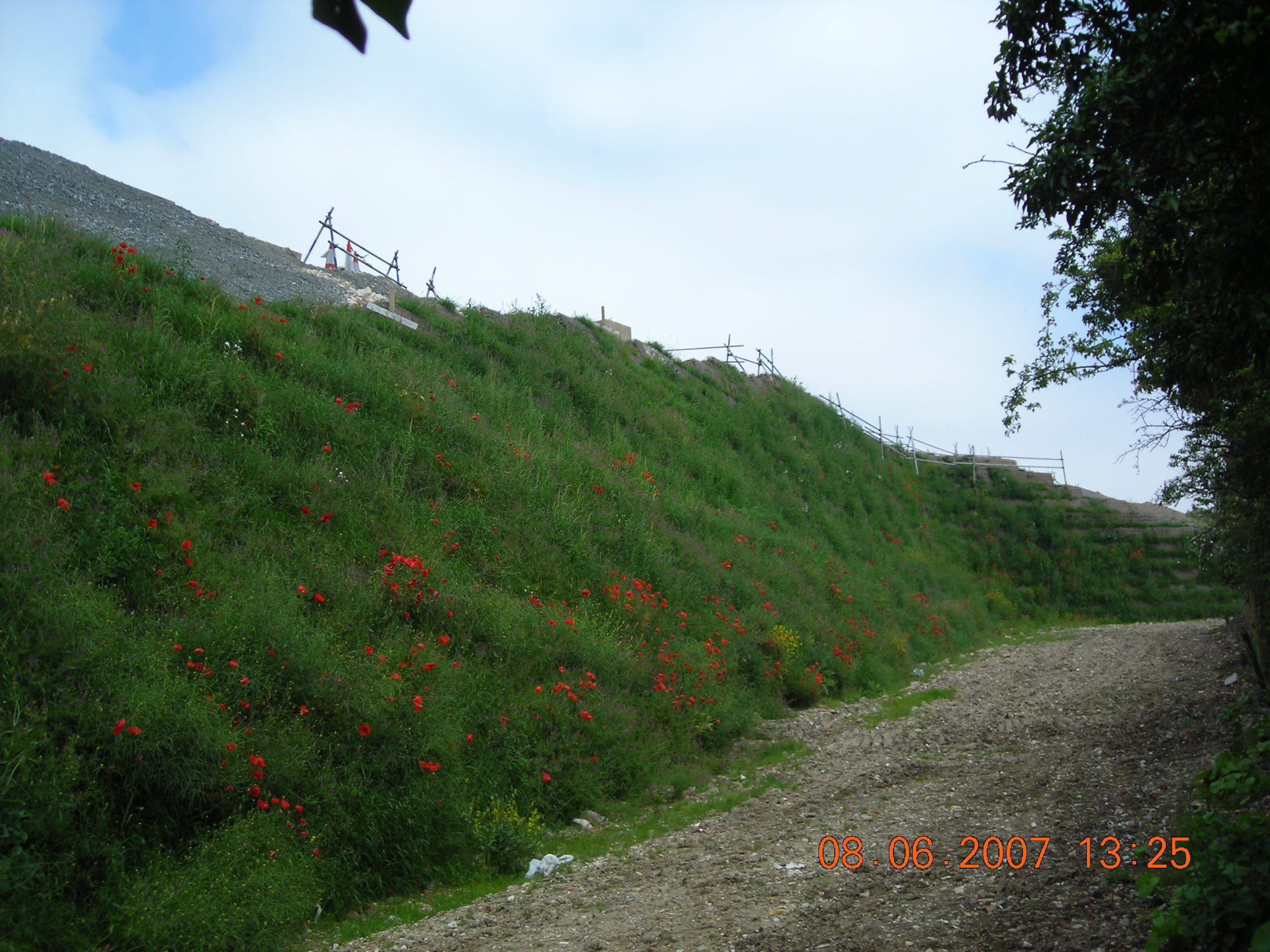
Green Terramesh reinforced vegetated
Challenge
The strategic junction between the A2 and A282 arterial routes, located adjacent to London’s M2 motorway, required widening from three lanes to four to improve traffic flow, reduce congestion, and support increasing transport demand. This infrastructure upgrade required the construction of a widened embankment to accommodate the additional carriageway.
However, the project faced a critical environmental constraint. At the base of the existing slope lay a mature hedgerow, an ecologically valuable habitat supporting a range of nationally scarce and vulnerable invertebrate species. These included ladybirds, wood-boring beetles, fungus weevils, and bark beetles. Of particular importance was the presence of the jewel beetle, a rare species in North Kent that depends on the bark of hawthorn trees within the hedgerow.
A conventional embankment design using a standard 1:2 slope would have significantly increased the land take, resulting in the destruction of the hedgerow and the loss of this important biodiversity asset. This created a major challenge: delivering essential highway infrastructure improvements while ensuring environmental protection and compliance with ecological preservation requirements.
Solution
To overcome this challenge, the project team required an innovative slope stabilisation solution capable of significantly steepening the embankment profile. By reducing the footprint of the earthworks, the design could avoid encroachment on the hedgerow and preserve the sensitive habitat.
Costain Ltd, the main contractor, partnered with Maccaferri to develop a design and supply solution tailored to the site constraints. The proposed solution enabled the embankment to be constructed at angles of up to 70 degrees, dramatically reducing land take while maintaining structural integrity.
Two reinforced soil solutions were considered: a traditional geogrid-reinforced slope with a wrapped face, and the Green Terramesh® system. The embankment reached a maximum height of 9.3 metres, with 6.3 metres requiring reinforced soil construction and the upper section formed at a 1:2 slope.
The Green Terramesh® reinforced earth system was selected as the optimal solution due to its engineering performance and environmental benefits. This system allows for the construction of steep, stable slopes capable of supporting high loads while minimising the footprint compared to conventional embankments. Crucially, it also enables natural vegetation growth, supporting sustainable infrastructure development.
Green Terramesh® is manufactured from galvanised and PVC-coated double-twist steel wire mesh, forming both the soil reinforcement (geogrid tail) and the facing element in a single integrated unit. During installation, the geogrid tails are layered between compacted structural fill, creating a reinforced soil mass with enhanced stability and durability.
This solution successfully delivered the required highway widening while preserving the mature hedgerow and its associated biodiversity. The project demonstrates how engineered earth solutions can balance infrastructure development with environmental conservation, making it a strong example of sustainable civil engineering and ecological protection.
Used Products