21 July 2026
From Understanding Erosion to Designing Better Slopes
The best erosion control solution isn't always the strongest or the most expensive. It's the one that's designed for the site's actual conditions. Understanding how water behaves, how the soil responds, and where erosion is likely to develop is the foundation of every successful erosion control strategy.
Erosion Is a Process, Not an Event
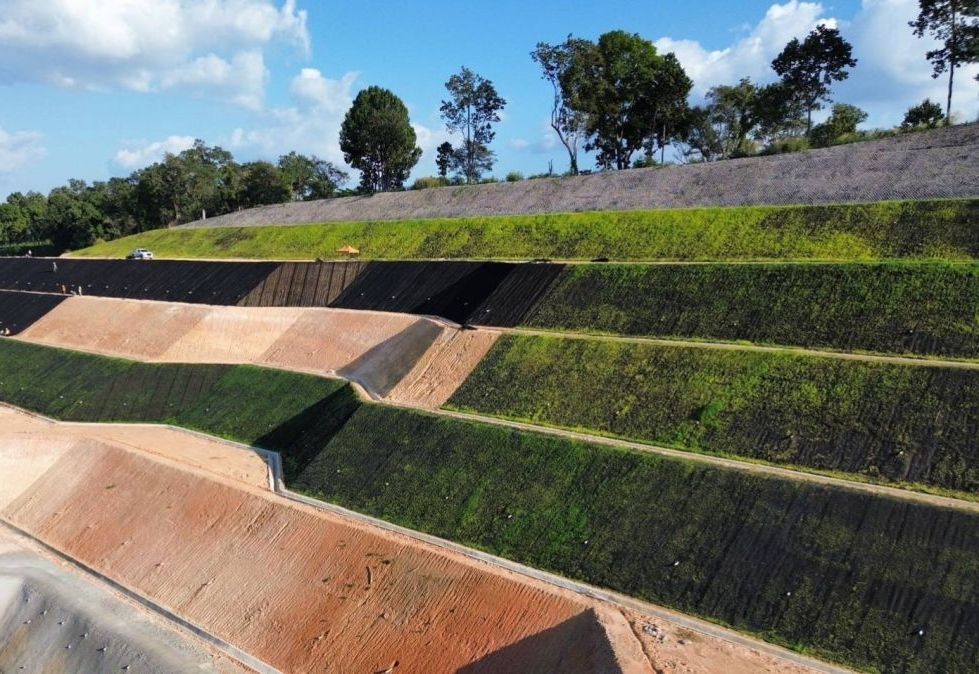
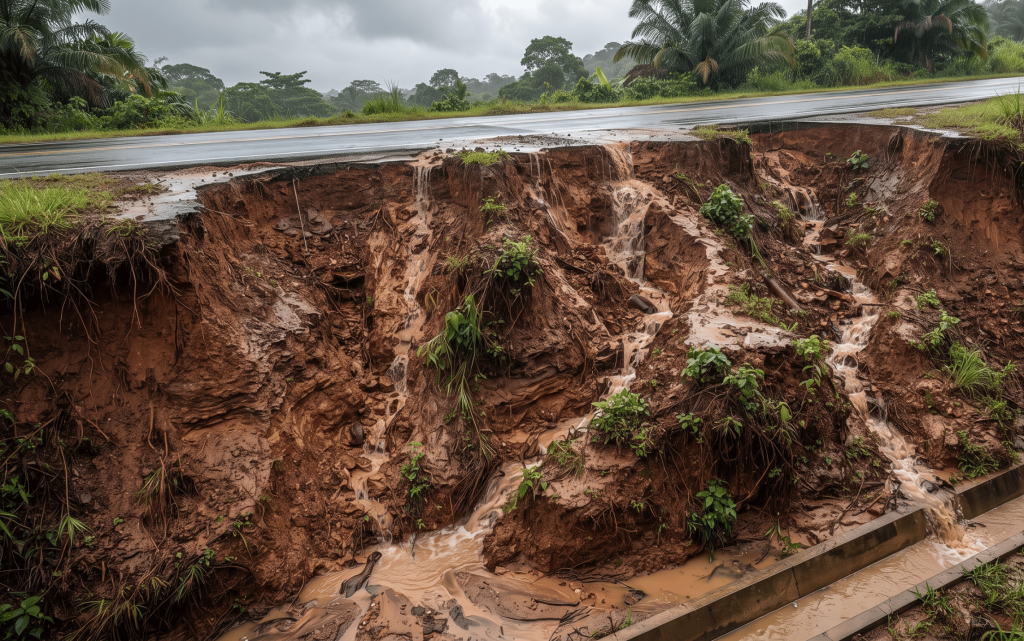
One of the key takeaways from the discussion was that erosion is a gradual process rather than a sudden event. Before a slope failure or significant damage occurs, subtle changes have often been taking place for months, or even years.
As rainfall repeatedly follows the same flow paths, it gradually wears away the surface layer of the soil. As rainfall repeatedly flows over unprotected slopes, continuous runoff gradually strips away the soil surface, accelerating the erosion process.
Over time, these seemingly minor changes can develop into:
- Rill erosion
- Gully erosion
- Toe scour
- Local slope instability
Understanding how erosion progresses through these stages is fundamental to developing an effective erosion control strategy.
Why Is Water the Most Critical Factor?
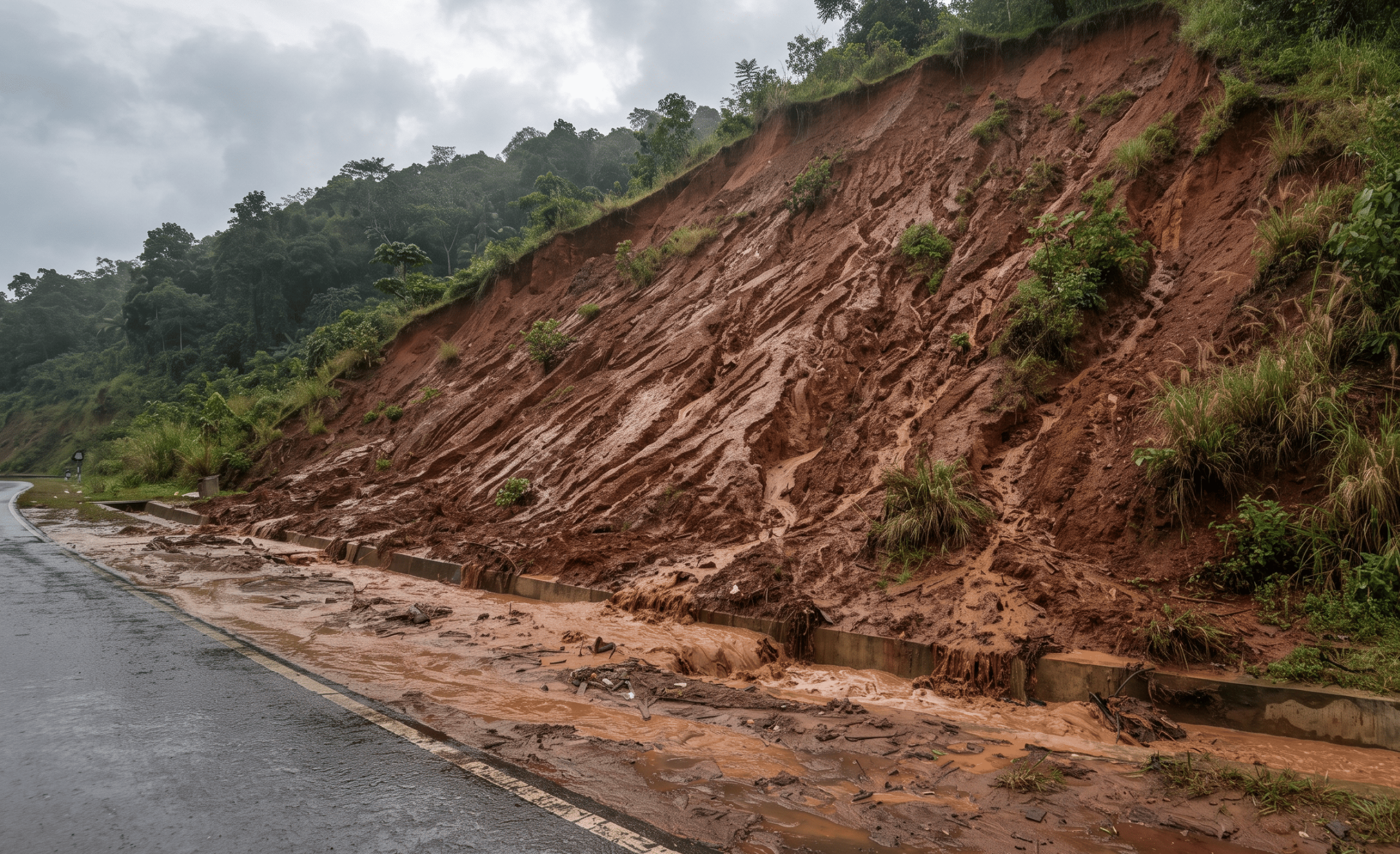
One of the main points highlighted during the webinar was that water is the driving force behind most slope-related problems. Water does more than erode the soil surface. It also alters the mechanical behavior of the soil by increasing its moisture content, changing effective stress conditions, and, in certain situations, increasing pore water pressure. These changes can significantly reduce slope stability over time.
For this reason, erosion control cannot be separated from proper water management. Engineers need to understand:
- How water enters the slope
- How water moves across and through the slope
- Where water is ultimately discharged
If any of these pathways are overlooked, erosion can continue to develop, even when surface protection measures have already been installed. intervention.
Upper and Lower Slopes Require Different Approaches
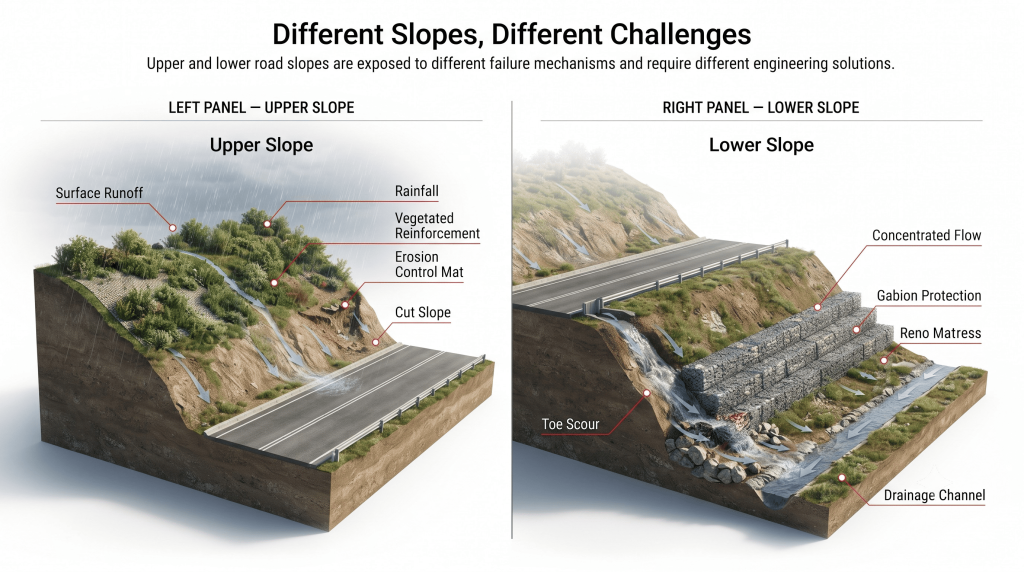
Another important point discussed was that upper and lower slopes perform different functions and therefore should not be treated with the same engineering solution.
For upper slopes, the primary objective is to reduce the energy of surface runoff before it reaches the slope face. Key considerations include:
- Runoff control
- Surface protection
- Soil stabilization
- Vegetation establishment
For lower slopes, the focus shifts toward managing the impacts of accumulated runoff and soil movement. Typical considerations include:
- Toe protection
- Scour control
- Stability under accumulated loads
- Flow energy dissipation
By tailoring the design approach to the specific function of each slope, engineers can develop systems that perform more effectively than applying a single solution across the entire slope.
There Is No One-Size-Fits-All Solution
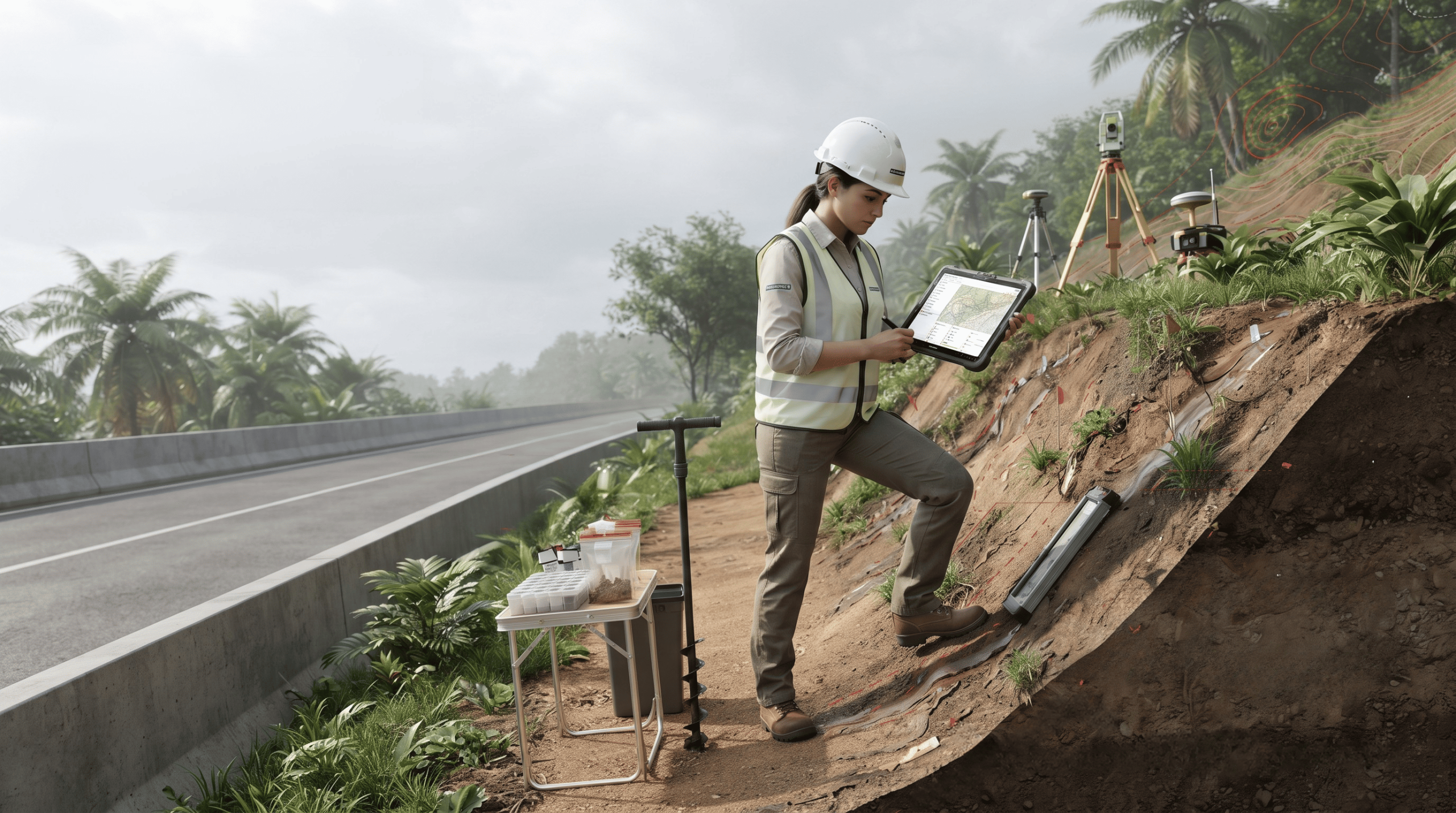
Every slope presents a unique combination of environmental and geotechnical conditions. As a result, erosion control solutions should be tailored to the specific characteristics of each site rather than relying on a standard approach. Factors such as:
- Slope angle
- Soil type
- Rainfall intensity
- Drainage conditions
- Site hydrology
- Design service life
should all be evaluated before selecting an erosion control system. This engineering-based approach is what distinguishes long-term performance from temporary repairs that simply address the visible symptoms.
Why Is Green Engineering Becoming the Preferred Approach?
One of the key insights previously discussed in our webinar was that green engineering is about much more than using vegetation or environmentally friendly materials. Instead, it combines engineering principles with natural processes so that each complements the other, resulting in more resilient and sustainable slope protection systems.
For example, vegetation does more than improve the appearance of a slope. It also helps to:
- Reduce runoff velocity
- Increase water infiltration
- Protect the soil surface from erosion
- Reinforce the shallow soil layer through root systems
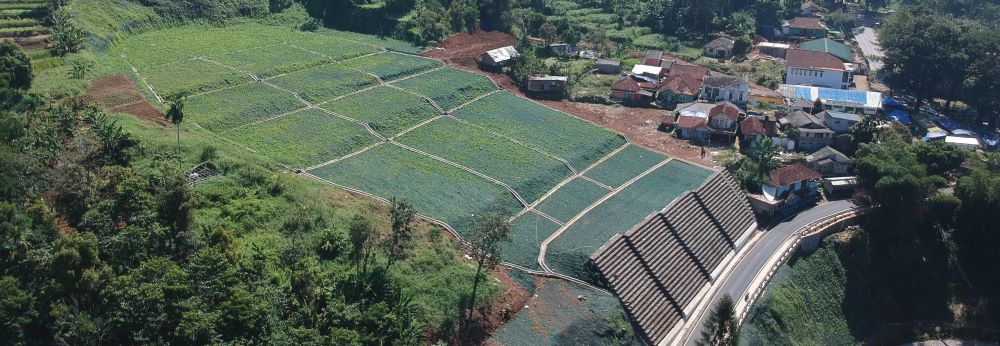
When combined with appropriately designed geosynthetic systems or erosion control mats, these solutions provide immediate protection after installation while creating the conditions necessary for long-term vegetation establishment.
Building More Resilient Slopes
The success of an erosion control system should not be measured solely by whether a slope remains intact after the next rainy season. More importantly, it should be evaluated by its ability to maintain performance throughout the infrastructure’s design life.
The webinar emphasized that effective erosion control requires the integration of hydrological analysis, geotechnical engineering, drainage design, surface protection, and the selection of solutions that are appropriate for site-specific conditions.
By adopting this holistic engineering approach, slopes can achieve greater long-term stability, require fewer maintenance interventions, and provide more reliable protection for road infrastructure over their entire service life.
Request technical consultation
Get in touch with Maccaferri Indonesia and explore how we can work together.