04 March 2026
Understanding Rockfall Protection: A Must-Have Strategy for Indonesia’s Infrastructure
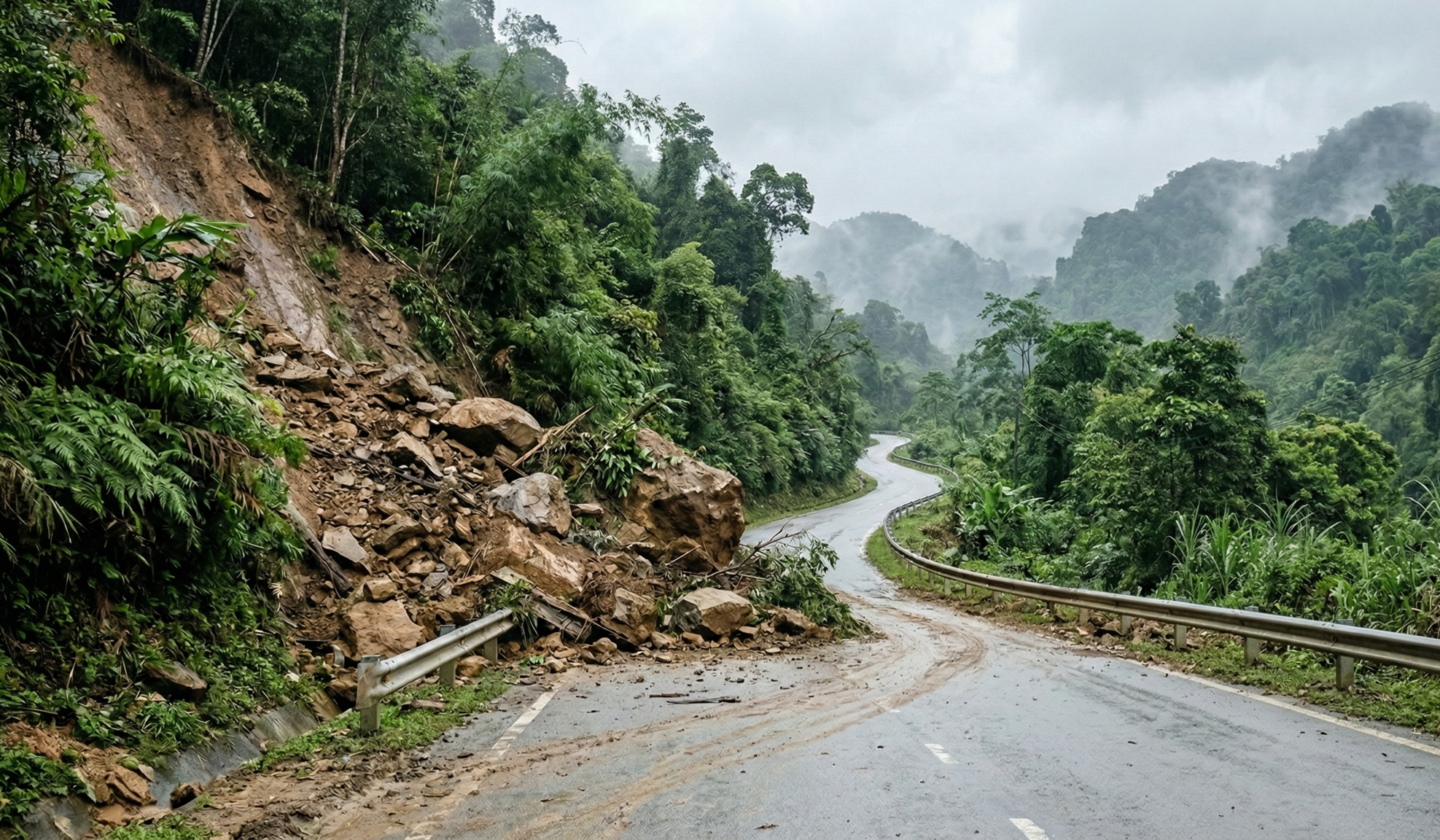
Indonesia is one of the most geologically complex countries in the world. More than 40% of national and provincial road networks traverse hilly and mountainous terrain, often combined with high rainfall intensity and active seismic zones. According to data from Badan Nasional Penanggulangan Bencana, landslides and rock-related slope failures consistently rank among the most frequent natural hazards recorded each year across the country, particularly in Java, Sumatra, and Sulawesi. In many infrastructure corridors, disruptions are not caused by massive slope collapses, but by recurring small- to medium-scale rockfall events that are difficult to predict yet have immediate consequences for safety, traffic continuity, and maintenance costs. So when a single falling boulder can shut down a critical road or rail link, is your project truly designed to manage that risk?
What Rockfall Protection Really Means for Engineering Projects
When we talk about rockfall, we mean the detachment and rapid fall of rocks from a steep slope. It’s different from deeper landslides or mudflows. It’s fast, driven by gravity, and often unpredictable once a boulder detaches.
In geotechnical design, mitigation falls into two broad approaches:
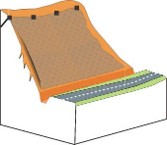
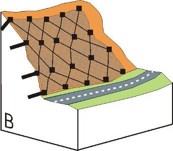
- Active protection focuses on stabilizing the slope itself. Methods like rock bolting, surface drapery mesh, or soil nailing reduce the likelihood of detachment by reinforcing the rock mass or guiding falling debris safely downslope.
- Passive protection doesn’t try to stop the rock from detaching but instead, it intercepts and absorbs impact energy before that rock reaches critical infrastructure. This is where rockfall barriers, embankments, and debris flow barriers come in. They are often essential in areas where slopes cannot be stabilized due to topography or access constraints.
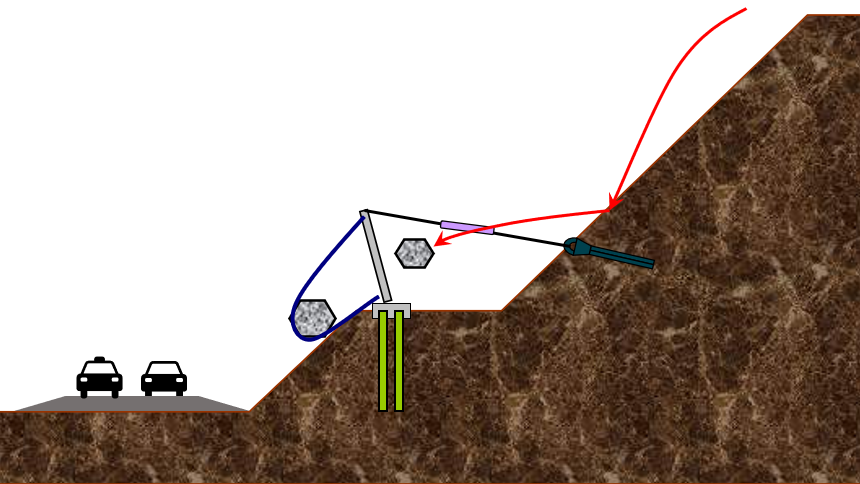
For an engineer, choosing the right solution starts with understanding potential energy levels of falling rocks, slope geometry, and what’s being protected like a highway, a rail tunnel, or a mine access road.
The Maccaferri Approach: Solutions That Fit Real Demands
At its heart, what sets Maccaferri apart is the breadth and adaptability of its rockfall protection systems that are designed with the realities of both Indonesian terrain and global engineering standards in mind.
1. Dynamic Rockfall Barriers — Catch Before Impact
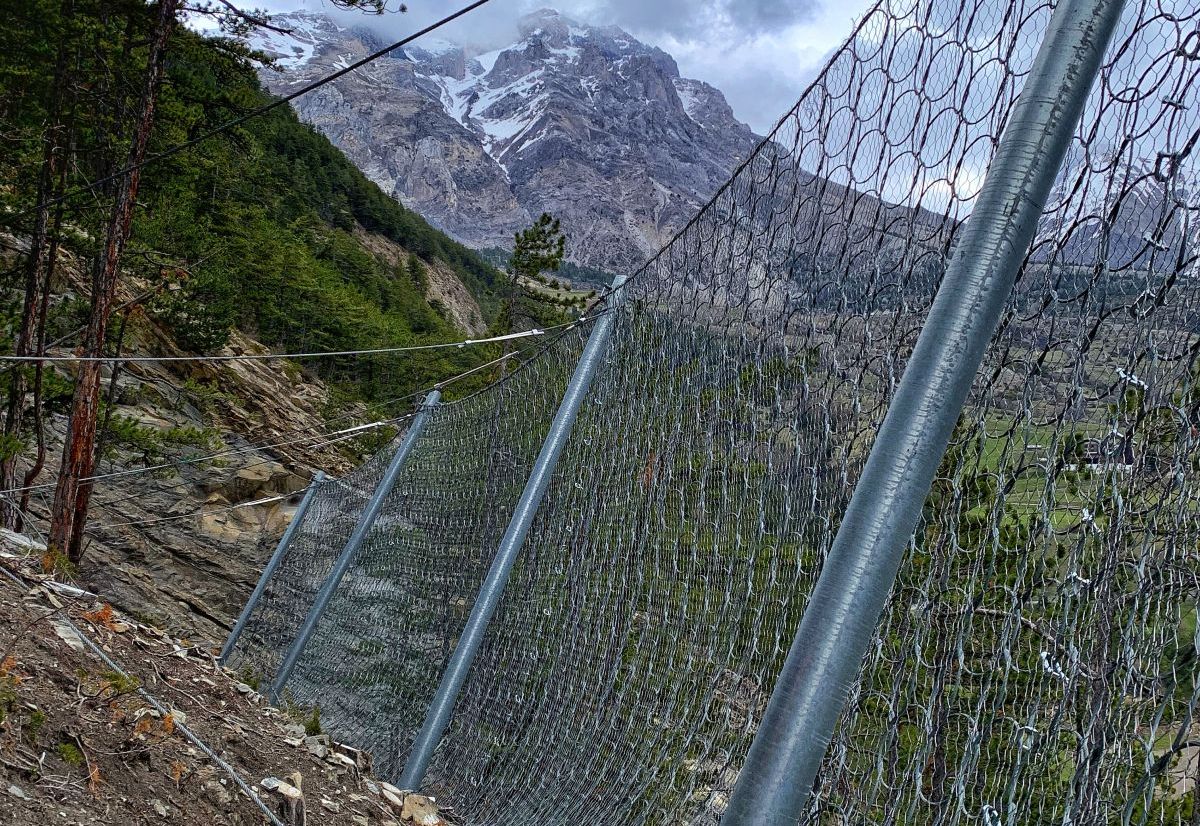
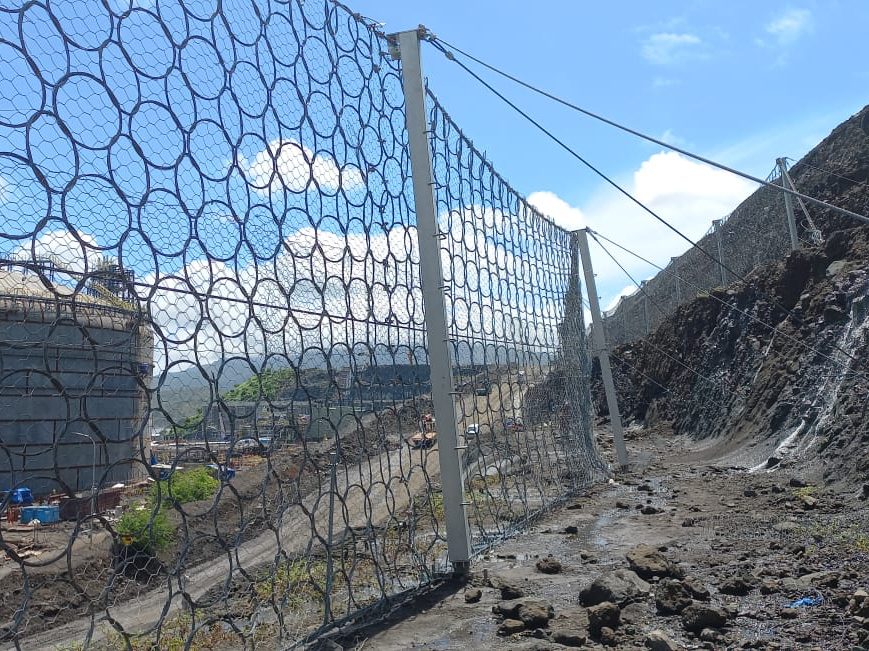
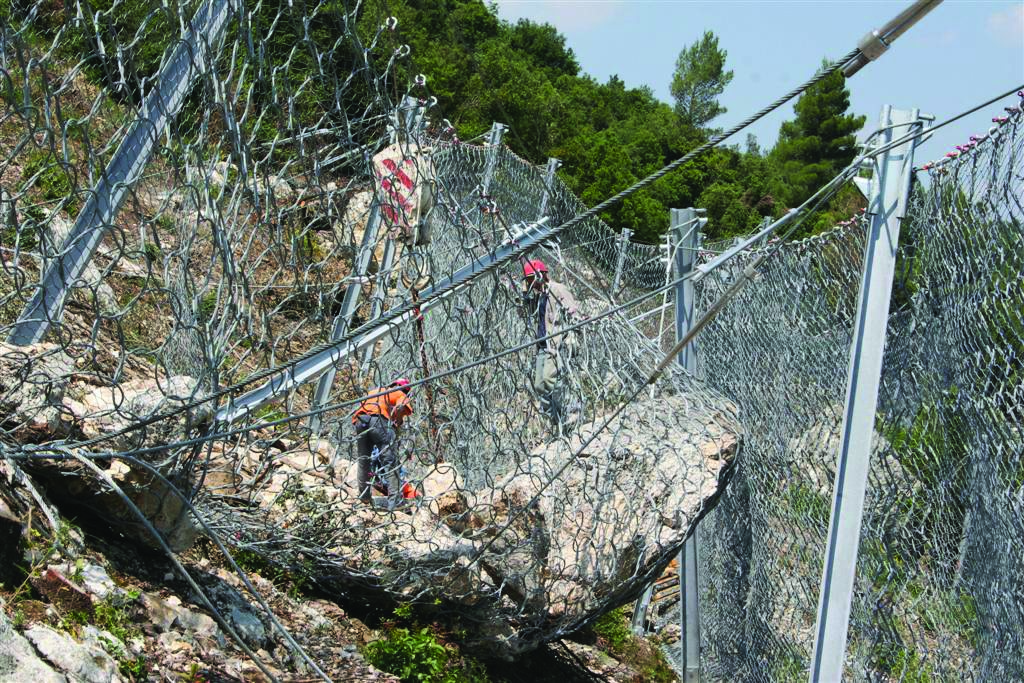
The classic choice for passive protection is a rockfall barrier: a system of posts, nets, and energy dissipation devices engineered to stop or slow falling rock masses. These systems cover a spectrum of needs from low energy scenarios near urban developments to high-energy impacts on mountain highways and mines. They’re supplied as complete kits in certified configurations (according to EAD standards), with posts, mesh, energy absorbers, anchorage, and accessories tailored to site conditions.
A real example from our portfolio is the Rockfall Barrier System installed for Amman Mineral, West Nusa Tenggara, designed to withstand forecasted rockfall energy on a key regional corridor.
2. Surface Drapery & Stabilisation Mesh — Guiding What Falls
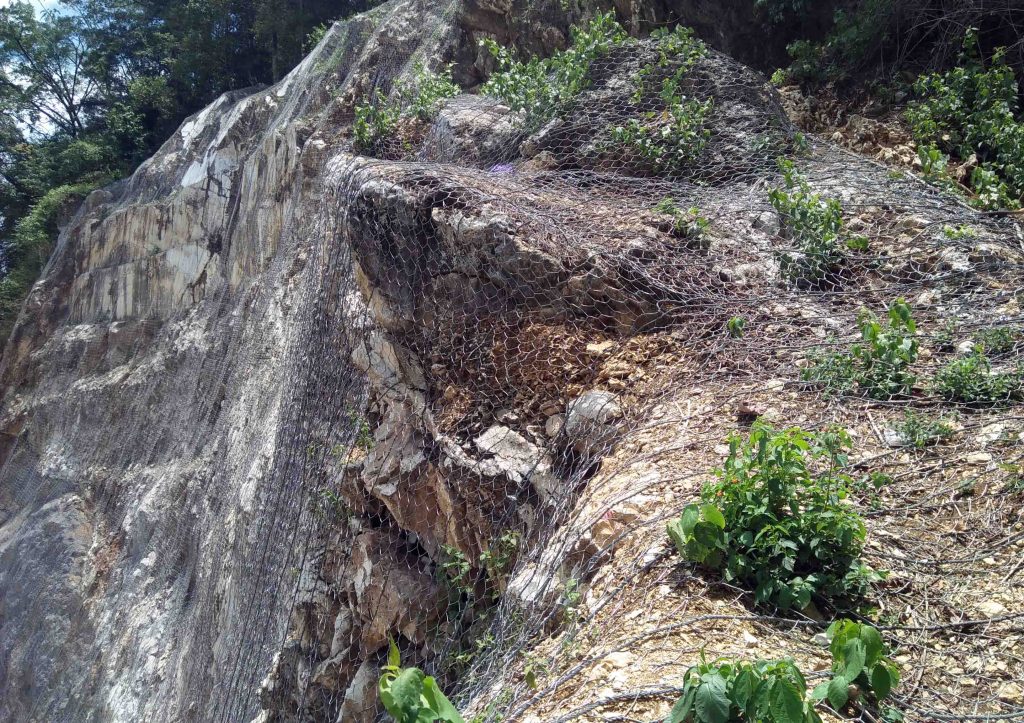
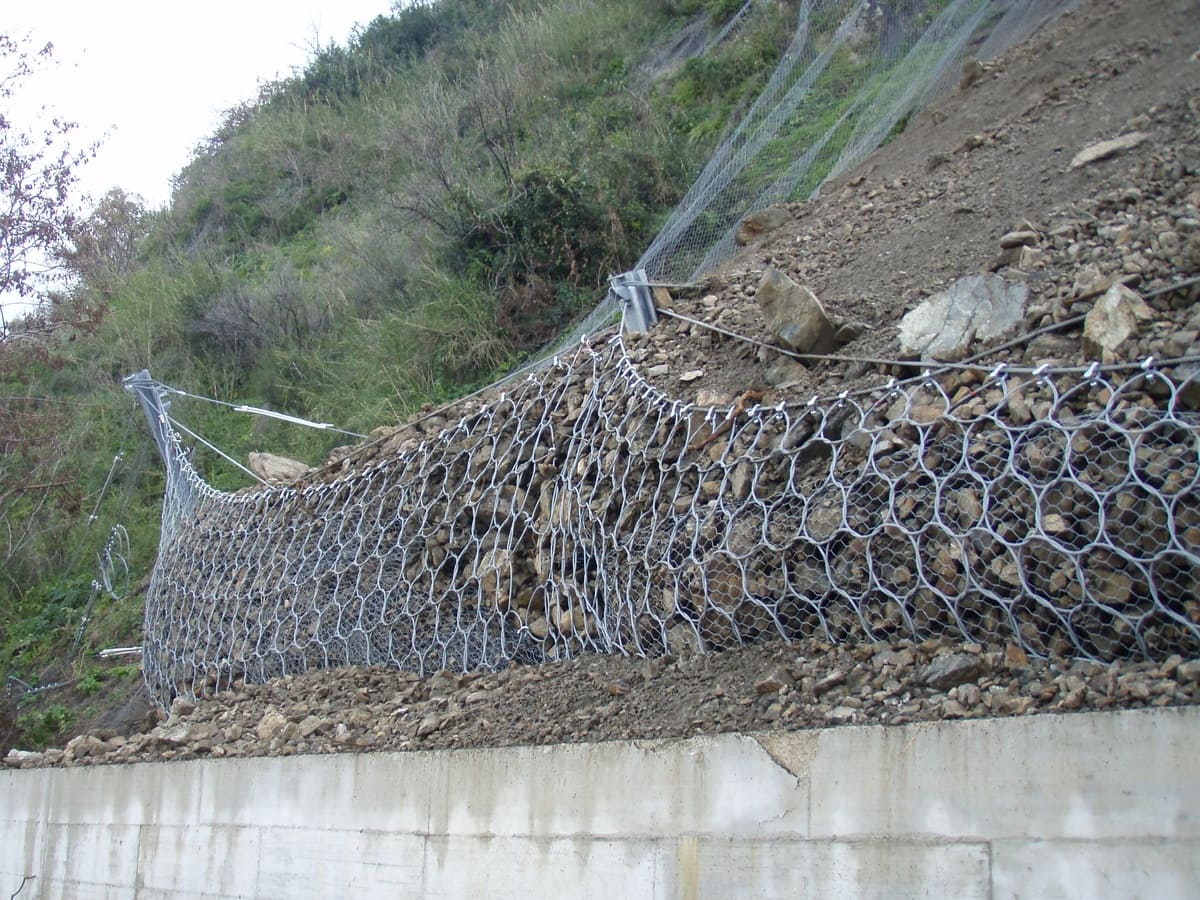
When full slope stabilization isn’t practical, drapery mesh systems take a geared-to-terrain approach: they allow rocks to detach safely, guiding them down in controlled paths that avoid populated areas or infrastructure.
Drapery solutions are especially useful in steep cut slopes where vegetation and water flow must continue without disrupting the slope’s natural behaviour.
A real example from our portfolio is the Rockfall Drapery System installed in Maros, South Sulawesi, designed to guide falling debris safely downslope.
3. Rockfall Embankments — Massive Passive Shields
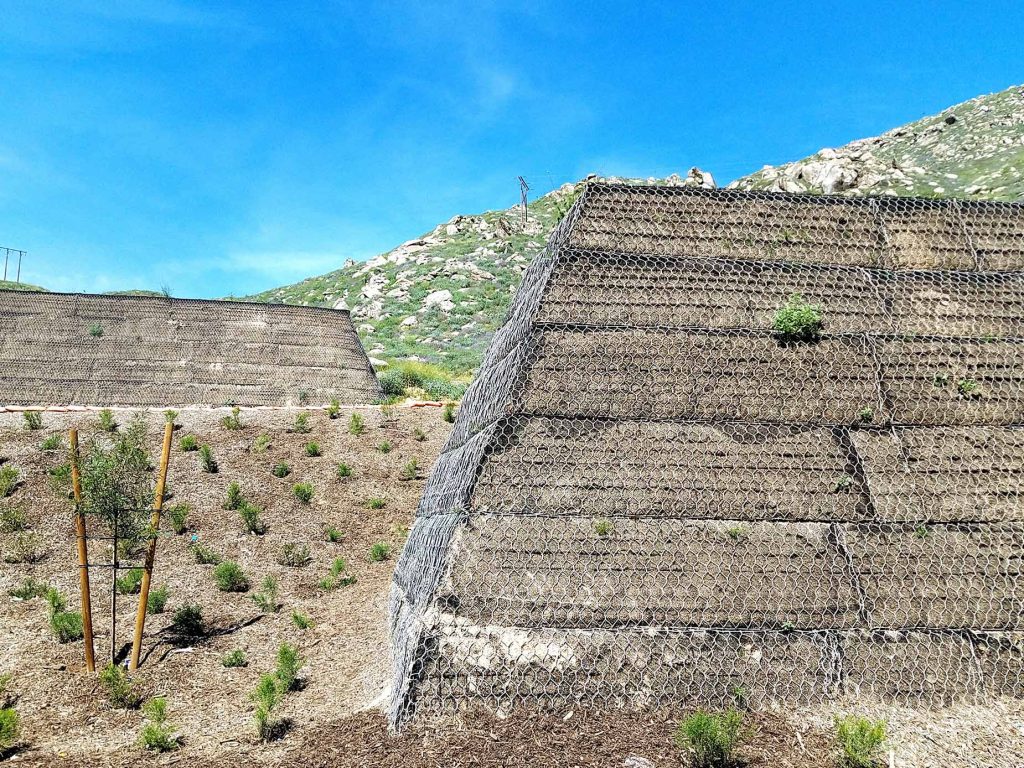
Where barrier systems alone aren’t enough, rockfall embankments serve as broad passive barriers. Built from reinforced soil and scalable up to extreme energy absorption levels (tens of thousands of kJ), they provide passive protection over wide swaths which are ideal for sites with space to work and heavy risk scenarios.
4. Complementary Tools — From Modelling to Monitoring
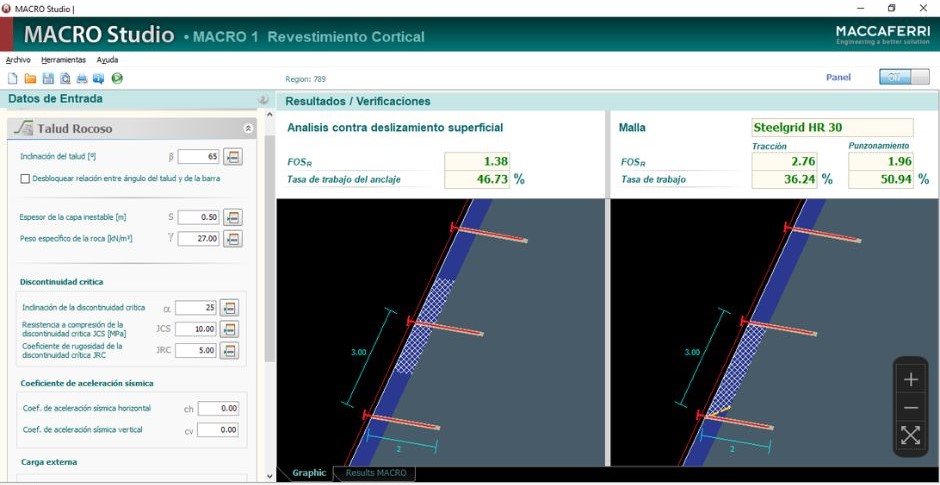
Formulating a rockfall strategy today is more than selecting hardware. Maccaferri’s design tools, like Mac S-Design and MacRo, help engineers model rock trajectories and define design energy levels early in project planning. Integrating monitoring systems like HELLOMAC, an early detection sensor, rounds out a robust approach to risk.
Why Rockfall Protection Is Critical and Why This Matters
In Indonesia, infrastructure corridors often run through steep terrain where repeated rockfall can occur due to rainfall, weathering, and seismic activity. Even small rockfall events can force temporary closures, disrupt logistics, and trigger unplanned maintenance, all of which translate directly into lost time and escalating costs. More importantly, unmanaged rockfall exposure increases safety and liability risks. Investing in a well-designed rockfall protection system is therefore not only about compliance, but about protecting asset value, operational continuity, and long-term performance of the project.
A Proven Partner for Rockfall Mitigation
Working with Maccaferri Indonesia means partnering with a team that understands both the technical and practical sides of rockfall mitigation. Our approach is built around:
- Rockfall protection systems that are fully tested and certified to international standards
- Solutions developed through our technical support to suit Indonesian terrain, climate, and construction realities
- A complete range of active and passive mitigation options
- Long-term performance, safety, and asset protection as core design objectives
To learn more about our rockfall solutions and applications, download our brochure ⬇️
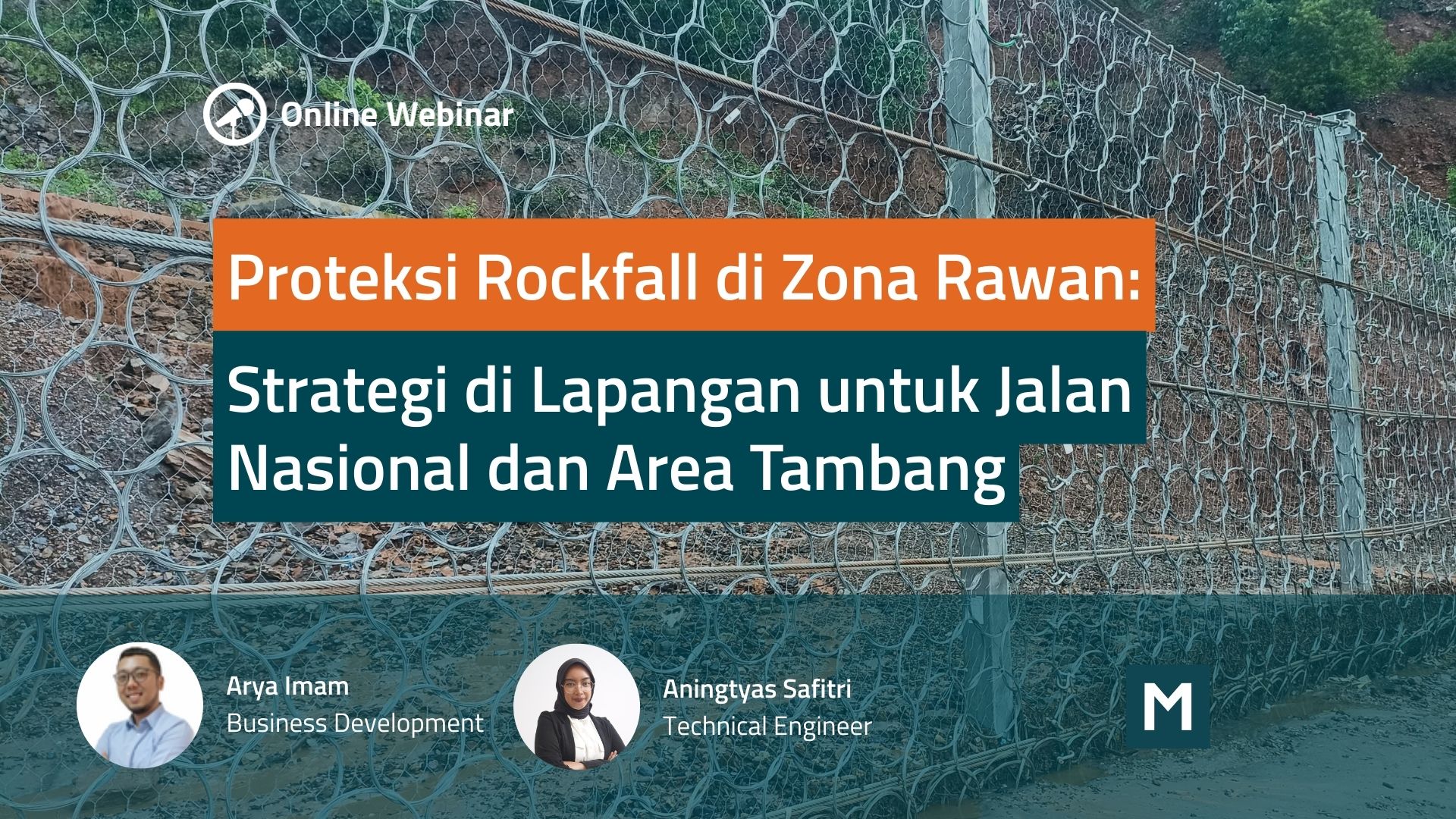
Don’t miss out on our webinar!
Learn how geotechnical solutions can make rockfall protection more effective and sustainable. Register for the webinar now and join the discussion directly with our experts.