24 March 2026
Retaining Wall for Surplus Fill
Gabion wall solution delivers efficient containment, drainage, and sustainability under strict CEDD requirements
Project Overview
Under Contract CV/2021/09, the handling of public surplus fill in Hong Kong is carried out in strict compliance with the Civil Engineering and Development Department (CEDD) requirements.
Public fill in Hong Kong consists of inert construction and demolition (C&D) materials such as soil, rock, sand, and broken concrete. These materials are suitable for reuse in reclamation and site formation works and must be managed separately from non-inert waste destined for landfills.
The Challenge
In this project, surplus fill needed to be contained within a limited footprint, requiring an efficient and reliable retaining solution. The variability and less-controlled nature of public fill materials added further complexity, demanding a system capable of accommodating differential settlement while maintaining structural integrity.
The Solution
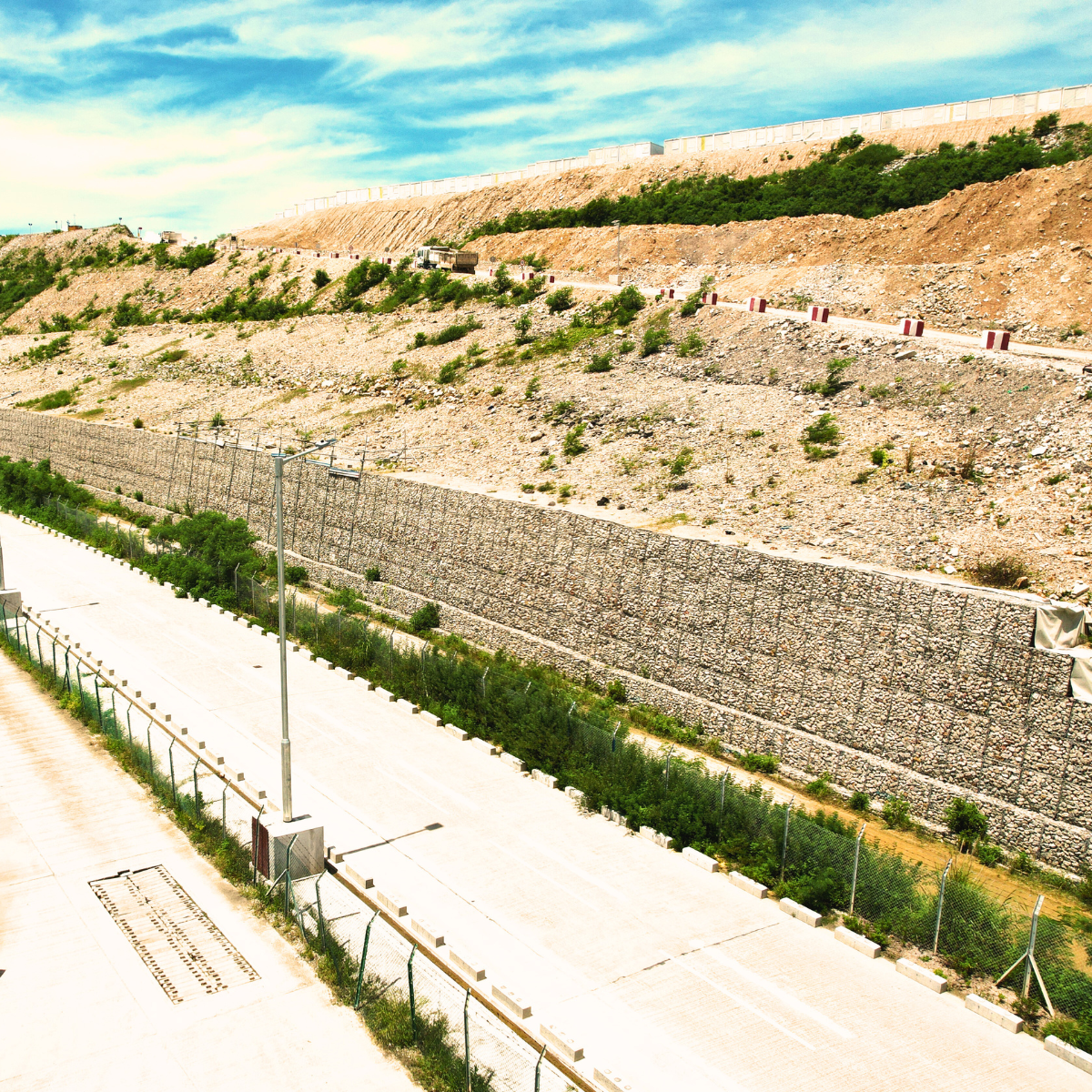
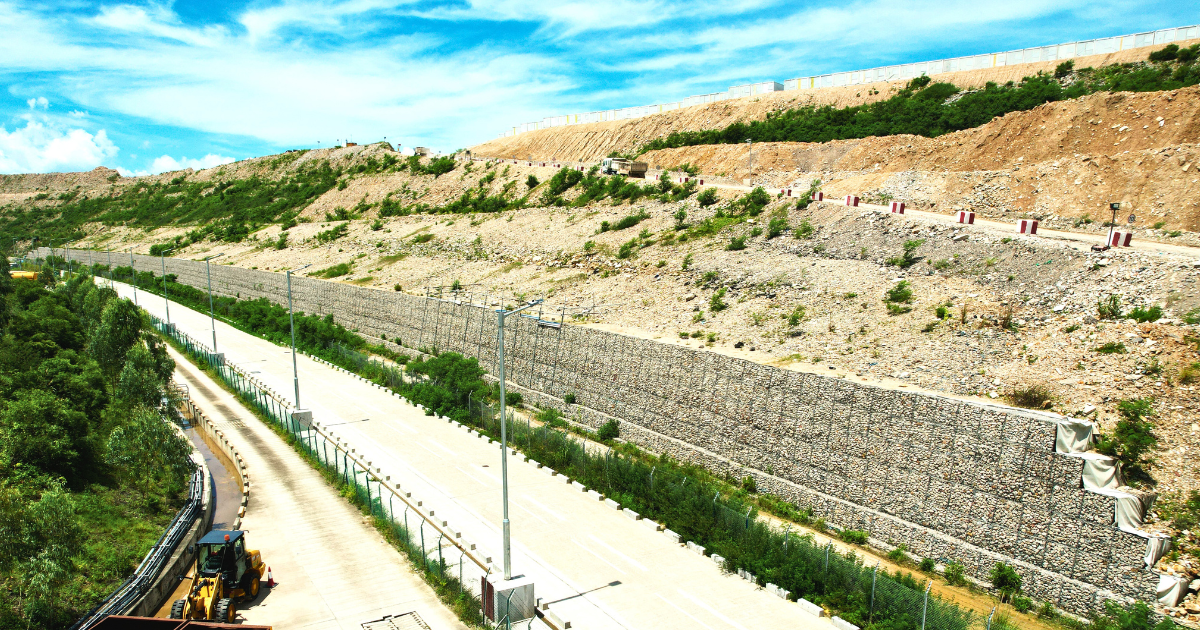
A gabion retaining wall was selected as a more suitable alternative to a conventional reinforced concrete (RCC) wall, offering both technical and practical advantages.
The flexible nature of gabion structures allows them to adapt to heterogeneous fill materials and tolerate differential settlement without cracking—unlike rigid RCC systems. Their inherent permeability enables free drainage, preventing hydrostatic pressure build-up and eliminating the need for complex drainage systems.
From a construction standpoint, gabion walls enable faster installation, require less skilled labor, and can incorporate locally available materials, resulting in significant cost efficiencies.
In addition, gabions provide environmental benefits through a lower carbon footprint, improved visual integration, and the potential for vegetation growth—making them a sustainable solution for both temporary and permanent retention of surplus fill.