

06 May 2026
Introducing MacCycle Assessment: Quantify Your Environmental Impact
May 2026 - Maccaferri launches a free, web-based Life Cycle Assessment tool that gives engineers instant, science-backed GWP comparisons between traditional concrete structures and Maccaferri solutions — directly on the eDesign platform.

A New Era of Data-Driven Sustainable Design
As environmental regulations tighten across Europe and beyond, the infrastructure industry faces mounting pressure to demonstrate measurable sustainability outcomes. Life Cycle Assessment (LCA) is no longer a nice-to-have — it is rapidly becoming a legal and commercial requirement under frameworks such as the EU Construction Products Regulation (CPR 2024/3110) and Italy’s CAM Strade criteria for road infrastructure, updated in September 2025.
To meet this challenge head-on, Maccaferri is proud to announce the launch of MacCycle Assessment, a dedicated LCA calculation tool integrated into the company’s free eDesign software platform. Accessible at any time at edesign.maccaferri.com, it enables engineers and designers to run rigorous environmental comparisons from the earliest stages of project development.
What Does MacCycle Assessment Do?
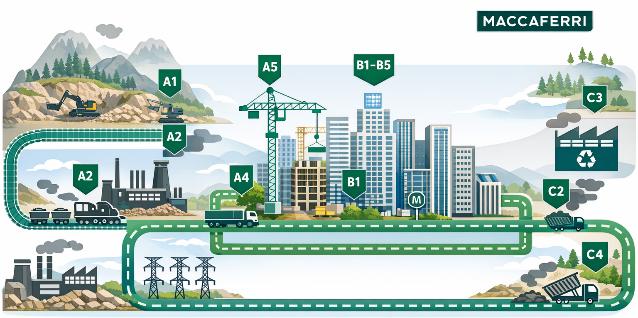
MacCycle Assessment performs full cradle-to-grave LCA calculations — covering life cycle modules A1 through C4 — in accordance with ISO 14040, ISO 14044 and EN 17472. The software uses the Global Warming Potential (GWP) indicator to quantify greenhouse gas emissions, expressed in kg CO₂ equivalent, providing a single, transparent metric that is universally understood by engineers, clients, and regulators alike.
The tool supports two calculation modes. The Parametric mode requires only a handful of project inputs — site location, production facility, transport distances, and wall or bank geometry — and automatically sizes the structure, then outputs the total GWP for each life cycle stage. The Custom mode, coming soon, will allow users to input bespoke material quantities for project-specific analyses.
Applications Currently Available
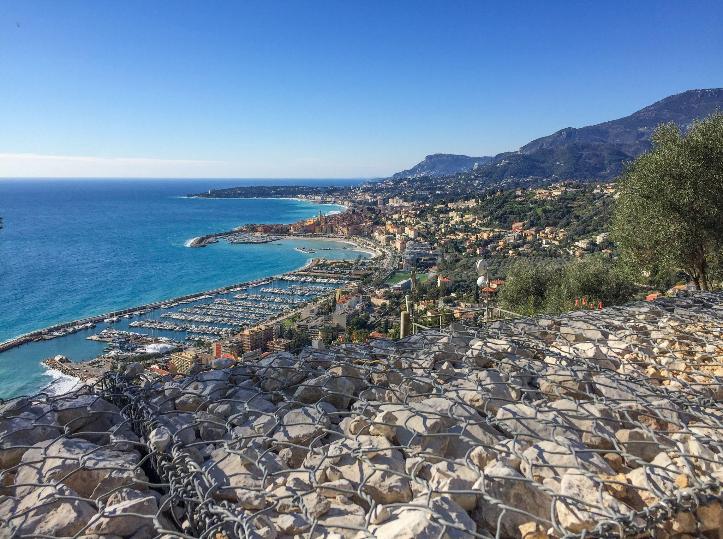
- Retaining Walls — Compares Gabions, TerraMesh System, and concrete cantilever solutions for wall heights up to 10 m, designed to Eurocode 7 / FHWA / AASHTO with a 120-year service life.
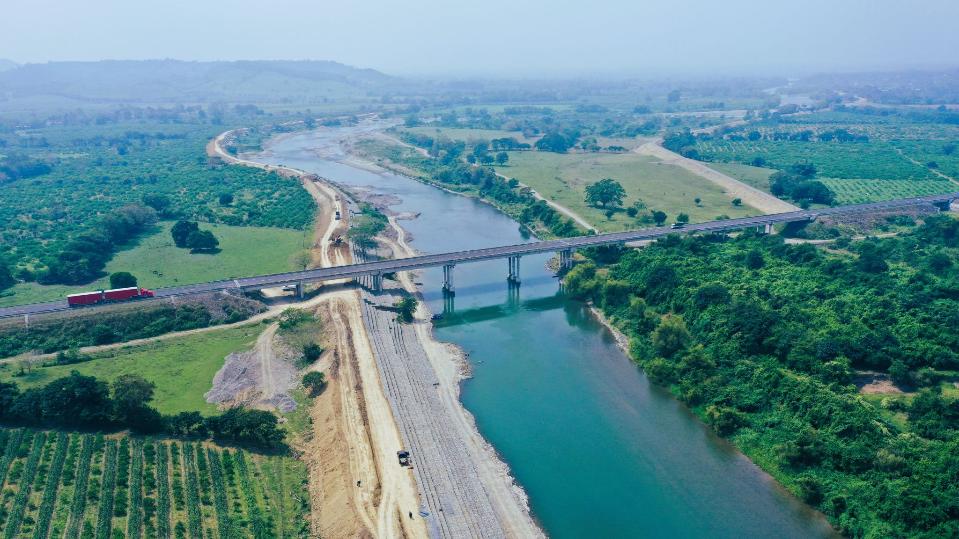
- Riverbank Protection — Compares Reno Mattress Plus against rip-rap and concrete lining, accounting for optimised stone usage, transport, and end-of-life scenarios.
- Culverts & Geosynthetics — Work in progress; coming in a future release.
The Results Speak for Themselves
Early project analyses demonstrate the significant carbon advantage of Maccaferri wire mesh technologies over conventional concrete structures. For retaining walls, Gabion solutions can reduce total GWP by up to 80%, while the TerraMesh System achieves reductions of up to 90% — driven largely by the elimination of cement, which accounts for approximately 91% of concrete’s environmental impact. Transport contributes 13–15% of total emissions for Gabion and TerraMesh scenarios, underlining the importance of local stone sourcing.
For riverbank protection, Reno Mattress Plus reduces total emissions by up to 87% compared to concrete lining and up to 40% compared to conventional rip-rap. When vegetated solutions are adopted with locally sourced stone, carbon sequestration can reduce net emissions even further — with modelled scenarios showing up to 94% reduction in total emissions for Reno Mattress Plus.
Beyond GWP, Maccaferri solutions offer additional sustainability advantages: zero end-of-life disposal impact, potential for recycled content, compatibility with green and vegetated facing options, and a design service life of 120 years requiring zero scheduled maintenance.

Aligned with Global Standards and Regulations
MacCycle Assessment’s methodology is grounded in the leading international and European standards for LCA in construction. Calculations are based on certified Environmental Product Declarations (EPDs) and recognised LCA databases, ensuring results are auditable and suitable for use in public procurement processes, tender submissions, and sustainability reporting.
The tool is particularly relevant for projects operating under the EU’s new CPR 2024/3110, which mandates LCA-based data for civil engineering structures, as well as national green public procurement frameworks active in France, Italy, Sweden, the Netherlands, Denmark, Poland, Brazil, and South Africa.
