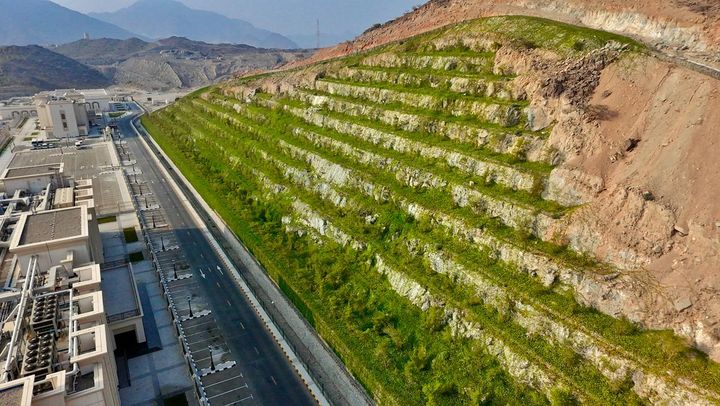
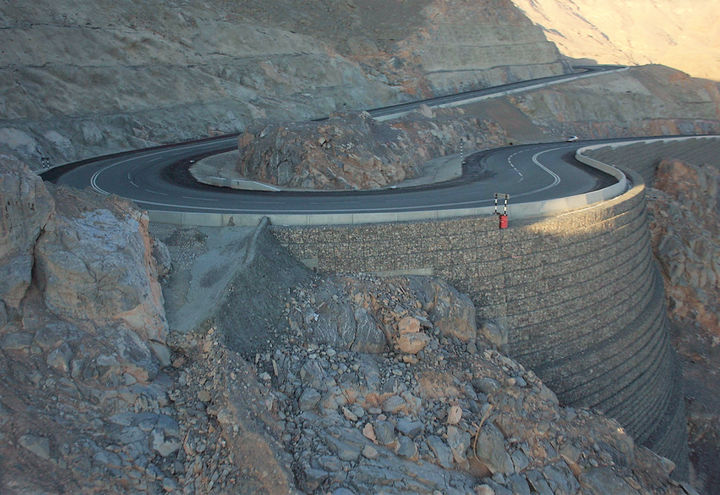

Biaxial Geogrids
Soil reinforcement for road stabilization
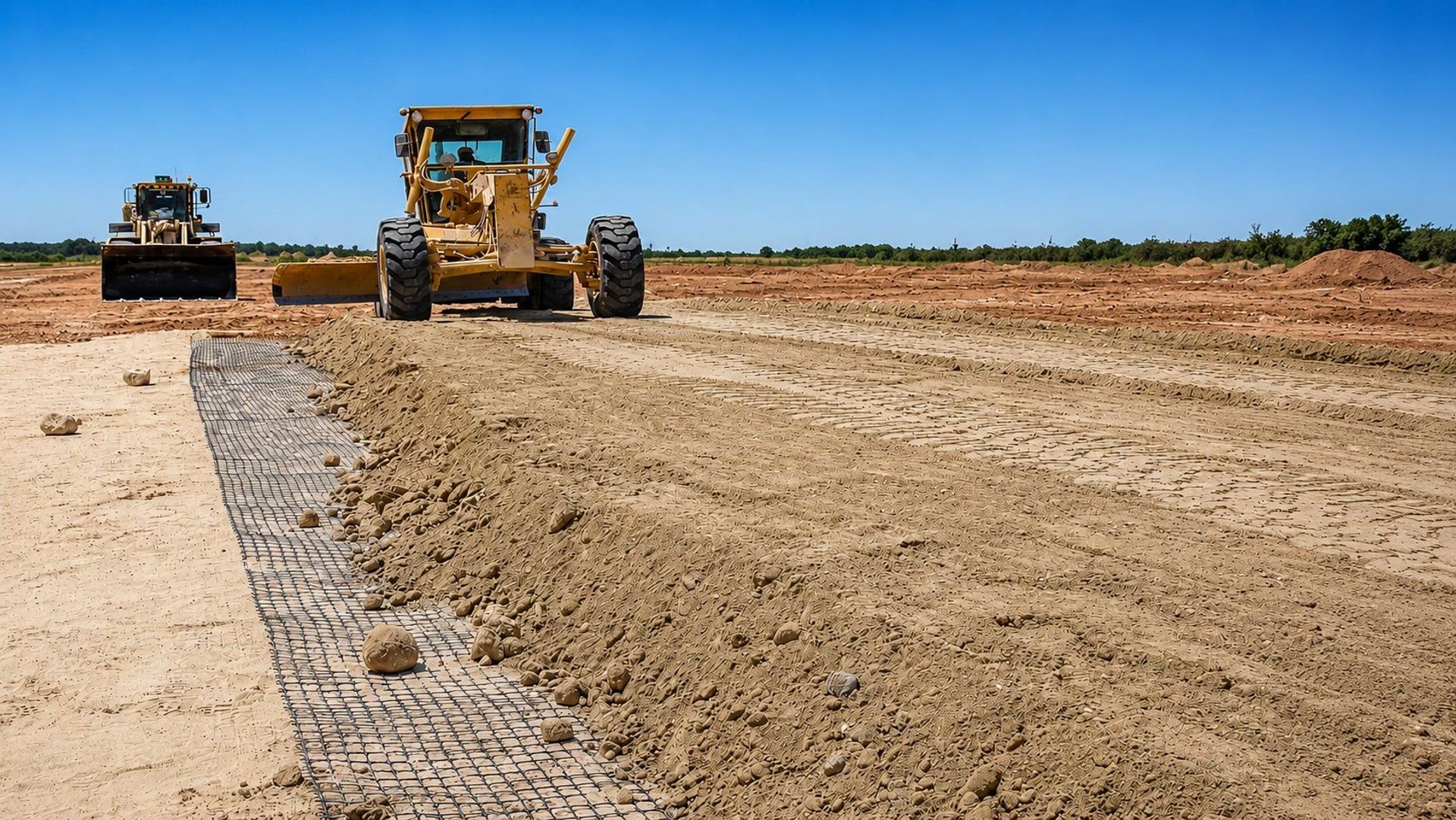
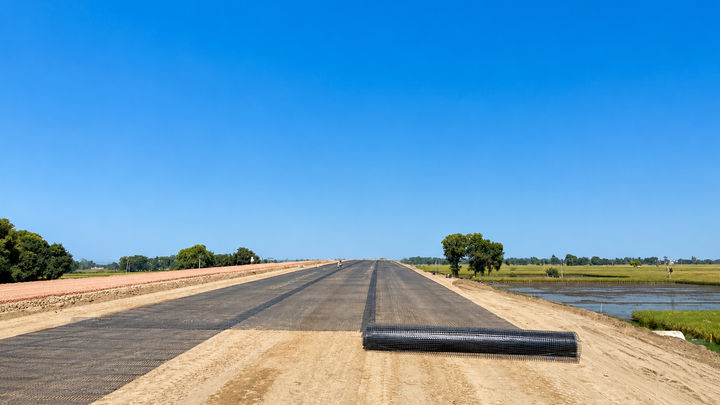
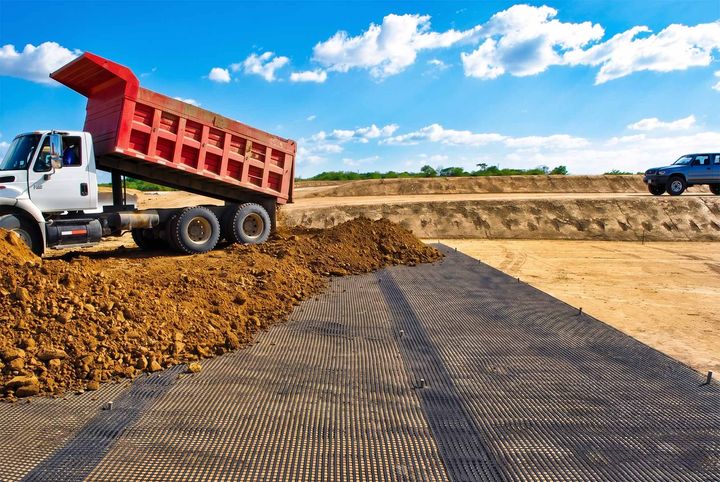
Biaxial geogrids are used mostly for reinforcement purposes in soil stabilization applications their symmetric-multiaxial structure can increase the bearing capacity of the existing subsoil providing the necessary strength and confinement effect. The tensile strength and the geometry of these geogrids are normally symmetric with tensile strengths from 20 to 300 (or even more) kN/m but three or more axis versions are available; also the polymer and the opening shapes can vary according to the tensile requirements and the fill properties.
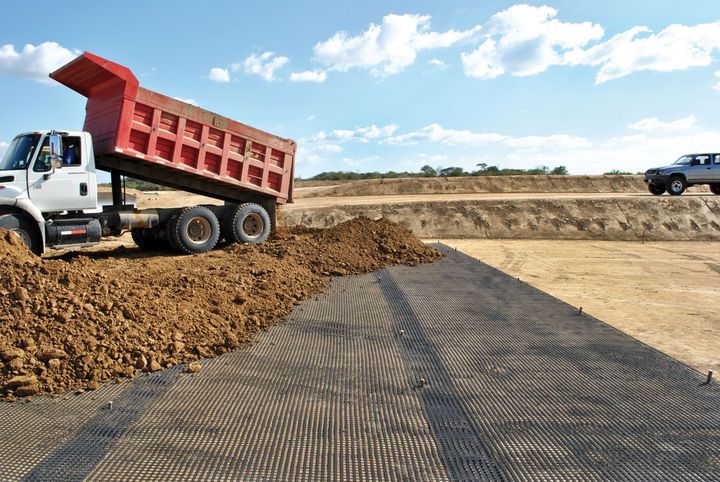
Maccaferri’s range includes different families of products:
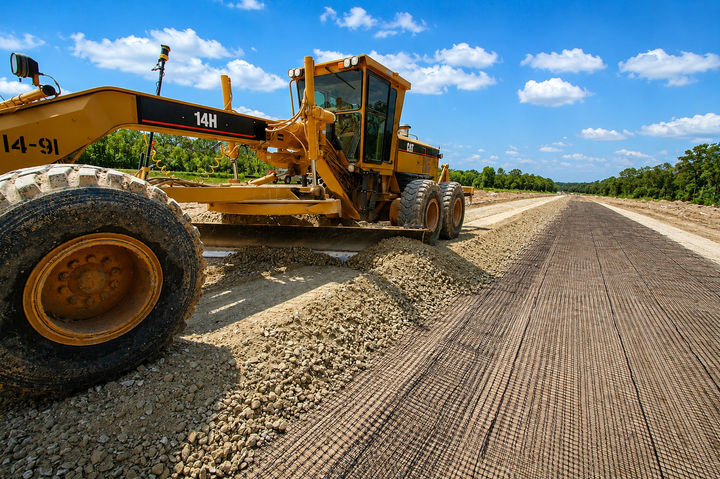
MacGrid EG
Extruded polypropylene geogrids with a symmetric tensile strength of up to 50 kN/m; successfully used in single or multiple layers for many decades in soil stabilization applications is an essential component of many combo-solving solutions.
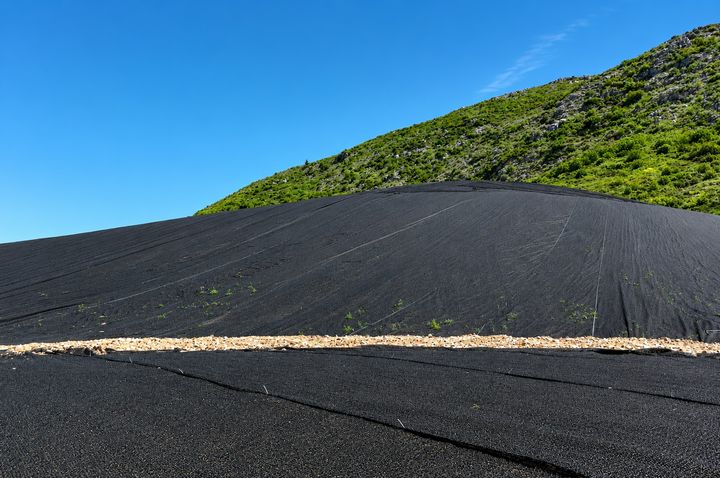
MacGrid EG-T
Again an extruded polypropylene geogrid but characterized by a triangular shape to have a multi-axial behaviour. These materials are used – as the MG EG – in the same type of applications and are supposed to be an evolution of the biaxial ones.
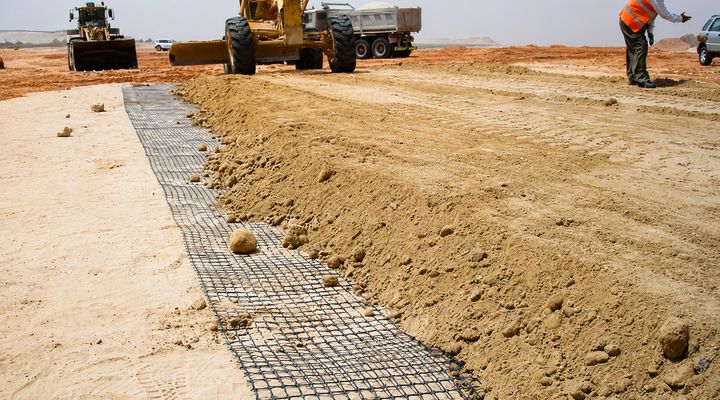
MacGrid WG-S
High tenacity PET knitted-weaved coated geogrids are also available and used in these types of applications especially when the tensile strength requested exceeds the capacity offered by the extruded ranges; these products are available up to standard symmetric strength of 300kN/m but – on demand – can be proposed up to 1000 kN/m.
Success Stories
Built, not just drawn
Discover more
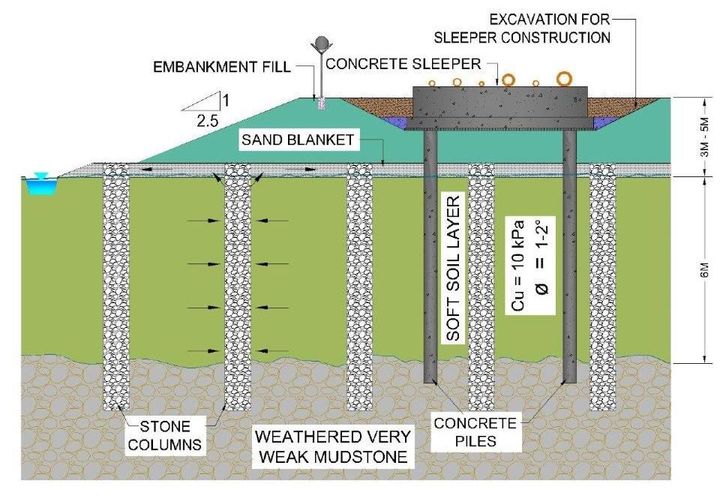
CONSTRUCTION OF THE DUQM REFINERY SERVICE CORRIDOR TO THE LIQUID J
Oman
SEZAD plans to build a service corridor in the industrial zone of Duqm, Oman. The project aims to link Duqm refinery with a liquid jetty by allowing the Refinery to lay its pipes and connecting it to the Port. The project was awarded to Qurum Business Group LLC under the scope of Engineering, Procurement & Construction. The last 3 km stretch of the project lies close and parallel to the Duqm Road Nos. 1 and 5 project. This location is characterized by the significant presence of ‘soft clay/sabkha’ soil, which influences the construction of foundations of the proposed service corridor that consists of concrete sleepers supporting pipelines, service roads, etc. The FEED design requires the EPC contractor to replace the entire Sabkha soil with engineered fill if the depth of Sabkha is less than 4 m. For locations where Sabkha depth is more than 4 m, ground improvement techniques like stone columns shall be adopted. Nonetheless, the potential cost of doing stone columns is very high, and this prompted the EPC contractor to look for alternate viable options.
Discover more
EMAL's GATE ACCESS AND PARKING
United Arab Emirates
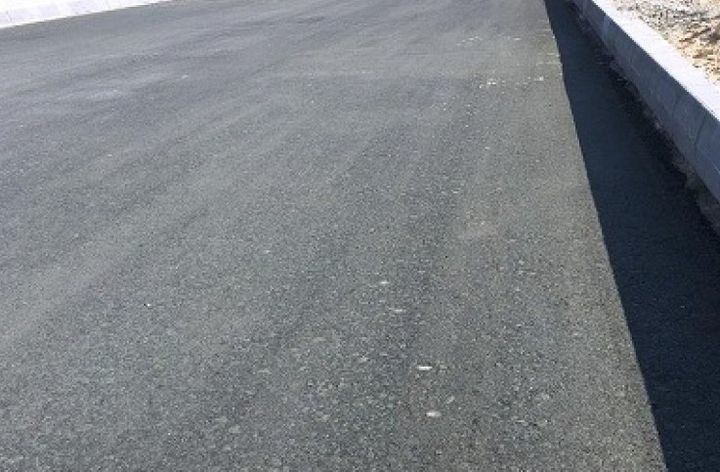
The proposed project “Gate Access & Parking for Emirates Aluminium (EMAL)” consisted of design and construction of road pavement and parking facilities, wherein the existing subgrade was weak in nature with very low CBR value such that the Factor of Safety in the original pavement design was lower than the requirement. Intial proposal of ground improvement considered by the ‘client / consultant’ was deep removal of weak soil, backfilling & compaction works in order to improve the subgrade CBR value. Understating that the conventional ground improvement of soil replacement can prolong the project duration considerably since it requires massive earth works, the alternate option of ground stabilization by installation of geogrid in pavement layers was proposed by Maccaferri and was approved by the client after proper verifications and evaluation of its benefits.
Discover more
RABAB HARWEEL INTEGRATED PROJECT - PDO
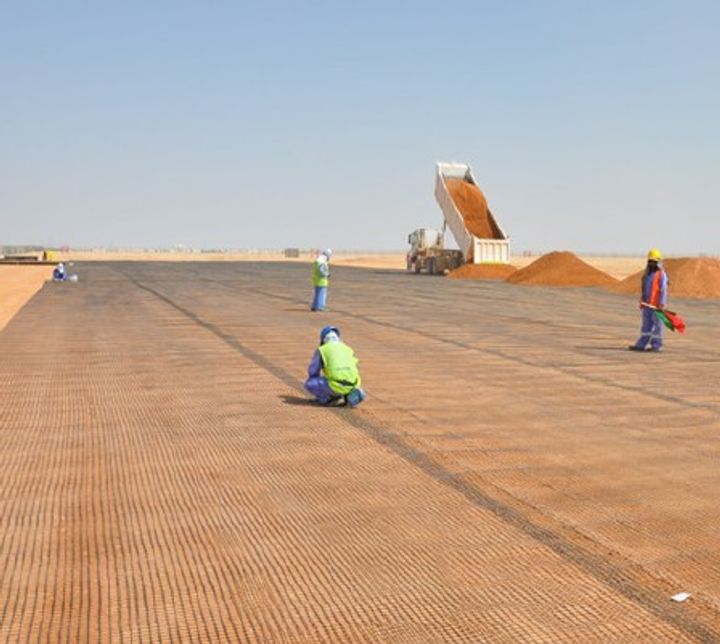
Rabab Harweel Integrated Project (RHIP) is located in the Harweel Cluster of oil fields in the south of the Sultanate of Oman. The present phase of the project involves many heavy machineries & pipelines which were to be constructed in a problematic foundation soil. Several areas (7 locations) within the project site had existing soil with high gypsum content (6% - 12%) which were susceptible for dissolution and in turn can cause un-predictable settlement. Specifically, the foundation soil with a gypsum content >5% is not acceptable as per the project requirements; from bearing capacity and diferential settelement criteria. Realizing that the conventional ground improvements & deep foundations can consume huge cost, time and require tedious construction activities, the alternative option of ‘ground stabilization with geogrid’ proposed by Maccaferri was agreed by the client.
Discover more
Deep dive into
Biaxial Geogrids
What we can do with
Biaxial Geogrids


Get in touch with us
[contactForm_txtSuccessSubmit]