
Netting
Steel wire rockfall protection systems
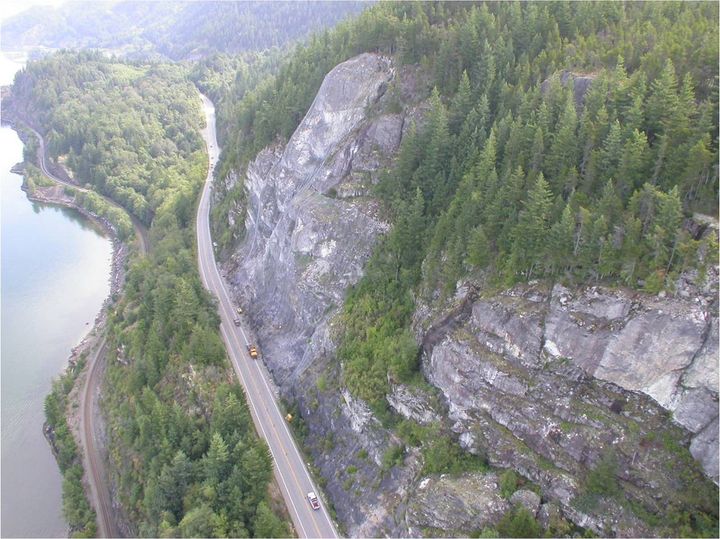
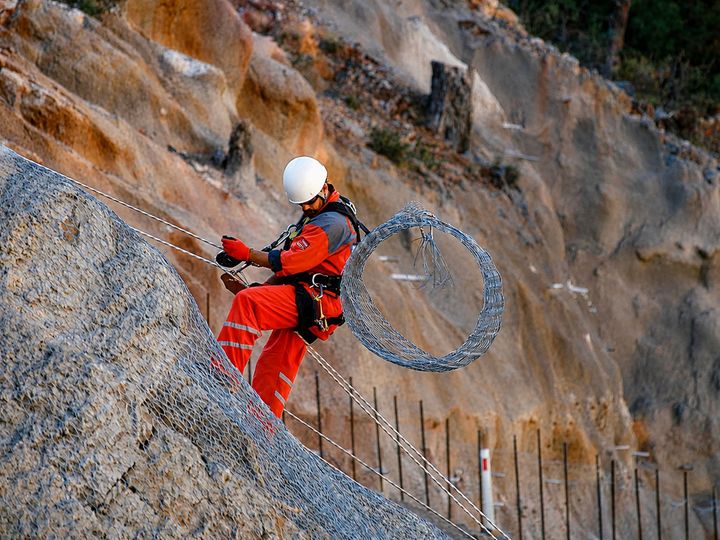
Maccaferri DT Mesh is a core component of our MacRO rockfall mitigation and natural hazard protection application area. It is one out of a range of mesh systems that are selected according to our analysis of the project site conditions and client requirements.
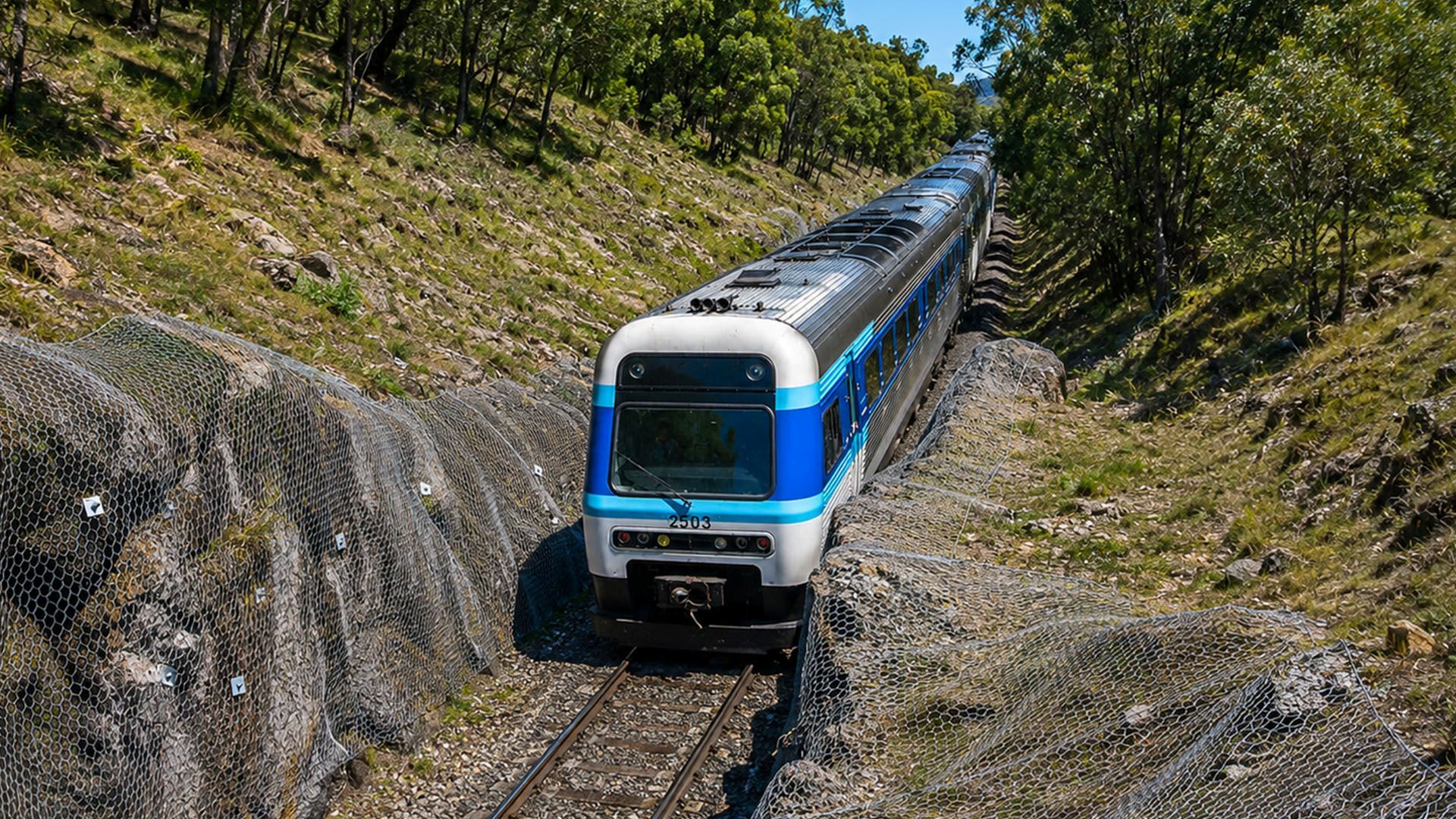
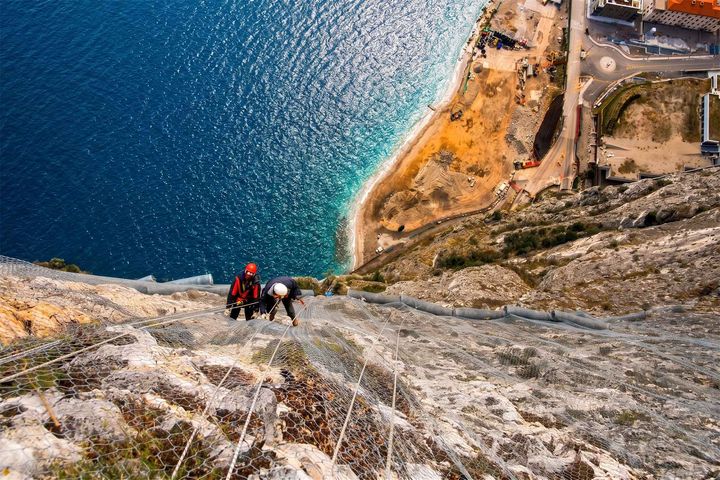
Used for over 50 years, our DT Mesh is engineered from our double twisted hexagonal woven steel wire and is used as a drapery system to prevent rocks and debris from falling onto roads and railways. Due to the characteristics of the double twist, the steel wire mesh can withstand the punching force of falling rocks and without unraveling in the event of wire breakage.
DT Mesh is made from high quality steel wire, which is heavily galvanised to provide long term corrosion protection. An additional protective polymeric coating is also applied for meshes that are to be used in more aggressive environments, or where a longer design life is required.
Our DT mesh is manufactured in our factories around the world. In selected factories, the mesh is produced in compliance with CPR - Construction Product Regulation 305/2011, having EC marking in compliance with ETA-16/0758. The management and production system is certified in compliance with ISO 9001 and ISO 14001 (related to the environmental management system).
Success Stories
Built, not just drawn
Discover more
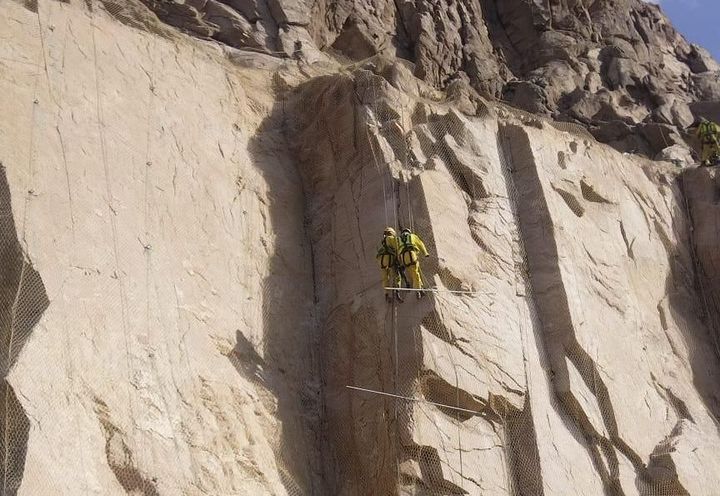
DESIGN AND BUILD OF ROCK STABILIZATION AND WADI INTERCEPTORS
Saudi Arabia
The Red Sea Project, one of the giga-projects announced by the crown prince in 2017, is billed as one of the World’s most ambitious tourism and hospitality projects: An ultra-luxury destination that is being created around one of the world’s hidden natural treasures. The Red Sea Project will set new standards in sustainable development and redefine the world of luxury tourism with objectives to position the Kingdom on the global tourism map. Once completed, visitors will be able to explore the wonders and rich cultural heritage of Saudi Arabia’s untouched Red Sea Coast. This touristic project includes more than 90 unspoiled islands between the cities of Umluj and Al-Wajh. It covers several of the Red Sea’s untouched islands and a nature reserve containing regional flora and fauna. The project location is characterized by the presence of steep rock slopes that become susceptible to instabilities once it is altered from their original form during the expected construction activities required for the project. Therefore, one of the main challenges was to adopt the right solution that would protect the workers and the visitors from the potential geo-hazards that could happen during the construction period and in the future.
Discover more
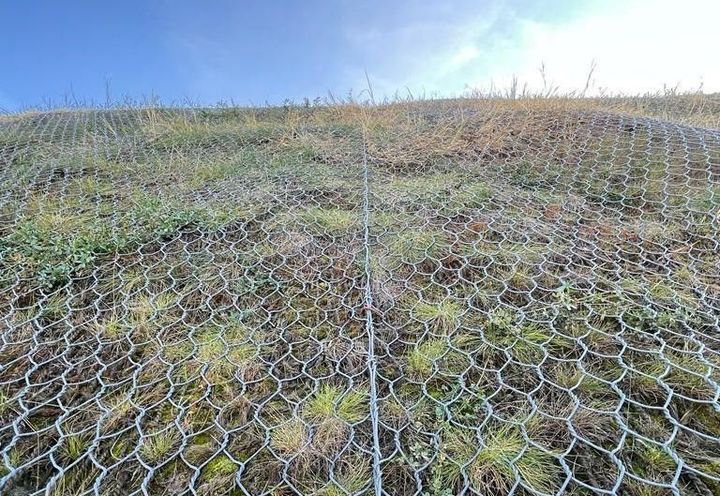
HELMHOLTZ-ZENTRUM BERLIN ADLERSHOF
The University Campus in Berlin-Adlershof is well known for the many research institutions present in its area. One of those is the HZB Helmholtz - Zentrum Berlin, where a prototype of a linear accelerator with energy recovery is placed. In this building, electrons are accelerated to almost the speed of light using a great deal of energy. After passing through a high-speed path, the electrons are to be recaptured in bERLinPro and their energy recovered. Therefore the hall is protected by a reinforced soil structure made with the wrap-around system. In the last times, some foxes started to dig and excavate tunnels inside the embankment, creating some instability problems.
Discover more
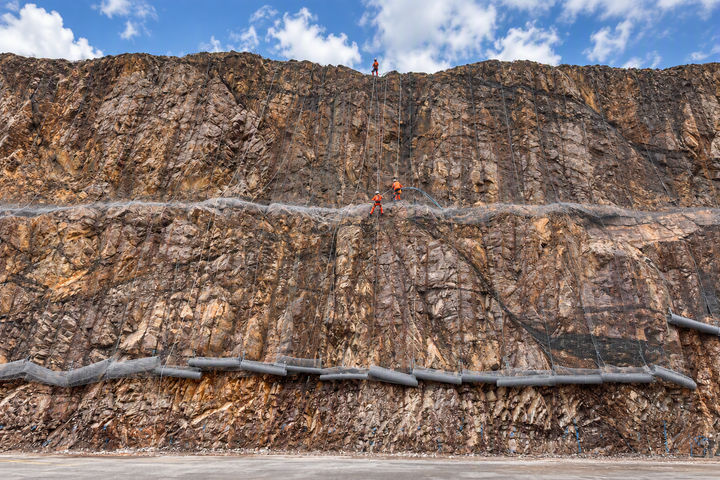
Kishorn Port Dry Dock Expansion
Kishorn Port is located on the west coast of the Scottish Highlands and plays a major role in the construction, maintenance and decommissioning of oil and gas rigs. As the energy sector moves toward a more sustainable future, the port was keen to extend its capabilities regarding the construction of floating foundations and other infrastructure for offshore wind projects. In 2025 the port secured £24m in government funding to expand it’s dry dock to allow it to accommodate deeper water berthing which will increase the port’s capability to berth deeper draft vessels and structures associated with offshore wind development. As part of the extension of the dry dock, significant blasting of the surrounding rock was required which resulted in a new rock face approximately 320m in length and 35m high encircling the new basin. Following a review of the condition of the newly exposed rock consisting of the Applecross Formation, a pebbly sandstone formation, it was determined by the project designers that rockfall protection would need to be installed to mitigate the potential for small rocks of 65mm diameter falling into the working area within the newly extended dry dock. Given the marine environment, rockfall netting with an enhanced corrosion protection was also required in order to meet the project’s 60 year design life.
Discover more
Deep dive into
Netting
What we can do with
Netting
Applications
Solutions
Get in touch with us
[contactForm_txtSuccessSubmit]