
RenoMesh
Burrowing animal barrier for levees
Beavers, badgers and other burrowing animals can sometimes cause fairly large damage on bank slopes, along dykes or in the earth-filled embankments. In isolated cases, such damage caused by these mammals could lead to an increased risk of global slope failures with serious consequences of over flooding for the communities living in the area. Cavities created by beavers can be of high risk for the stability of the dyke.
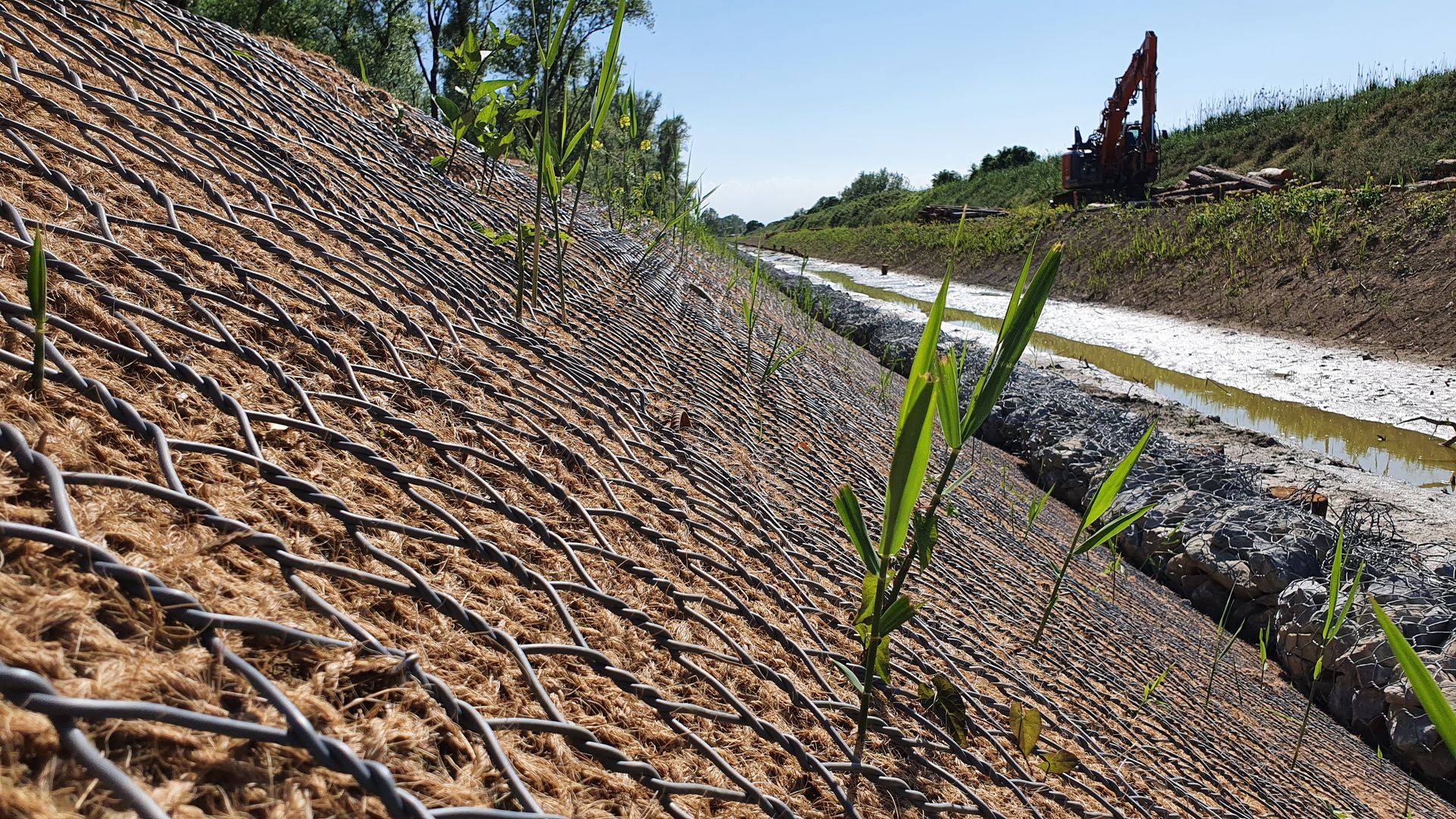
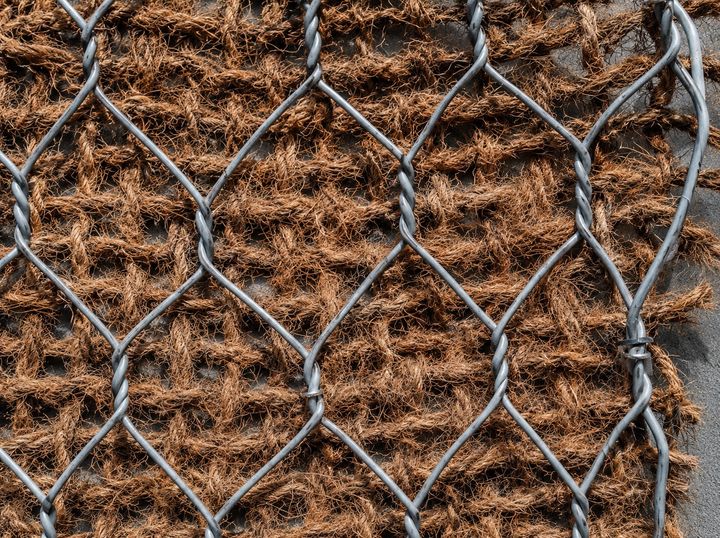
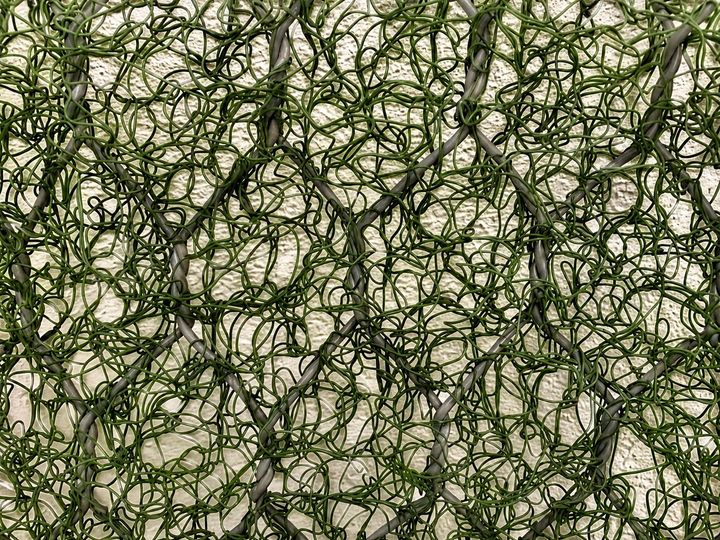
Our RENOMESH, RENOMESH BIO and RENOMESH GREEN work as an effective long-term barrier against the intrusion of burrowing animals, discouraging them from digging inside the levee core / embankment and inducing them to migrate to other non-critical areas of the river/infrastructure.
Maccaferri Renomesh is a proven solution: initial observation studies were conducted by the Technical University in Vienna (Austria) to find whether and how we could prevent these animals from burrowing into the critical core of an embankment along rivers in Europe. After trying several types of barrier systems, the study concluded that the only way to create an effective barrier to the bite of beavers is to use the steel mesh.
In the past, synthetic materials were used, due to their durability in water, but they proved not to be effective against rodent bites. Tests conducted at Vienna University of Technology on several types of barrier systems proved that steel mesh is the only way to create an impenetrable barrier to resist the strong bite of a beaver.
Moreover, these solutions promote the establishment of vegetation, allowing integration into the environment. We use recycled steel, which contributes to cutting CO2 emissions. Moreover, these solutions promote the establishment of vegetation, allowing integration into the environment. We use recycled steel, which contributes to cutting CO2 emissions.
Success Stories
Built, not just drawn
Discover more
CONSTRUCTION OF 21.5KM GANGAPATH EXPRESSWAY FROM DIGHA TO DIDARGANJ
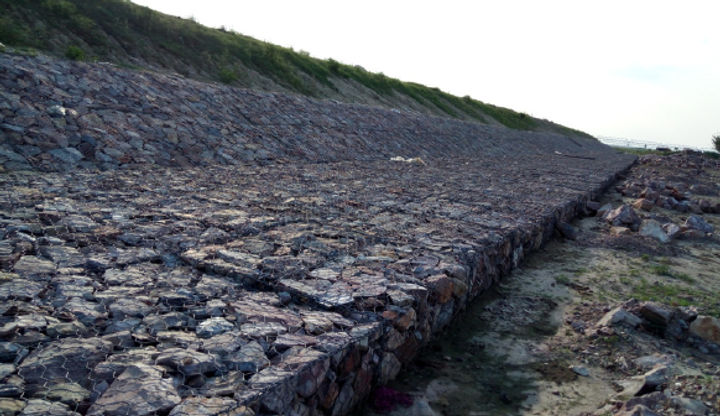
Ganga Path, Christened Loknayak Ganga Path in honour of Jayaprakash Narayan, is a 21. 5 km Expressway from Digha to Didarganj along southern bank of river Ganga in the city of Patna in the state of Bihar. Once completed, this will be a major boost for the state’s infrastructure development and would prove a game-changer for the burgeoning city by effectively easing much of its dreadful traffic congestion and will reduce the travel time between Patna’s eastern and western ends from two hours to less than 25 minutes. This would significantly enhance the public awareness in river training works and pave the way for beautification of the city along the stretch. Out of 21. 5 km, Gangapath consists of 13. 9km construction of a high embankment (8 m to 15m) over loosely packed sand and fine silt deposits which is susceptible to liquefaction when subjected to ground vibration as it lies in seismic zone IV, which is a high-risk zone and is liable to earthquakes. Furthermore, the city lies largely in the Ganga river basin, which gets affected from flood due to the spill over during monsoons. This also triggered the need to provide a high embankment which can act as flood control bund. In addition, in case of an embankment due to liquefaction, the ground beyond the toe may lose shear strength and suffer lateral flow which may result in the settlement of embankment and progressive cracking of the top crest of the embankment. Hence stability of embankment in short term and settlement of ground in long term ensuring the protection against scour and slope erosion during floods has made the embankment construction more complex. In general, the bore log data obtained from the project site indicated a brownish grey clayey silt followed by loose to medium dense silty sand, then followed by dense to very dense silty sand till the termination depth.
Discover more
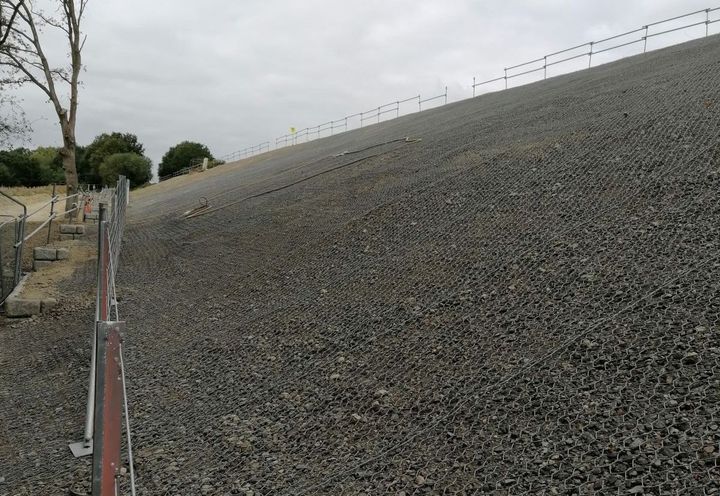
RAILWAY EMBANKMENT BURROWING PREVENTION
The East West Rail Alliance (EWRA) is a large project which plans to utilise the previously built and abandoned varsity railway line to re-build an upgraded line that links Oxford and Cambridge via Bicester, Milton Keynes and Bedford avoiding London. The planned route covers an extensive distance consisting of diverse environmental challenges. As you progress through this countryside route, there is a variety of wildlife including a large amount of Badgers. Badgers are fantastic diggers and have many burrows at any given time. Occasionally badgers burrow underneath live rail embankments which can lead to collapse and delays in the line due to water ingress through the network of burrows deep into the embankment. The solution was to use our RenoMesh Mammal Anti-burrowing mesh.
Discover more
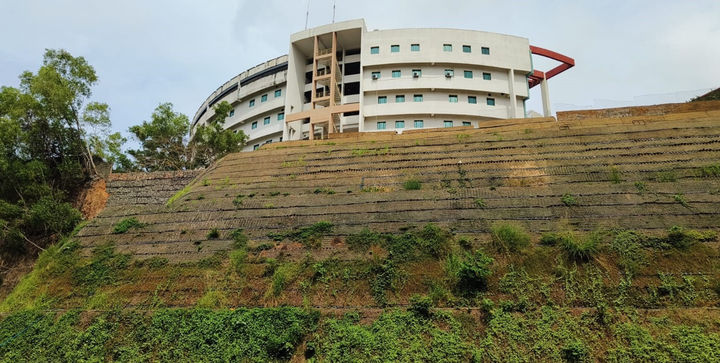
SOIL RETENTION MEASURES FOR TECHNO PARK PROJECT- TRIVANDRUM
A landslide occurred in August 2020 near the Thejaswini Building, below the existing roadway and in front of the CDAC Building within the Technopark Phase I campus, Thiruvananthapuram, Kerala. The affected slope has an average height of approximately 25 m. Site investigations indicated that the failed slope predominantly comprised lateritic soil interbedded with rock layers. The lateritic soil is relatively soft and can be easily cut when wet, although it hardens upon drying and with time. Its plasticity decreases with depth as it transitions towards the parent rock, while the presence of iron oxides contributes to its relatively high specific gravity. The landslide was primarily triggered by a sudden increase in pore water pressure during heavy rainfall, which significantly reduced the shear strength of the lateritic soil. The lateritic soil layers sandwiched between the rock strata experienced a loss of cohesion upon saturation, resulting in the combined movement of both the soil and overlying rock mass. The considerable slope height, together with the weakened soil conditions and groundwater effects, posed a significant geotechnical challenge requiring a robust and long-term slope retention solution.
Discover more
Deep dive into
RenoMesh
What we can do with
RenoMesh
Get in touch with us
[contactForm_txtSuccessSubmit]