
Biaxial Geogrids
Soil reinforcement for road stabilization
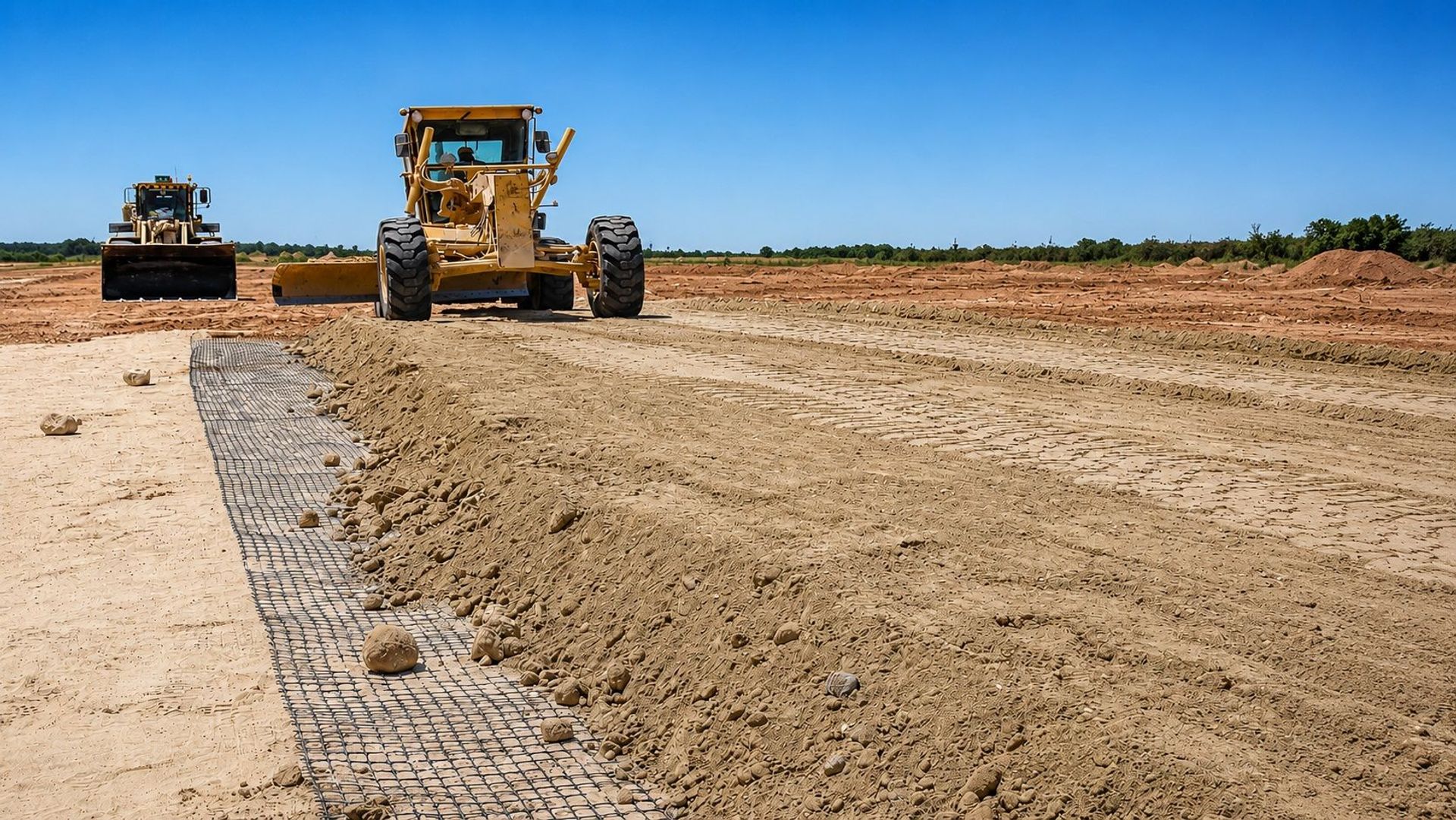
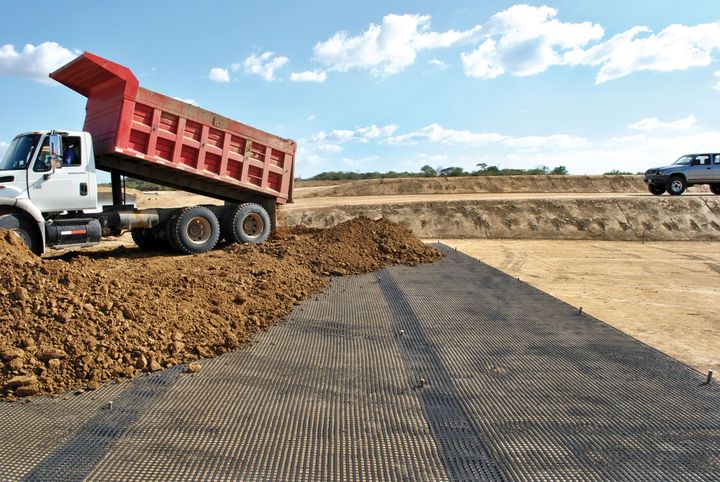
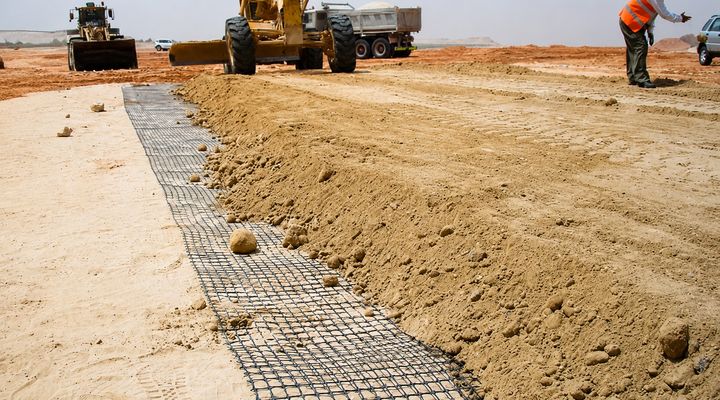
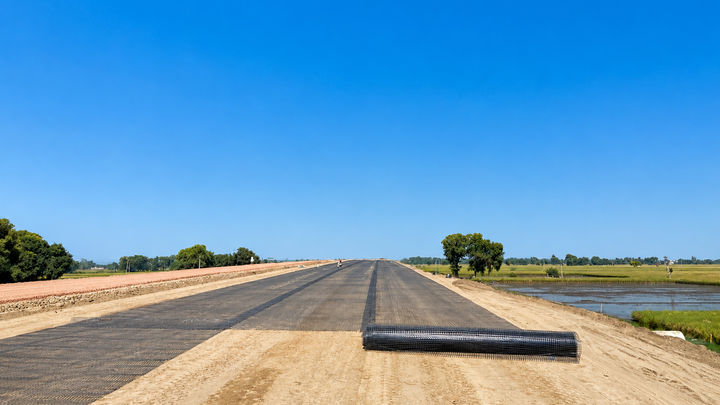
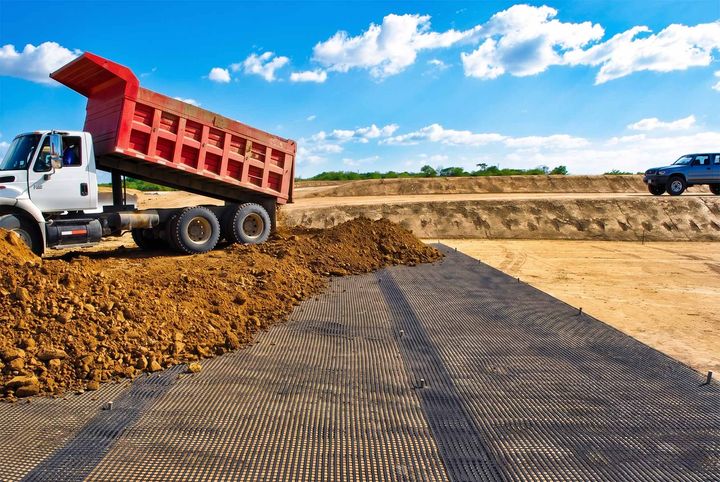
Biaxial geogrids are used mostly for reinforcement purposes in soil stabilization applications their symmetric-multiaxial structure can increase the bearing capacity of the existing subsoil providing the necessary strength and confinement effect. The tensile strength and the geometry of these geogrids are normally symmetric with tensile strengths from 20 to 300 (or even more) kN/m but three or more axis versions are available; also the polymer and the opening shapes can vary according to the tensile requirements and the fill properties.
Maccaferri’s range includes different families of products:
MacGrid EG
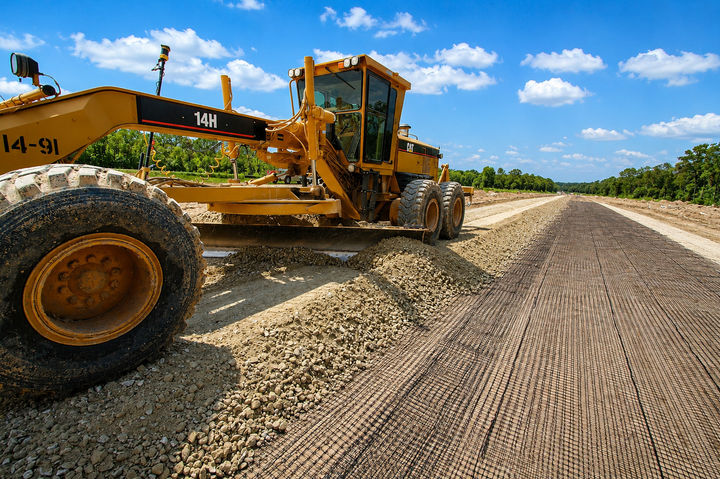
Extruded polypropylene geogrids with a symmetric tensile strength of up to 50 kN/m; successfully used in single or multiple layers for many decades in soil stabilization applications is an essential component of many combo-solving solutions.
MacGrid EG-T
Again an extruded polypropylene geogrid but characterized by a triangular shape to have a multi-axial behaviour. These materials are used – as the MG EG – in the same type of applications and are supposed to be an evolution of the biaxial ones.
MacGrid WG-S
High tenacity PET knitted-weaved coated geogrids are also available and used in these types of applications especially when the tensile strength requested exceeds the capacity offered by the extruded ranges; these products are available up to standard symmetric strength of 300kN/m but – on demand – can be proposed up to 1000 kN/m.
Success Stories
Built, not just drawn
Discover more
NTPC SIDING-GADARWARA PROJECT– BLANKET THICKNESS REDUCTION
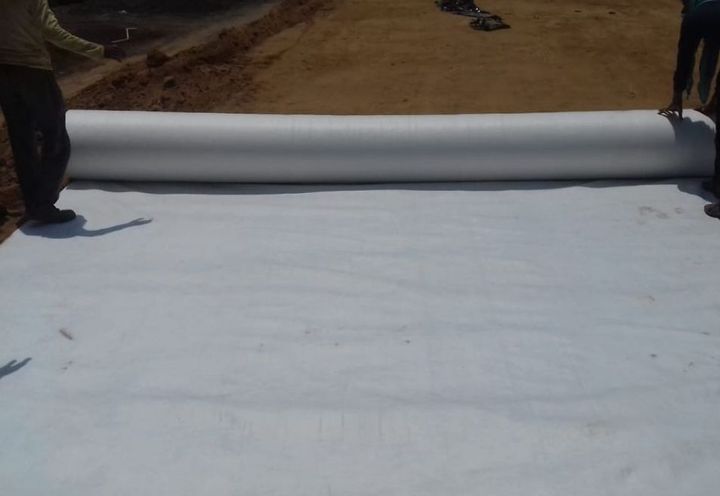
The Gadarwara railway station is approx. 20 km from NTPC site. NTPC constructed the Gadarwara railway siding line for transporting coal to their plant. For this railway siding work, the blanket (subballast) material was not available in the Gadrwara area and transportation of blanket material from outside area was not an economical option. This devoid of blanket material was major concern of project. Also, mining has been banned in our country due to environmental issues, so it had become difficult to get quantity for blanket for formation construction. Apart from unavailability of blanketing material, another concern of this project was the inadequacy of good subgrade material. The subgrade material was of SQ1 type which had fines content of more than 50%. Considering these aspects of project, biaxial extruded polypropylene geogrid MacGrid EG and non-woven geotextile solution MacTex N was proposed for strengthening the formation.
Discover more
Soil Reinforced Retaining Wall Near CDAC Building at Technopark Phase 1
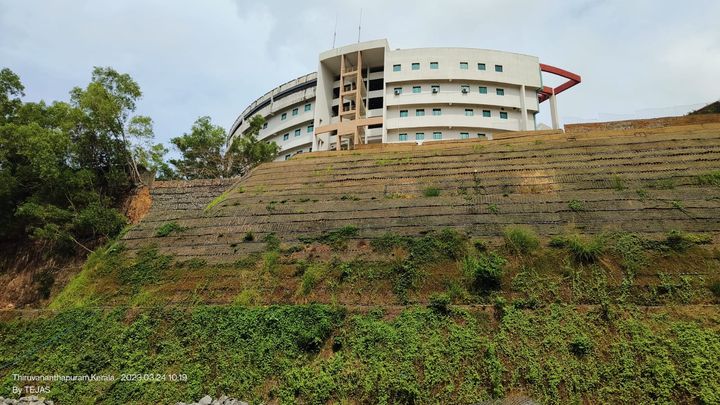
Technopark is a technology park in Trivandrum, Kerala established on 18 November 1990 by the Government of Kerala. Technopark houses domestic firms, joint ventures, and subsidiaries of foreign companies engaged in a wide variety of activities. Technopark aims to provide the infrastructure and support facilities needed for IT/ITES and electronics companies to function. In addition to office space, it provides utilities and connectivity, which is done either directly or through private partners. It has been observed that the major portion of the landslide location is covered with lateritic soil. The lateritic soils are very soft and can be cut with a chisel when wet. However, these harden with time. The plasticity of the lateritic soils decreases with depth as they approach the parent rock. These soils, especially those which contain iron oxide, have relatively high specific gravity. A landslide occurred near the Thejaswini building, below the existing road, in front of the CDAC building in Technopark Phase – I campus on August 2020. The average height of the slope is about 25m.
Discover more

STRENGTHENING OF THE ROADBED LAYER OF THE RN4
The RN4 is one of the major routes in Burkina Faso that connects the capital and largest city of the country, Ouagadougou, to the eastern cities such as Koupela. Within Ouagadougou, the urban section of this national road passes through Komber-Pandema Avenue at the East interchange and traverses wetlands that border the lakes and ponds of the city. As part of the rehabilitation of this wet stretch, the company COGEB International aimed to strengthen the roadbed foundation layer to cope with potential hydraulic pressures and the wet-dry cycles associated with the rainy and dry seasons.
Discover more
What we can do with
Biaxial Geogrids

Get in touch with us
[contactForm_txtSuccessSubmit]