
Maccaferri@School comes to Milan: students engage with experts and professionals on the challenges of climate change
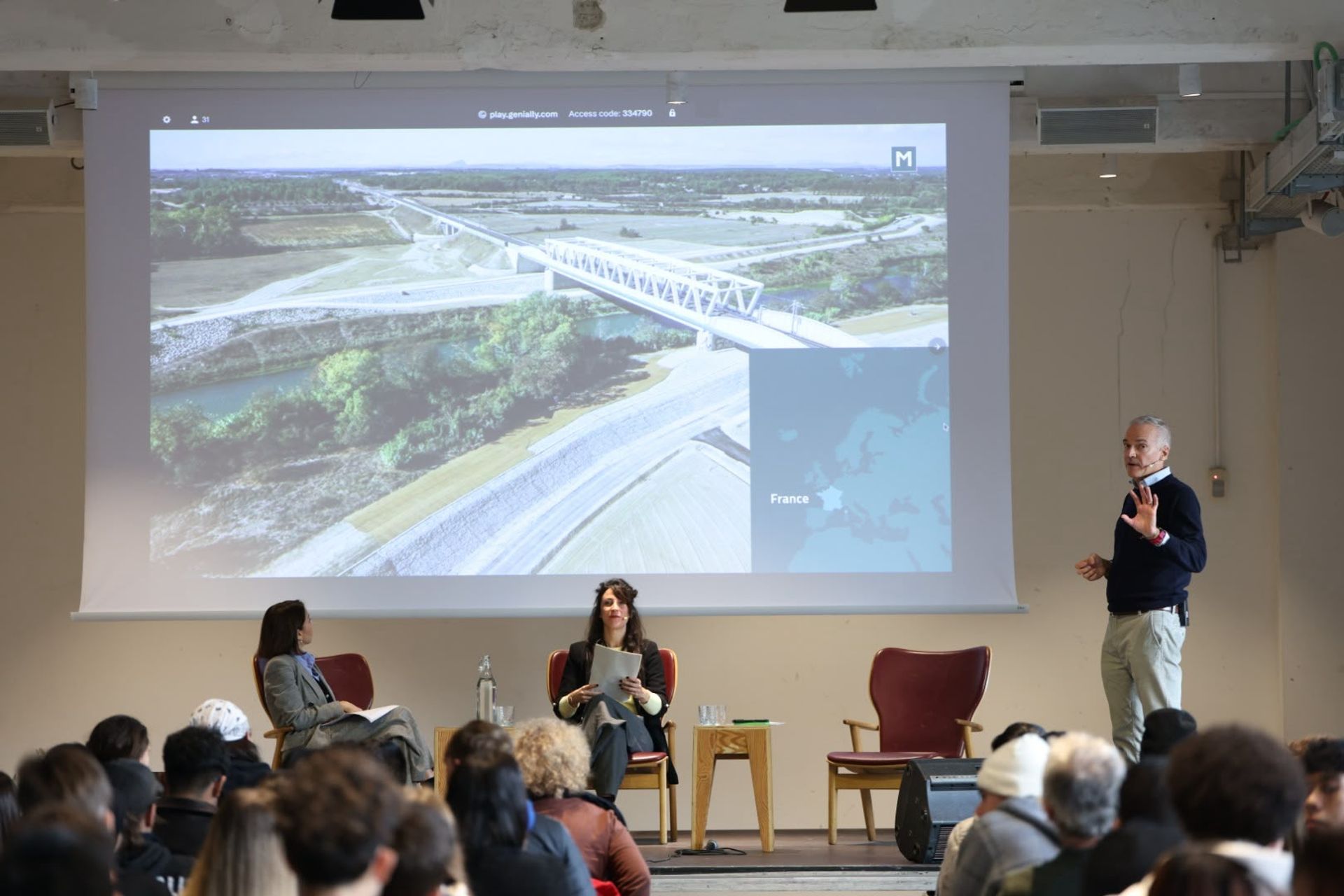
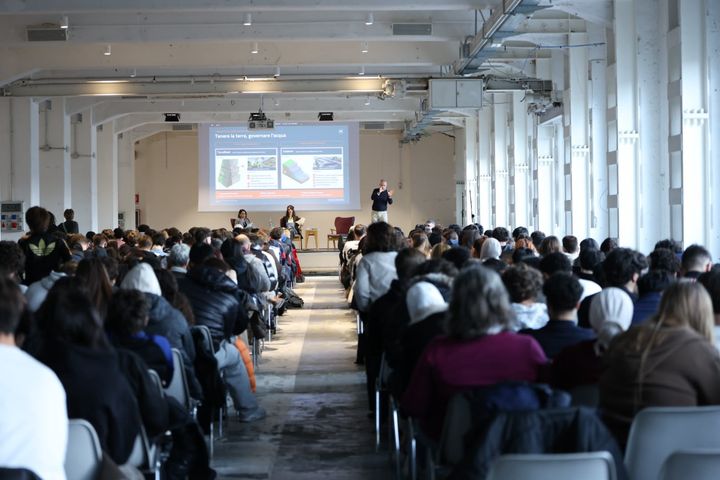
How can science and engineering help make infrastructure and territories safer and more resilient to the effects of climate change? What skills will be needed to address the environmental challenges of the future? These are some of the topics at the heart of the masterclass “Maccaferri@School – Dentro l'ingegneria del futuro. Professioni per un Pianeta fragile”, held today at the BASE Milano cultural centre, bringing together around 400 students in their third, fourth and fifth years from seven upper secondary schools in Milan and the surrounding province: Liceo Scientifico S.A-Ettore Conti, Liceo Scientifico Marconi, Liceo E. Fermi, Istituto Tecnico Economico Moreschi, Istituto Tecnico Economico Cavalieri – Marignoni, Liceo Scientifico Benini in Melegnano and ITIS Cartesio in Cinisello Balsamo.
The initiative, promoted by Officine Maccaferri, with the support of La Fabbrica S.r.l., a Benefit Corporation of Gruppo Spaggiari Parma, offered participants an opportunity to engage directly with the worlds of research and business, explore educational pathways and career prospects related to STEM disciplines, and understand how this knowledge is applied in practice to environmental protection and infrastructure safety.
At the heart of the masterclass was the impact of the climate crisis and the need to rethink infrastructure design and management in light of increasingly intense phenomena. Drawing on examples close to Milan's local context, such as the flooding of the Seveso and Lambro rivers, extreme rainfall and urban heat islands, the event connected the scientific understanding of these phenomena with the engineering tools and solutions available to mitigate their effects.
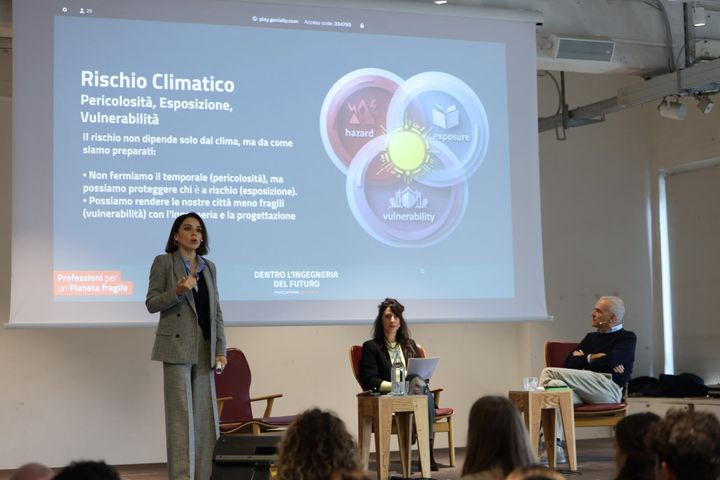
The scientific dimension was explored in greater depth by Serena Giacomin, climatologist and Scientific Director of the Italian Climate Network, who explained the causes of global warming and its consequences for climate patterns, focusing on the particular exposure of urban areas and the vulnerabilities of the Italian territory. Particular attention was paid to the risks associated with climate change and the importance of data, observations and scientific models in defining effective adaptation strategies. “Understanding these phenomena through scientific knowledge is essential to identifying measures capable of reducing the exposure and vulnerability of territories. Passing these tools on to younger generations means helping them interpret the changes underway and actively participate in building a more sustainable future,” Giacomin explained.
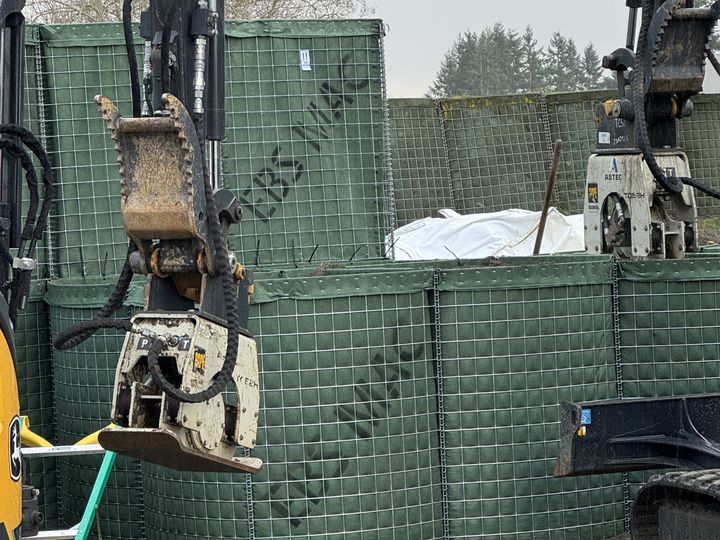
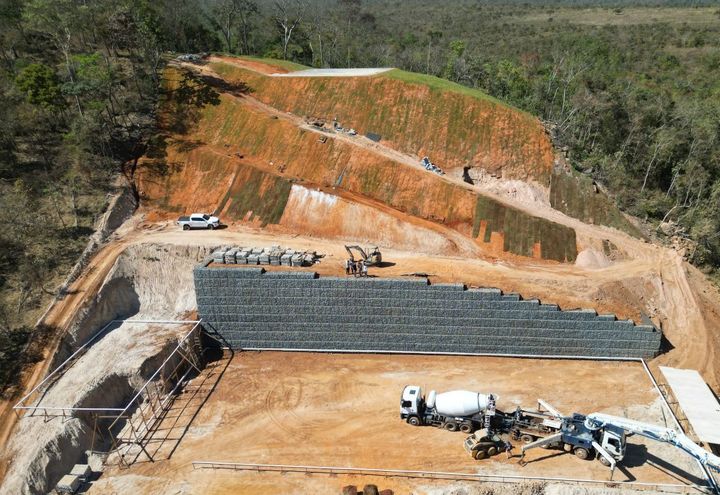
The discussion then moved from the scientific understanding of these phenomena to practical applications with a presentation by Stefano Susani, CEO of Officine Maccaferri, who explored the role of engineering in mitigating hydrogeological risk and developing more resilient infrastructure. Through examples of projects carried out around the world, the CEO illustrated the activities of Officine Maccaferri, which operates in over 130 countries and is committed to developing engineering solutions for land protection and infrastructure safety. This approach combines traditional techniques, nature-based solutions and advanced technologies, including the Internet of Things and artificial intelligence, to improve monitoring, data analysis and risk prevention. “The effects of climate change require increasingly specialised professionals and the ability to translate research and innovation into concrete solutions for community safety. Through Maccaferri@School, we want to raise young people's awareness of the contribution engineering can make in this field, encouraging them to pursue educational pathways and careers that will be crucial to making territories and infrastructure safer and more resilient,” Susani stated.
Completing the programme was a contribution from Luca Rosetti, an ocean sailor from Bologna and skipper of Maccaferri Futura, Officine Maccaferri's Class40 yacht, who, in a video message, retraced his educational and professional journey, from his studies to ocean sailing, highlighting the value of scientific observation and data interpretation also in activities at sea.
The Milan masterclass is part of Maccaferri@School – Dentro l'ingegneria del futuro, the educational and career guidance project promoted by Officine Maccaferri to bring upper secondary schools closer to the world of science and technology. The programme began with a series of 15 sessions at schools in Bologna, Milan, Rome and Padua, during which young professionals from the company shared their educational and career paths with over 700 students, offering first-hand insights into the activities and career opportunities available in civil and environmental engineering.
Following the Milan event, the initiative will continue with a second masterclass scheduled to take place in Bologna on 30 November, which will be attended by over 300 third-, fourth- and fifth-year students from eight upper secondary schools in Bologna and the surrounding province. The event will focus on the effects of climate change on territories and the role of science, innovation and the professional skills needed to address the environmental challenges of the future.