
BioMaterials
Biomaterials Crafted from Natural Fibers
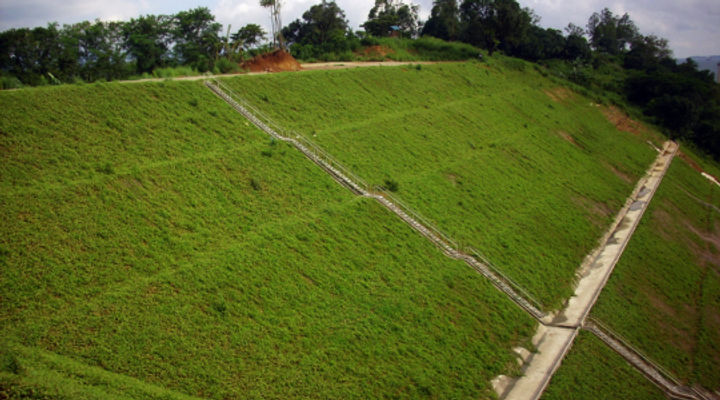
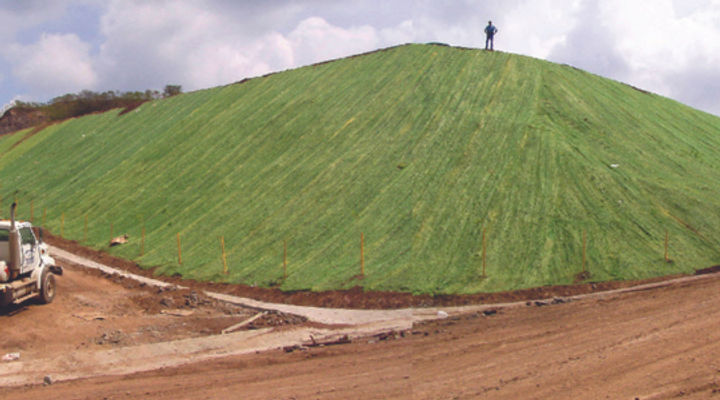
Our biomaterials are composed of natural fibers like jute, straw, coir, sisal, and more, carefully assembled into flat, two-dimensional structures.
These structures are available in both open mesh and closed designs. In the closed configuration, fibers are typically sandwiched between two containment layers. Additionally, certain natural fibers, such as jute, coir, and sisal, can be woven into standard fabrics with varying mesh openings. These materials are flexible, allowing them to adapt to the natural contours of the soil. Given the biodegradable nature of these materials, they are designed for temporary use, providing essential soil protection while vegetation takes root.
Success Stories
Built, not just drawn
Discover more
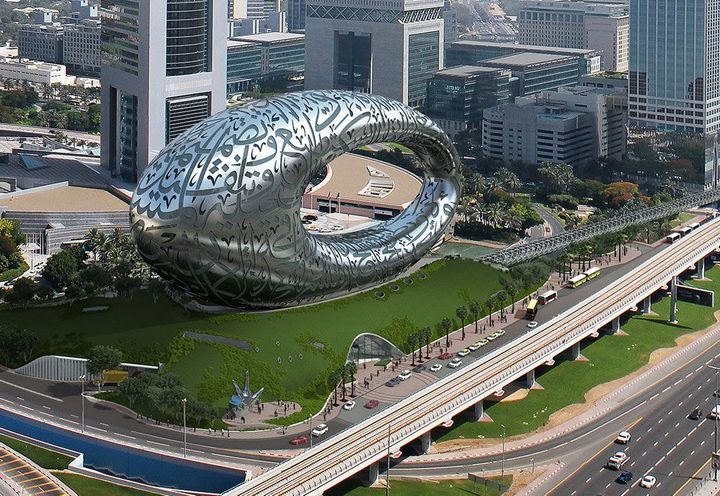
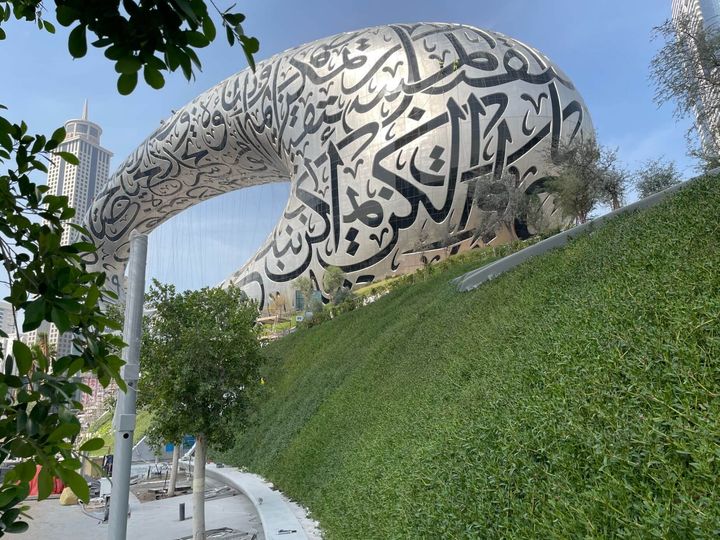
Museum of the Future - GREEN COVERAGE AND DRAINAGE SYSTEM
United Arab Emirates
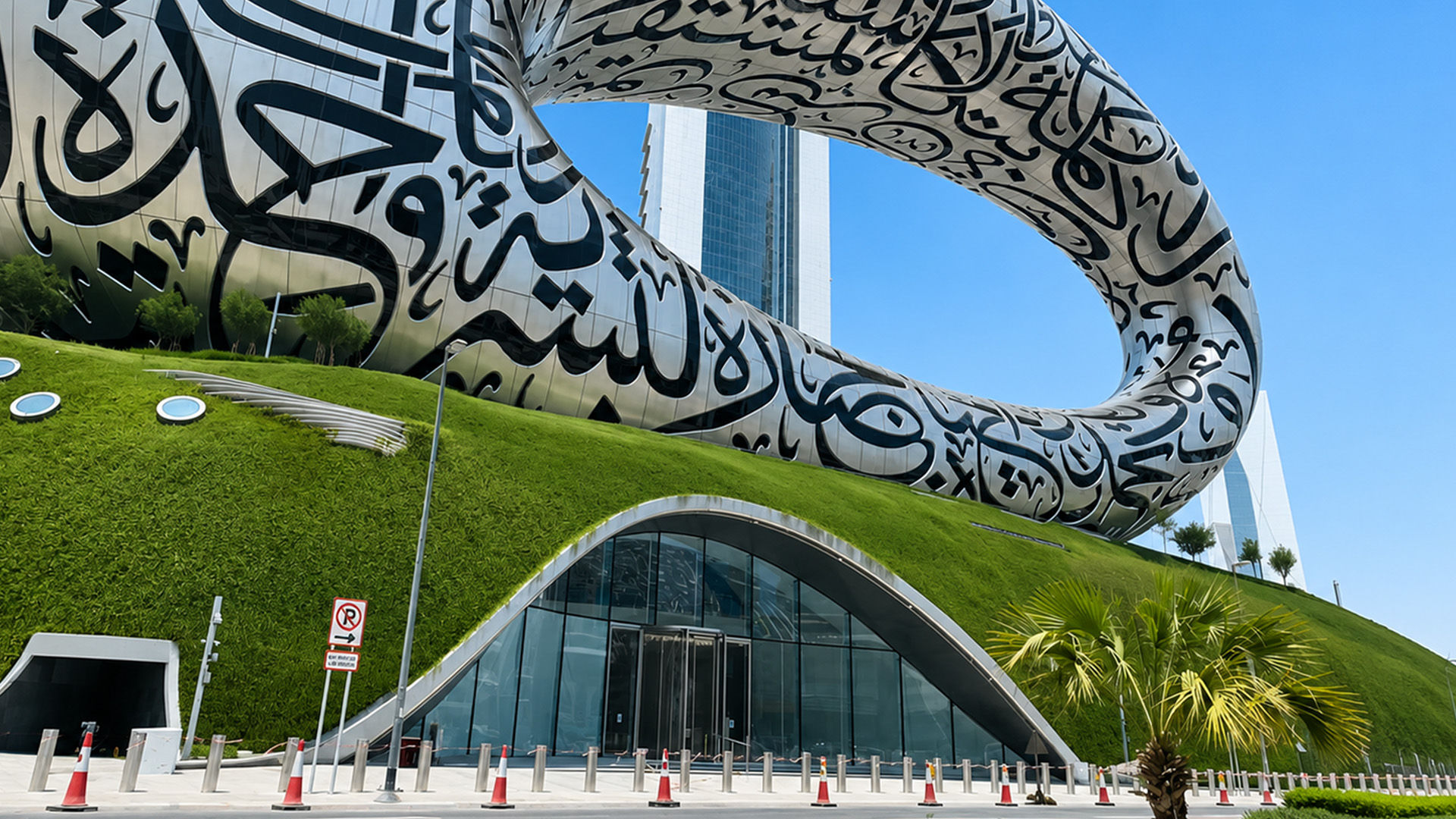
The Museum of the Future (MOTF) is a unique initiative by the Dubai government that explores the future of science, technology, and innovation and will be located at a prime spot in Sheikh Zayed Road and near the Burj Khalifa. The architect Kila designed MOTF in three main parts: the lower green hill, the upper building, and the elliptical void, representing earth, mankind & innovation, respectively. The inspiration for the green hill was also to elevate the building calmly and unobtrusively above the metro line and create greenery in elevation where visitors can enjoy while engaging with the Museum. The green hill is to be done through a smooth transition from the site as an earthen, vegetated mound with a minimal visible built intervention. A three-story podium structure will be embedded inside the green hill, which will house the lobby, auditorium, cafés, restaurants, retail, car parking, etc. For the aforementioned reasons, the vegetated mount must be done as a THIN CLADDING of varying slopes rather than a solid earth hill.
Discover more
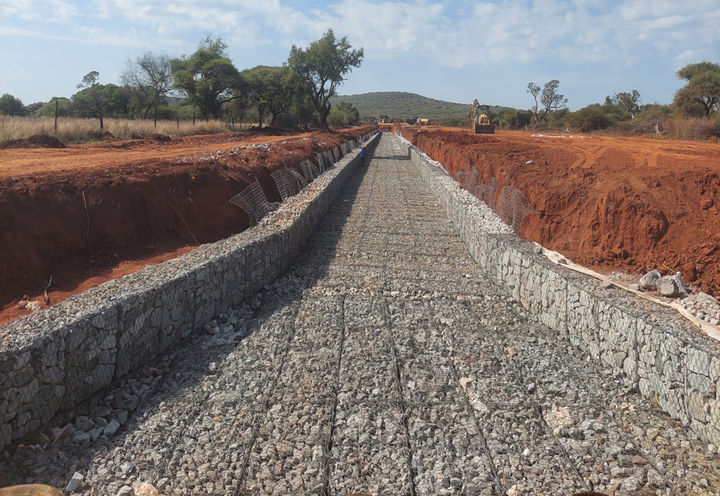
NWP-21-0047 GABION LINED CHANNEL - VREDE VILLAGE NORTH WEST
South Africa
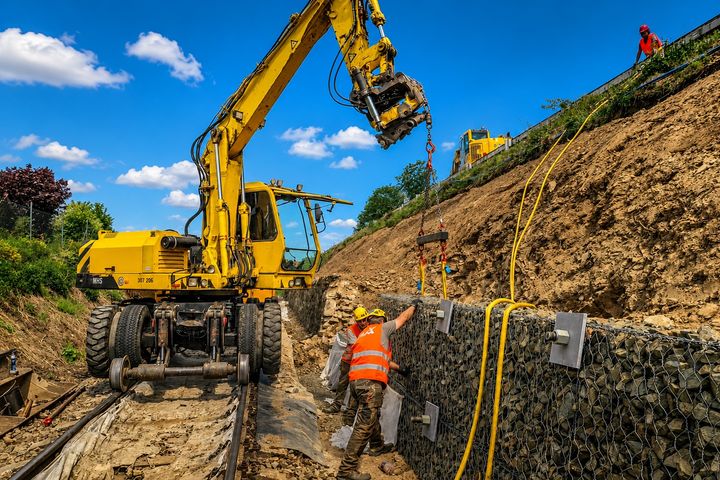
The construction of the Vrede residential housing complex in a flat, high-rainfall area necessitated the design & implementation of a robust stormwater management system to protect the surrounding infrastructure & community. Increased impervious surfaces due to construction activities can significantly alter natural drainage patterns & lead to flooding risks. Maranje Consulting, in collaboration with Maccaferri, developed a stormwater diversion channel system to address these concerns. The primary function of the channel is to efficiently convey stormwater runoff from the development area towards a designated non-perennial river located on the outskirts of the complex exclamation The estimated channel length is approximately 1. 2 kilometers.
Discover more
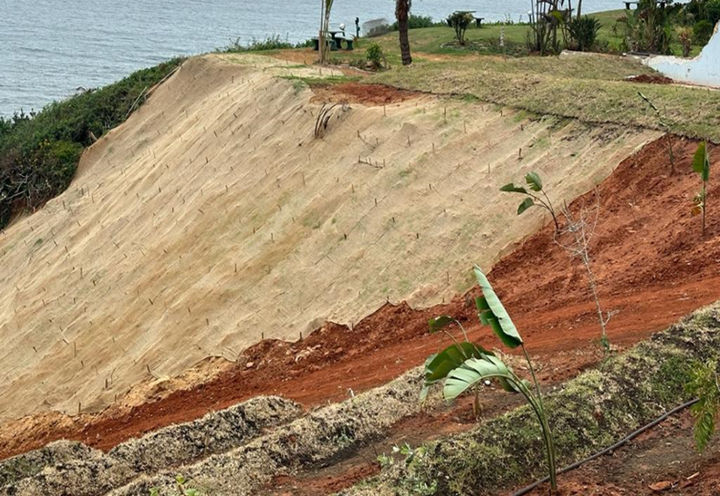
UMDLOTI WASHAWAY REHABIITATION
South Africa
In April 2022, intense rainfall events triggered the formation of two large washaways on the Umdloti Dune face. These washaways extended from high points on Bellamont Road in the west to North Beach Road in the east, resulting in extensive erosion of soil, forest habitat, and residential properties. The slip failure averaged a slope-length of 180m and width of 27m. The provided images depict the washaways immediately following the April 2022 rain event. The affected area is part of an elite multi-generational residential development situated on Berea sands, a soil type typical of the Kwa-Zulu Natal region. However, due to steep slopes and uncontrolled stormwater runoff a catastrophic failure occurred.
Discover more
Deep dive into
BioMaterials
What we can do with
BioMaterials
Get in touch with us
[contactForm_txtSuccessSubmit]