


EROSION CONTROL ON NEW WATER COURSES
Challenge
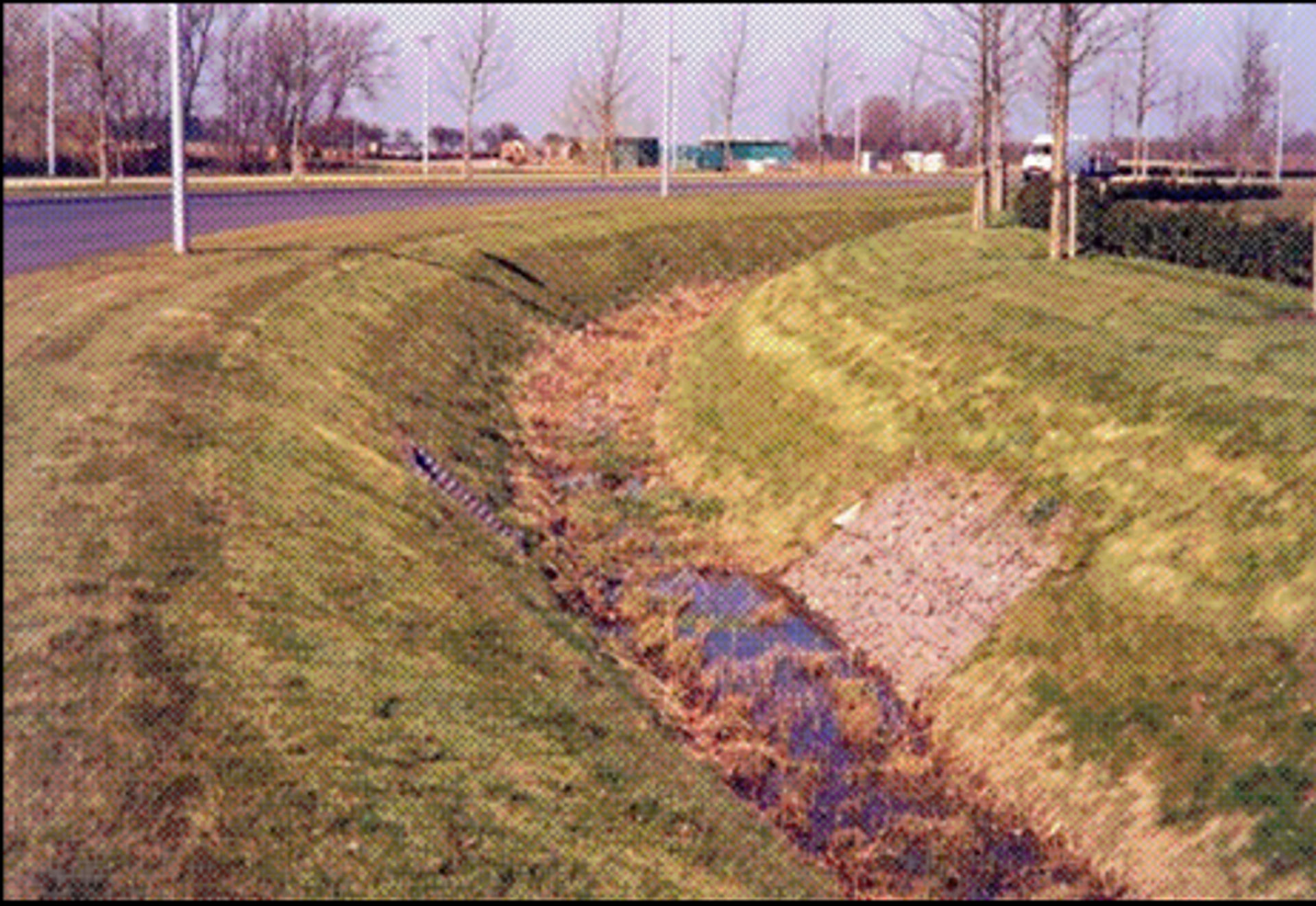
In a semi-rural location approximately five miles north of Cambridge, the new 112-acre Cambridge Research Park was developed by Slough Estates, Scott Wilson acted as the lead consultant for the site formation and infrastructure. Providing purpose-designed accommodation including both offices and R&D facilities, buildings are arranged around a series of natural and artificial lakes to create a pleasant and relaxing working environment. The completed site offers 56,000 sq m of office space. The overall landscaping of the site was undertaken with care, a wildlife refuge has been incorporated and the natural environment preserved to create an attractive vista overlooking the lakes. To ensure adequate drainage, a series of steep sided ditches, typical of the surrounding fenland, have been incorporated into the overall design. Whilst providing very effective drainage, the sides of the ditches were too steep for the safe application of topsoil and vegetation. The topsoil would slump down the slope unless given support.
Solution
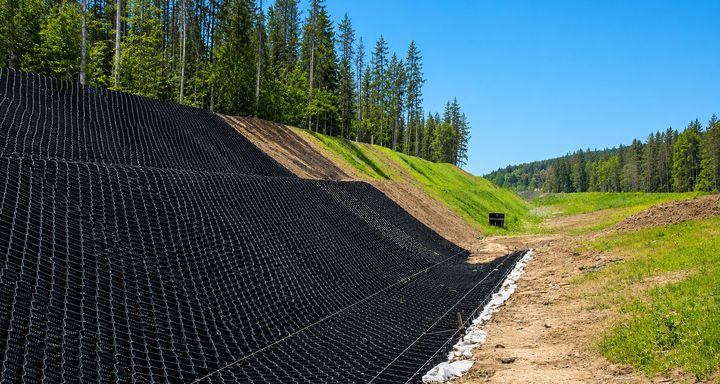
With the lake empty, the ditches were constructed using reinforced earth techniques and feature 1:1 side slopes. 5000 sq m of Macweb geosynthetic material was then installed to create attractive grass banks on the steep sided drainage channels. Macweb secures the topsoil and allows the ‘natural’ grass banks to flourish. Lightweight, flexible and easy to install, Macweb forms 150mm high cells into which topsoil is placed. These cells reduce the erosion caused by surface run-off and prevent the formation of gullies. The porous cell wall enables water to flow slowly through the hexagonal cells, avoiding ‘ponding’ at the base of each cell. The soft landscaping was overseen by View Point Ltd on a project management basis, with the installation being undertaken by Whiting Landscapes.
Our products for
this Success Story
Get in touch with us
[contactForm_txtSuccessSubmit]