


Rockfall Barriers
Catching rocks before impact damage
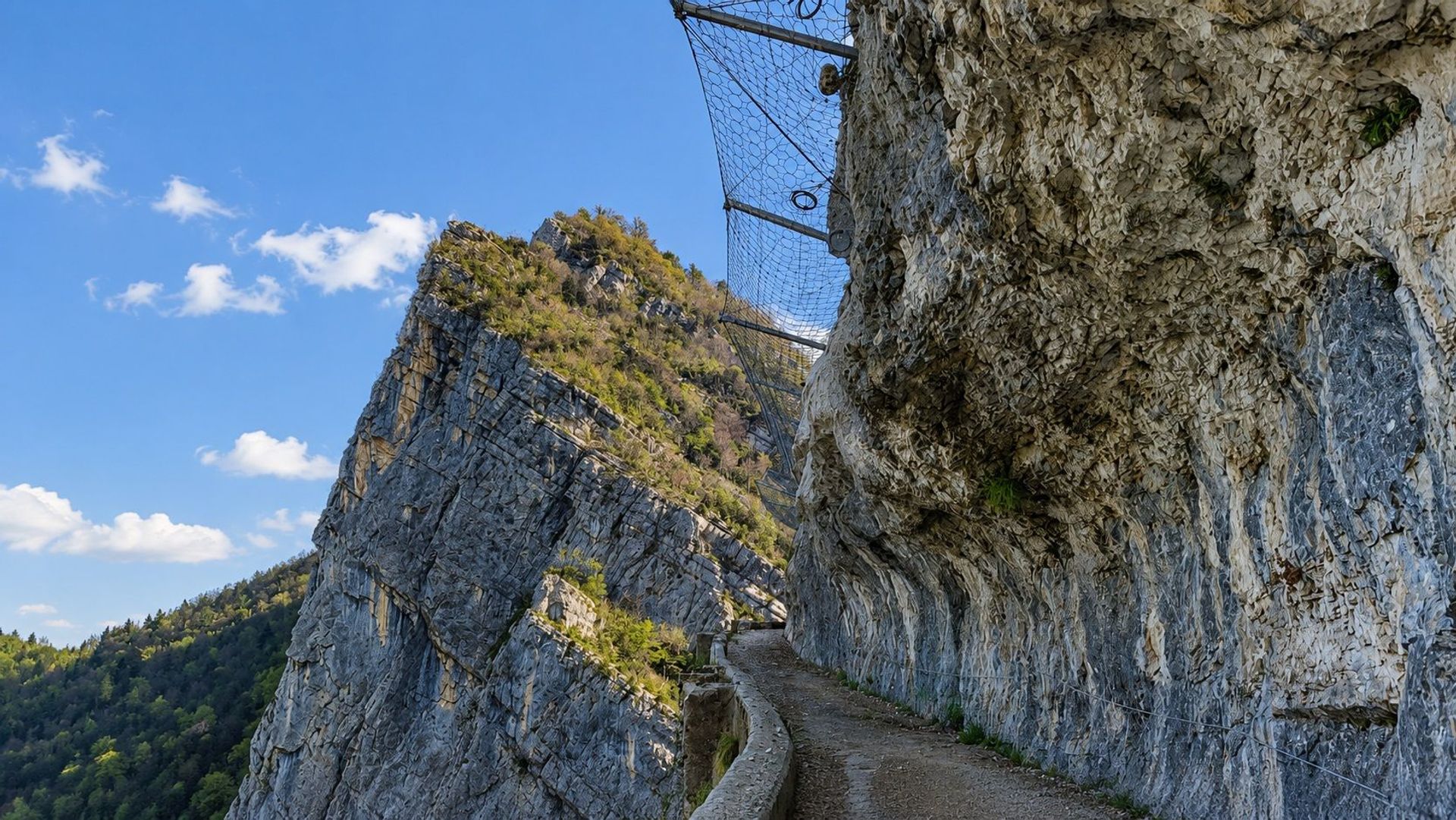
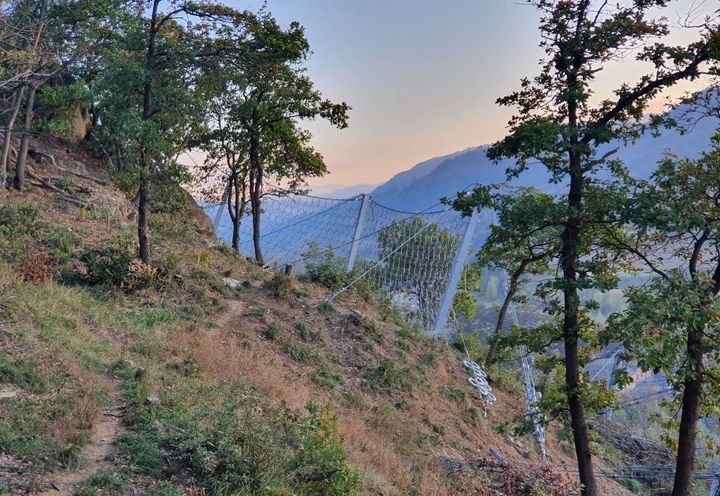
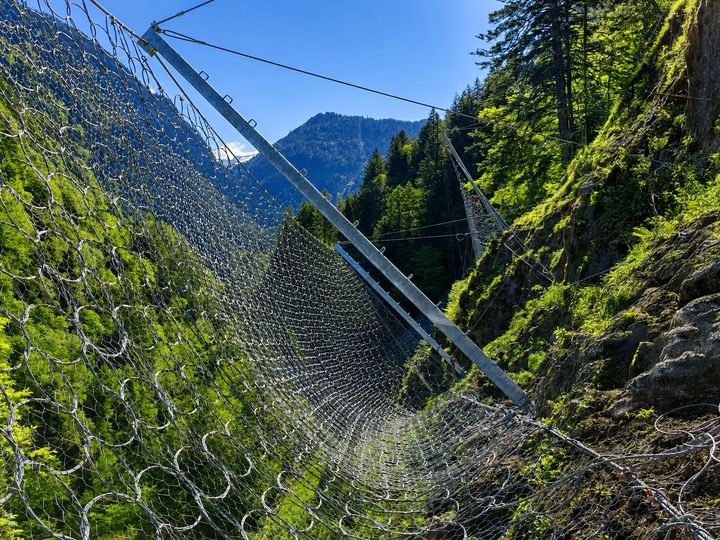
Maccaferri Rockfall Barriers (or Catch Fences) are designed to catch falling rocks and boulders before they fall onto infrastructure, mine haul-roads or other developments.
Our wide portfolio of rockfall barriers range from 35 kJ/H=1.35m to 9000 kJ/H=8m.
Maccaferri Rockfall Barriers are supplied in a "kit" form. All components are supplied in the kit in accordance with EAD 340059-00-0106 or EAD 340089-00-0106, including main nets, poles, base plates, energy dissipation devices, wire ropes and all accessories.
Our rockfall barriers are CE marked, guaranteeing rigorous quality control.
The anchors to connect the barriers to the ground are supplied on request and according to a specific design considering the ground conditions.
Maccaferri's engineering know-how leads to the design and successful testing of cost-effective solutions.
Our barriers are among the best in the field in terms of performance (high residual height after impact and low deformation upon impact).
Our barriers are easy to install, the design being made not only to achieve high level performance but also to facilitate the installation process for workers (pre-assembled panels on the posts, climbing steps on the posts, system opening of the curtains)*.
*Available depending on the model
Success Stories
Built, not just drawn
Discover more
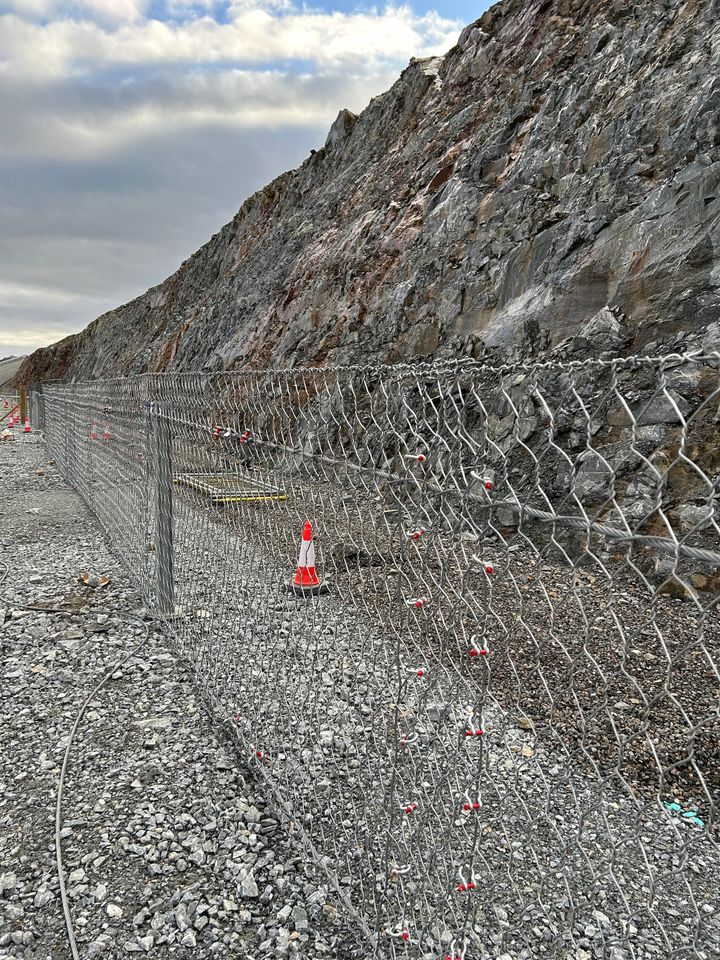
Low Energy Rockfall Barrier Protects Shetland HVDC Substation Construction Site
United Kingdom
The Shetland HVDC link, approved in 2020 after more than a decade of development, is a landmark project that connects Shetland to the Great Britain transmission network for the first time. This critical energy infrastructure unlocks the island’s renewable energy potential, supports the 443MW Viking Wind Farm, and contributes to the UK’s net-zero carbon targets. As part of the project, a 320/132kV substation and HVDC converter station were constructed at Kergord. The works required significant bedrock excavation, resulting in a 6-metre-high exposed rockface formed within the Weisdale Limestone Member. Following excavation, sections of the rockface showed signs of instability, including ravelling and loose material. This created a high rockfall risk to workers operating in the adjacent storage yard at the base of the slope. Without mitigation, falling debris posed a serious safety hazard, making effective rockfall protection essential to maintain safe construction operations.
Discover more
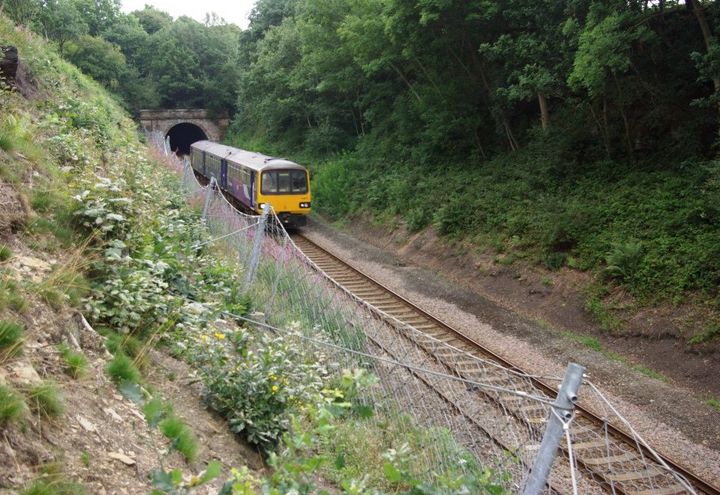
Railway Cutting Stabilisation at Denby Dale Rockfall Risk Mitigation Solution
United Kingdom
Approximately half a mile north of Denby Dale station, a single-track railway line exits Cumberworth Tunnel into a 14-metre-deep cutting formed within lower coal measure geology. The cutting comprises interbedded semi-competent sandstone alongside weak, friable siltstones and mudstones, creating a geologically variable and inherently unstable slope environment. The cutting slopes are steep, ranging between 45 and 55 degrees, with exposed rock outcrops measuring between 1. 0 and 2. 0 metres in height. Over more than 160 years of exposure, natural weathering processes have significantly degraded the strength and cohesion of the rock mass. This deterioration has increased the likelihood of slope instability and rockfall, posing a direct threat to railway infrastructure, operational reliability, and passenger safety. Recognising the growing geotechnical risk, Network Rail commissioned URS to undertake a detailed site assessment. The objective was to evaluate slope stability conditions and develop an effective long-term rockfall protection solution for this critical section of railway.
Discover more
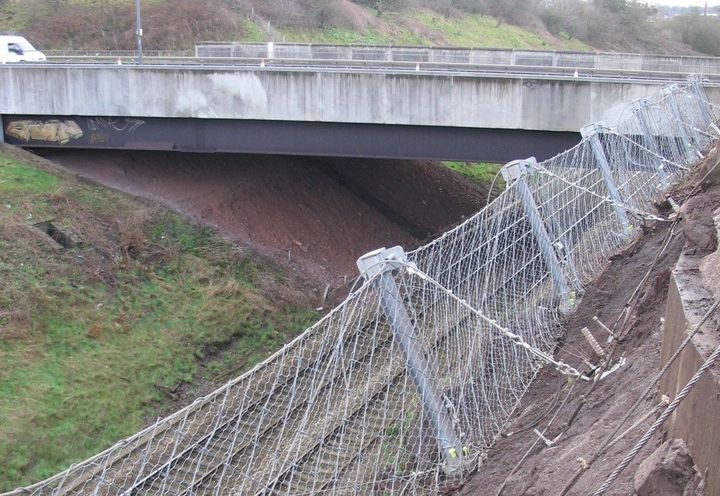
Rockfall Protection and Slope Stabilisation for Live Railway
United Kingdom
In April 2006, essential slope stabilisation works were undertaken to mitigate the risk of falling vegetation and rock debris impacting the main London to Bristol railway line, one of the UK’s busiest high-speed rail corridors. The project involved revegetation and descaling of a sandstone rockface situated directly above the live railway. These works were carried out by Greenman Environmental Management Ltd on behalf of Network Rail’s maintenance contractor, Dean and Dyball. During the descaling operations, a critical geotechnical hazard was identified. Engineers discovered a large sandstone block separated from the main rockface by an existing tension crack approximately 8 metres long. This instability presented a severe rockfall risk, with the potential for catastrophic consequences should the block detach and fall onto the operational railway below. To manage this immediate danger, consulting engineers White Young Green (WYG) implemented a rigorous weekly slope monitoring programme to track any movement or deterioration. This monitoring phase was crucial in maintaining safety while a permanent rock stabilisation solution was being designed. A key project constraint was that the railway line had to remain fully operational throughout, with trains travelling at speeds of up to 100 mph. No line closures were permitted, significantly increasing the complexity of both design and installation.
Discover more
Deep dive into
Rockfall Barriers
What we can do with
Rockfall Barriers
Applications
Solutions
Get in touch with us
[contactForm_txtSuccessSubmit]