


Geocells
Efficient Erosion Control with Honeycomb-Structured Geocells
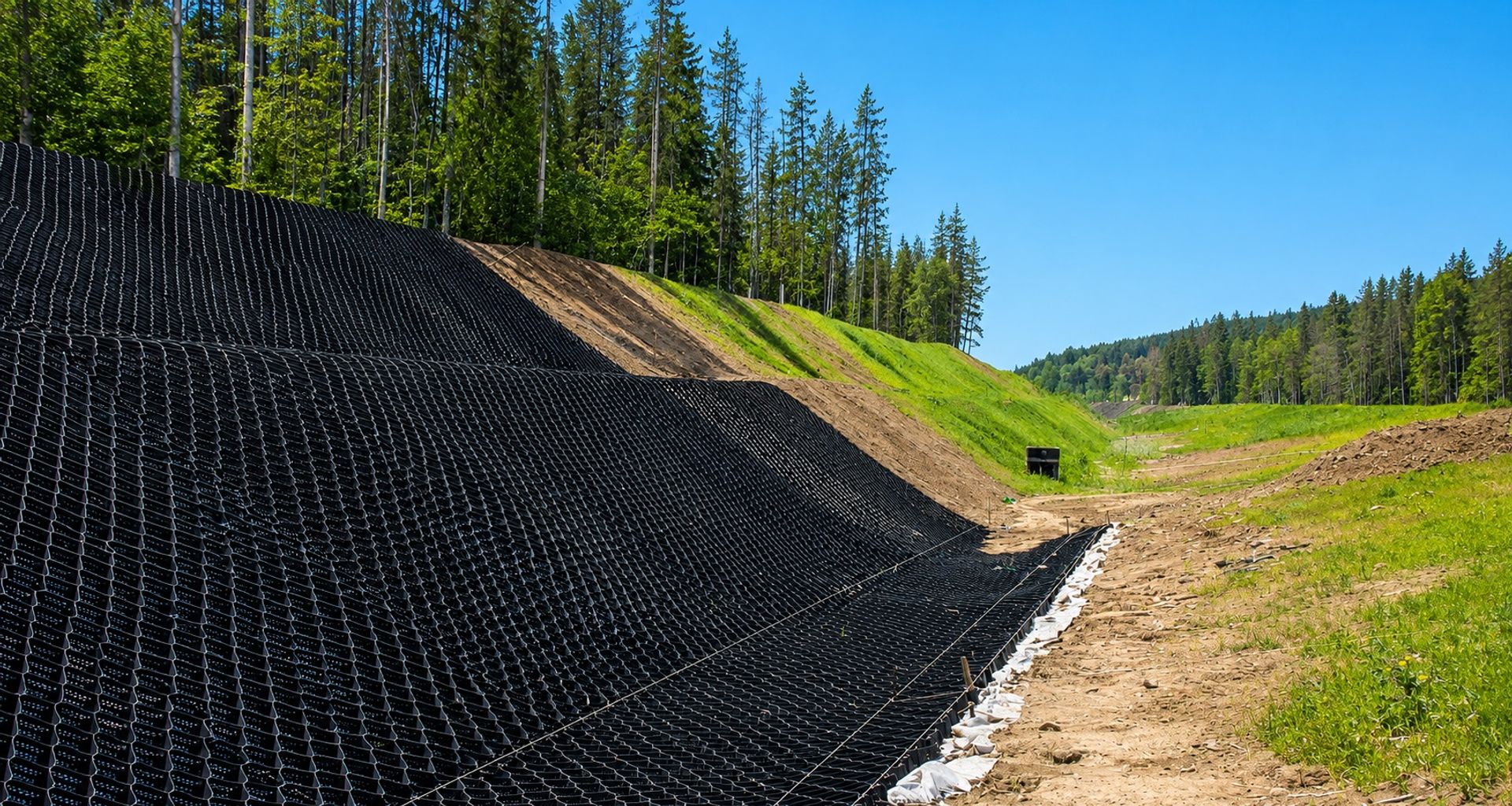
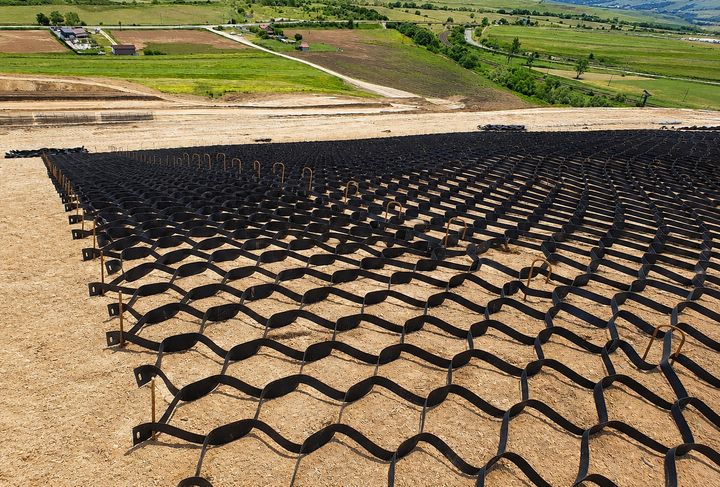
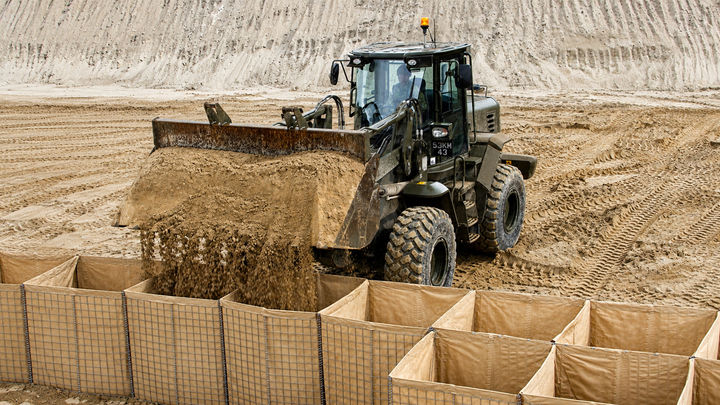
Maccaferri Geocells are engineered systems made from strips of high-density polymer materials, smooth or textured, perforated or solid, joined together to form a three-dimensional honeycomb structure. When filled with soil or aggregates, these cells confine the material, protecting and reducing erosion on slopes, channels, and embankments. Geocells are especially effective in dry, non-vegetated soils with shallow and standard inclinations; in more challenging conditions can be effectively combined with geogrids to grant stability for better short and long-term performance.
Introducing a new Generation of Geocell Technology
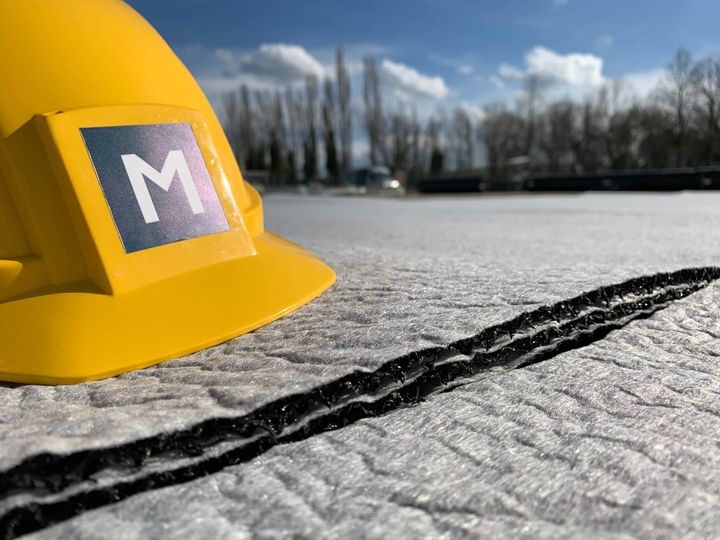
Our new Geocell system represents the evolution of traditional 3D geocells. Made from continuous polyethylene sheets with no welding, our system expands into a large-scale honeycomb when stretched on-site. Its vertically oriented cell shape ensures aggregates remain in place, even under heavy rainfall, drastically reducing maintenance. Compared to standard geocells, We offer:
up to 5x larger coverage per roll,
35% more product per truck load,
and lower installation and lifecycle costs.
This system is highly resistant to UV exposure, frost, and aggressive environments, with a certified service life of up to 100 years.
Slope Protection for Infrastructure and Environmental Projects
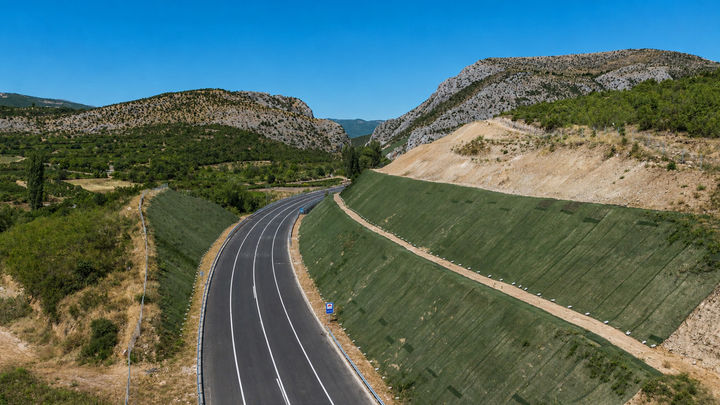
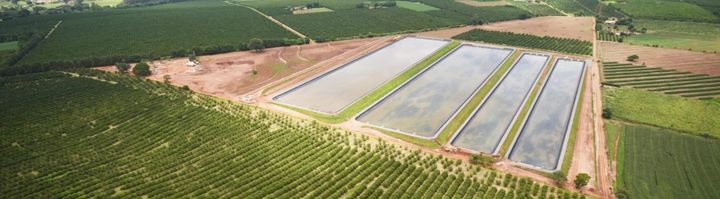
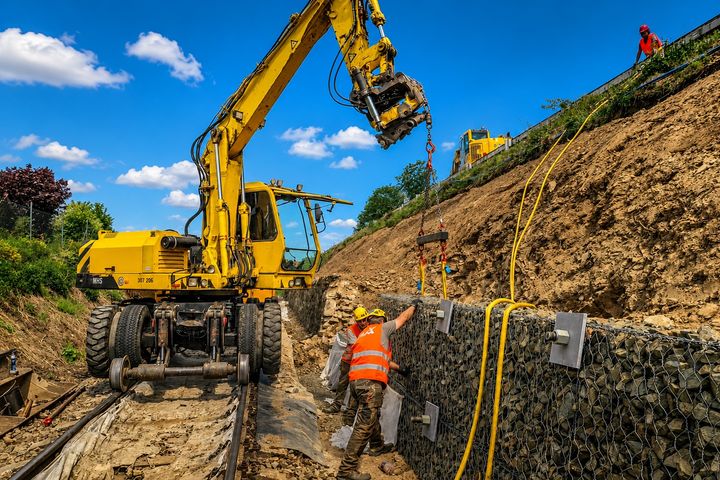
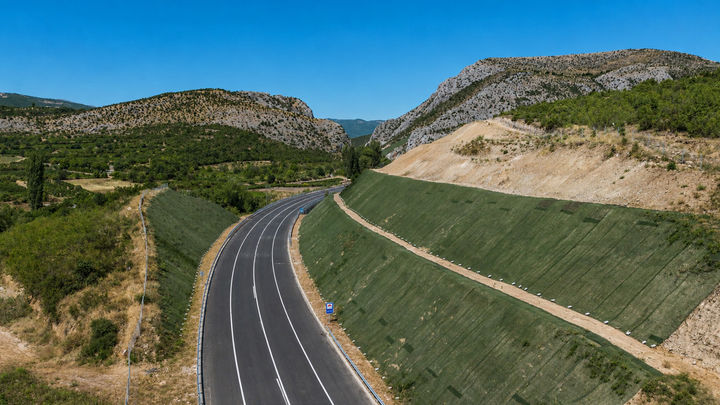
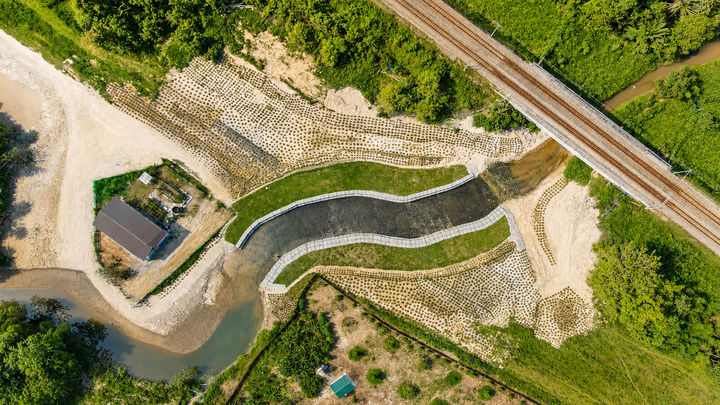
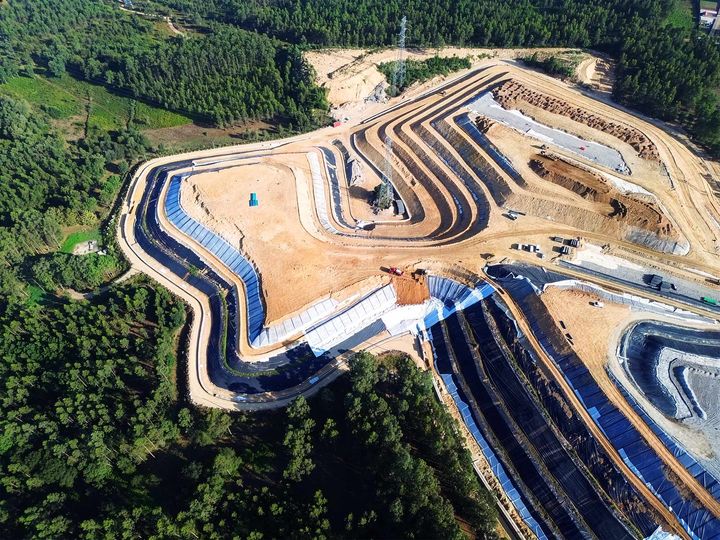
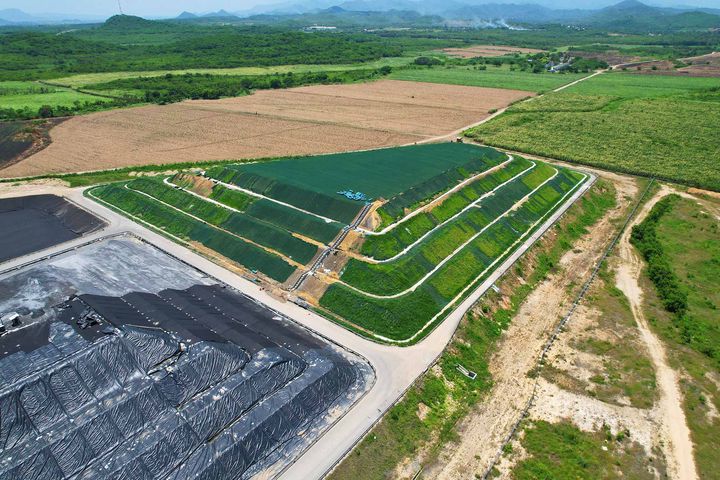
Applications are available in any latitude used in the road, rail, agriculture, and mining sectors. Whether applied to highway embankments, railway cuttings, or industrial slopes, it ensures long-term soil stability, effective confinement, and minimized erosion under varying load and environmental conditions. Its eco-friendly profile, lower material waste, and minimal installation effort make it an optimal choice for large-scale slope protection. From Romania to Spain, real-world projects have confirmed cost savings of up to 30% and reduced material use of over 35%, compared to standard systems.
Success Stories
Built, not just drawn
Discover more
Lightweight Reinforced Soil Embankment Protects Critical Gas Main at Coton Park
United Kingdom
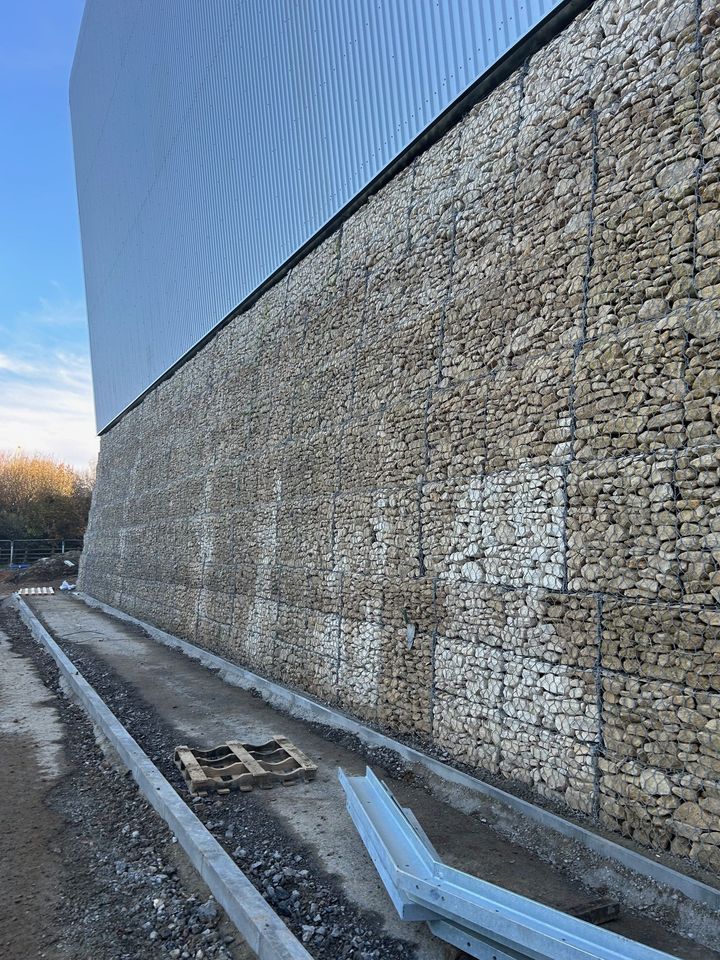
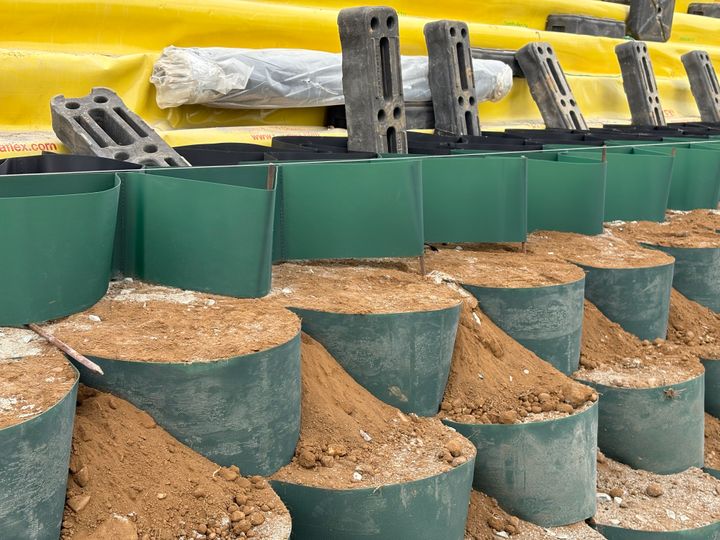
As part of the construction of a new state-of-the-art warehouse facility at Coton Park, Rugby, a significant ground engineering challenge arose. The development required the installation of a new road over a 54-metre-long culvert and an existing gas main. To mitigate the risk of excessive loading on the gas main, expanded polystyrene (EPS) lightweight blocks were selected to form the road structure and act as mass void fill above the buried services. Traditional construction methods were deemed unsuitable due to the imposed loadings they would transfer to the gas main, potentially compromising its integrity. While EPS provided an effective lightweight solution, its low density meant it required confinement and sufficient overburden to prevent movement. This created the need for a substantial embankment structure to retain and cover the blocks. The design called for a 45-degree slope, rising to a height of 8 metres and extending 44 metres in length, effectively forming a large mechanically stabilised earth (MSE) embankment around the EPS. A further complication was the nature of the available site-won material. Ground investigation reports, including borehole and ground information data, identified the soils as predominantly clay and sandy boulder clay with occasional pockets of sand and gravel. The project team aimed to reuse this material within the MSE structure to minimise both the importation of alternative fill and the export of excavated soils. However, cohesive soils of this type can present drainage and stability challenges, particularly when constructing steep slopes, and careful consideration was required to ensure adequate bearing capacity, global stability, and long-term performance.
Discover more
Reinforced Soil Slope Repair in Cheshire
United Kingdom
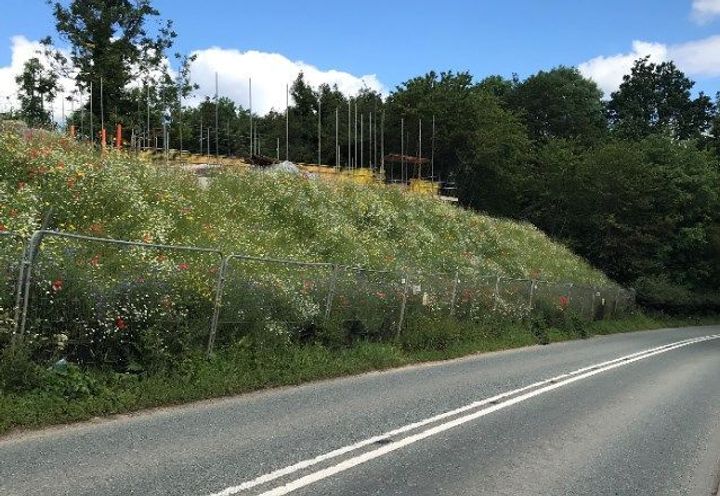
In 2018, Maccaferri delivered a full design and supply solution for a ParaGrid reinforced soil slope for Russell Homes, supporting a residential development along Macclesfield Road in Holmes Chapel, Cheshire. The reinforced slope was successfully constructed in summer 2018 and formed a critical boundary retention system for the site. As part of the engineered design, robust erosion control measures were installed on the slope face. These included a 150 mm deep MacWeb cellular soil confinement system filled with topsoil and seeded with a wildflower mix to promote vegetation. To further enhance surface stability and prevent soil erosion, Enkamat 7010 erosion control matting was installed over the topsoil layer. In February 2021, following a period of intense and prolonged rainfall, Russell Homes reported a localised failure where part of the topsoil layer had slipped down the slope towards the adjacent road. Maccaferri conducted a detailed site inspection to assess the issue. The investigation confirmed that the ParaGrid reinforced soil structure remained stable and structurally sound. However, the failure was attributed to construction deviation from the original design specification. The topsoil layer had been installed at approximately 400 mm depth, exceeding the specified 150 mm by an additional 250 mm. This excessive topsoil thickness created significant overburden on the slope face. During heavy rainfall, the surplus soil became saturated, dramatically increasing its weight. The original erosion control system, designed for the specified depth, was not intended to resist this additional load. Consequently, the saturated overburden led to instability, resulting in the topsoil slipping down the slope.
Discover more
Vegetated Rock Slope Stabilisation at Brigsteer Rise, Kendal, Cumbria
United Kingdom
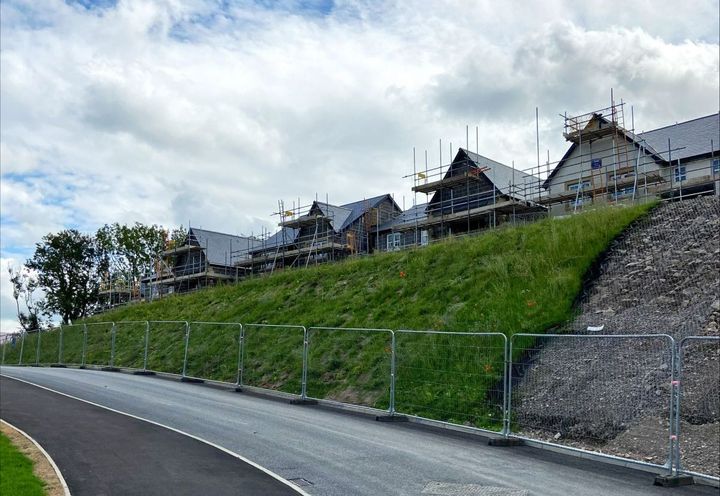
Maccaferri was commissioned by Story Homes to assess and develop a solution for a steep rock face located at the entrance to the Brigsteer Rise housing development in Kendal, Cumbria. With RSK acting as the consulting engineer, the client sought to enhance the visual appeal of the site by transforming the exposed rock face into a fully vegetated slope, creating a more attractive and welcoming entrance for residents. The site conditions presented several engineering and environmental challenges. The rock face had a maximum inclination of 45 degrees and extended up to 5 metres in height from crest to toe. These steep slope conditions made it extremely difficult to retain topsoil, which is essential for vegetation growth. Without intervention, any topsoil placed on the surface would be highly susceptible to erosion and washout during rainfall events. In addition, the hard rock substrate prevented the use of conventional slope stabilisation methods such as pinning systems, as standard steel pins could not penetrate the surface. This required an alternative anchoring and soil retention solution capable of working effectively on a rock face while supporting long-term vegetation establishment.
Discover more
Deep dive into
Geocells
What we can do with
Geocells




Get in touch with us
[contactForm_txtSuccessSubmit]