
Biaxial Geogrids
Soil reinforcement for road stabilization
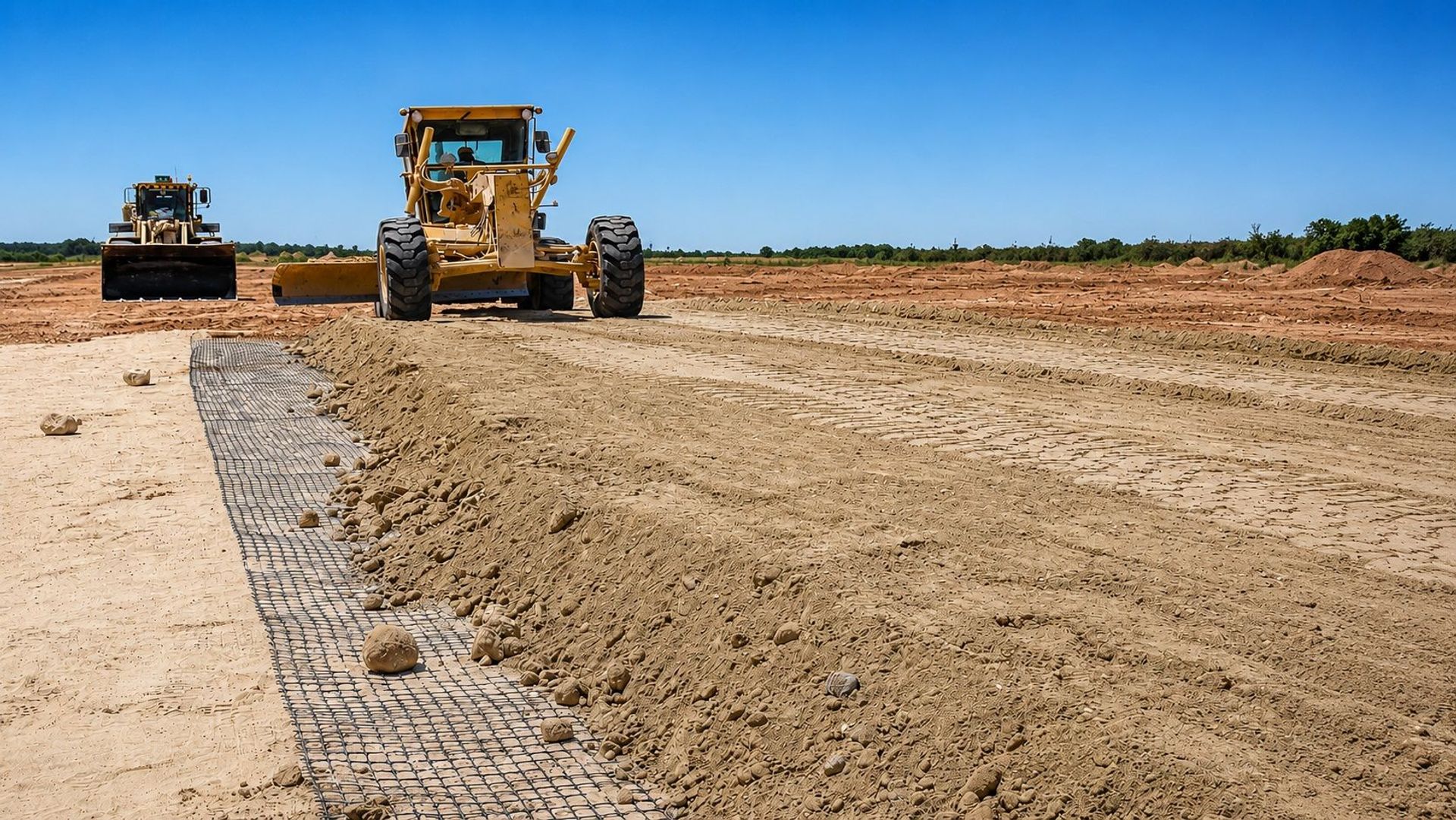
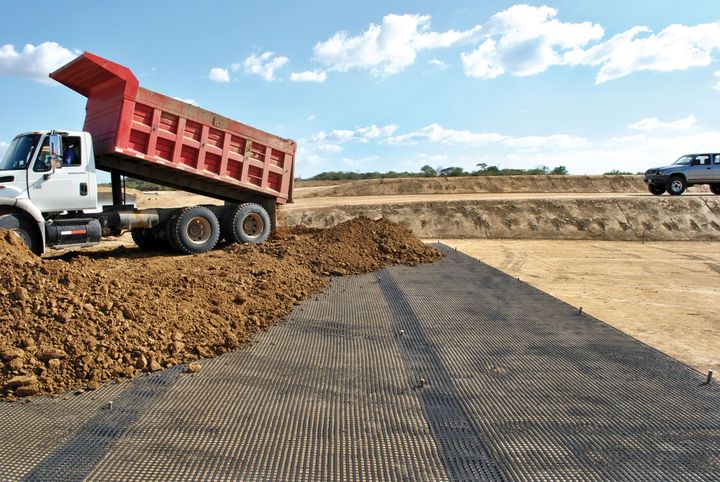
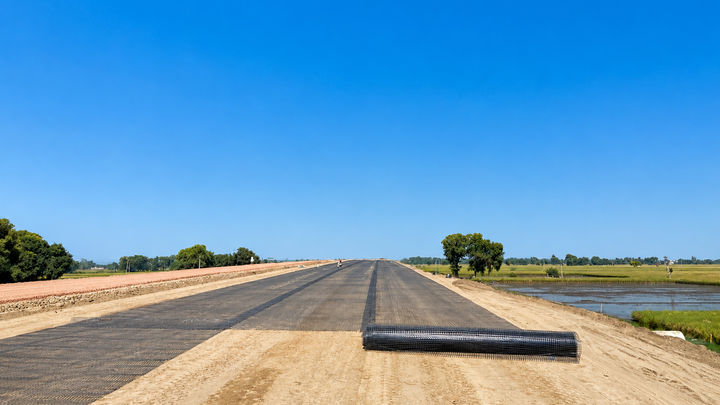
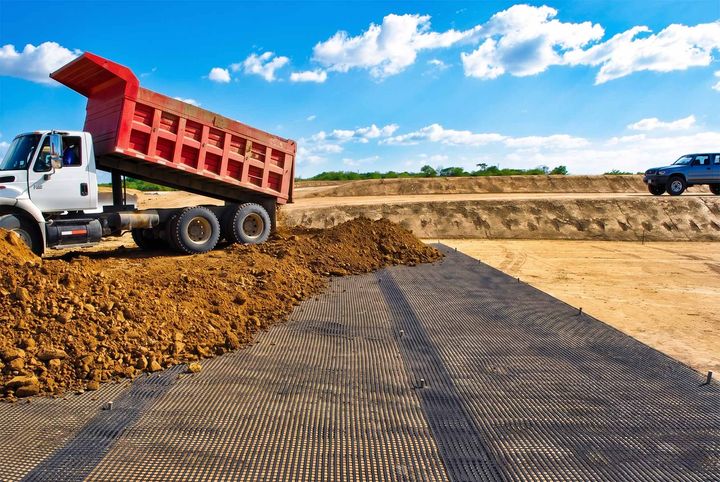
Biaxial geogrids are used mostly for reinforcement purposes in soil stabilization applications their symmetric-multiaxial structure can increase the bearing capacity of the existing subsoil providing the necessary strength and confinement effect. The tensile strength and the geometry of these geogrids are normally symmetric with tensile strengths from 20 to 300 (or even more) kN/m but three or more axis versions are available; also the polymer and the opening shapes can vary according to the tensile requirements and the fill properties.
Maccaferri’s range includes different families of products:
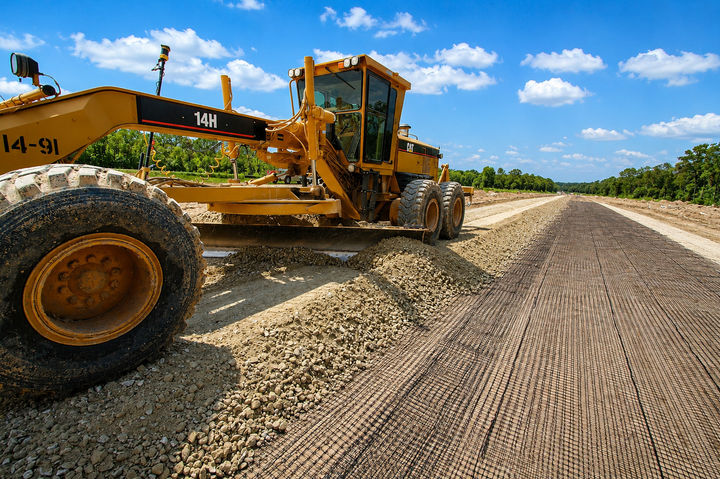
MacGrid EG
Extruded polypropylene geogrids with a symmetric tensile strength of up to 50 kN/m; successfully used in single or multiple layers for many decades in soil stabilization applications is an essential component of many combo-solving solutions.
MacGrid EG-T
Again an extruded polypropylene geogrid but characterized by a triangular shape to have a multi-axial behaviour. These materials are used – as the MG EG – in the same type of applications and are supposed to be an evolution of the biaxial ones.
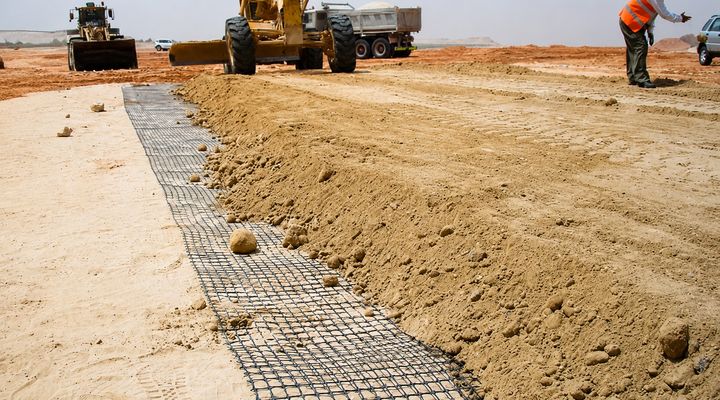
MacGrid WG-S
High tenacity PET knitted-weaved coated geogrids are also available and used in these types of applications especially when the tensile strength requested exceeds the capacity offered by the extruded ranges; these products are available up to standard symmetric strength of 300kN/m but – on demand – can be proposed up to 1000 kN/m.
Success Stories
Built, not just drawn
Discover more
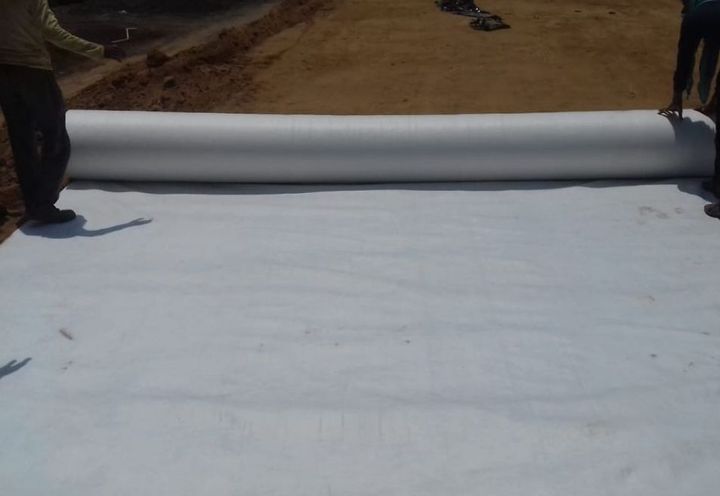
NTPC SIDING-GADARWARA PROJECT– BLANKET THICKNESS REDUCTION
The Gadarwara railway station is approx. 20 km from NTPC site. NTPC constructed the Gadarwara railway siding line for transporting coal to their plant. For this railway siding work, the blanket (subballast) material was not available in the Gadrwara area and transportation of blanket material from outside area was not an economical option. This devoid of blanket material was major concern of project. Also, mining has been banned in our country due to environmental issues, so it had become difficult to get quantity for blanket for formation construction. Apart from unavailability of blanketing material, another concern of this project was the inadequacy of good subgrade material. The subgrade material was of SQ1 type which had fines content of more than 50%. Considering these aspects of project, biaxial extruded polypropylene geogrid MacGrid EG and non-woven geotextile solution MacTex N was proposed for strengthening the formation.
Discover more
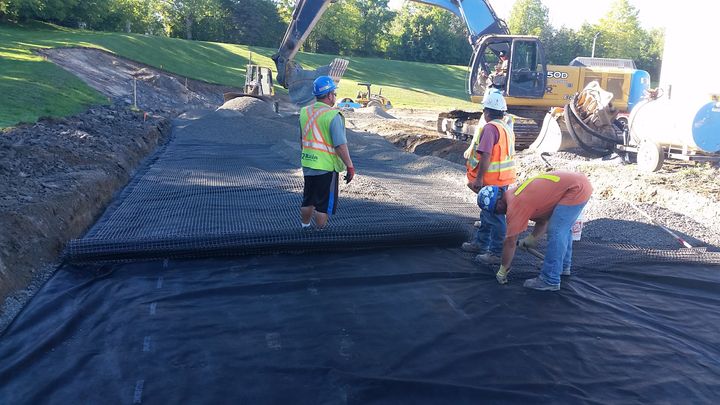
PORT DALHOUSIE WWTP - ROAD REINFORCEMENT
Canada
Weak subgrade threatened the safety and reliability of WWTP roads. At the Port Dalhousie Wastewater Treatment Plant in St. Catharines, the Regional Municipality of Niagara identified that the internal laneways no longer met industry standards for safe turning and vehicle maneuvering. Geotechnical investigations revealed very low bearing-capacity soils beneath the pavement, requiring a full reconstruction. The initial design called for complete pavement removal, subgrade regrading and proofrolling, and a thick section consisting of 60 mm HL-3 asphalt, 120 mm HL-8 asphalt, and 520 mm of Granular A base. This heavy granular requirement significantly increased project cost, material demand, and construction time. RMON needed a solution that would improve road performance without relying on excessive granular thickness.
Discover more
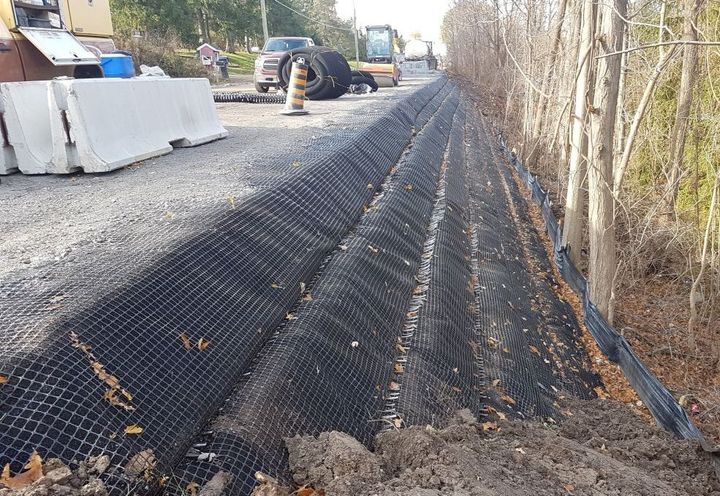
REHABILITATION AND WIDENING OF QUEENSTON ROAD
Canada
Because of quite a large volume of traffic, which adversely affects the traffic flows on Queenstone road, the town of Niagara-On-The-Lake required road to be rehabilitated and widened from Concession 7 Road to Townline Road. The project comprised rehabilitation/reconstruction and widening by 1. 5 m on both sides along a 1,050 m long section, including two culvert crossings of existing watercourse in order to facilitate the proposed road widening and to keep the proposed works within the roadway allowance at the culvert crossing area, the geotechnical engineer of the project proposed a soil retaining structures. Also, it was expected that the road reconstruction had a big amount the surplus excavation material that had to be carried out and dispose.
Discover more
What we can do with
Biaxial Geogrids




Get in touch with us
[contactForm_txtSuccessSubmit]