
Long-Term Performance of a Green-Faced Reinforced Soil Structure at Kuranda Range, Queensland
In 1999 the Queensland Government began consulting on a major upgrade to the Kuranda Range Road, the key crossing linking Cairns to the Atherton Tablelands and Cape York. The proposed works were substantial: a four-lane, 16-kilometre realignment with 16 bridges, roughly 60,000m² of fill batters up to 25 metres high, delivered over an expected ten-year program.
The project presented significant environmental and construction challenges. The alignment ran through Far North Queensland’s tropical climate and, critically, through World Heritage-listed rainforest under the jurisdiction of the Wet Tropics Management Authority (WTMA). Alongside environmental sensitivities, the project also had to manage frustrated local businesses and the demands of Cape York access tourism throughout a decade-long construction program. Given these constraints, Terramesh® Green was appended to the project’s Environmental Impact Assessment as a preferred technology for the fill batters.
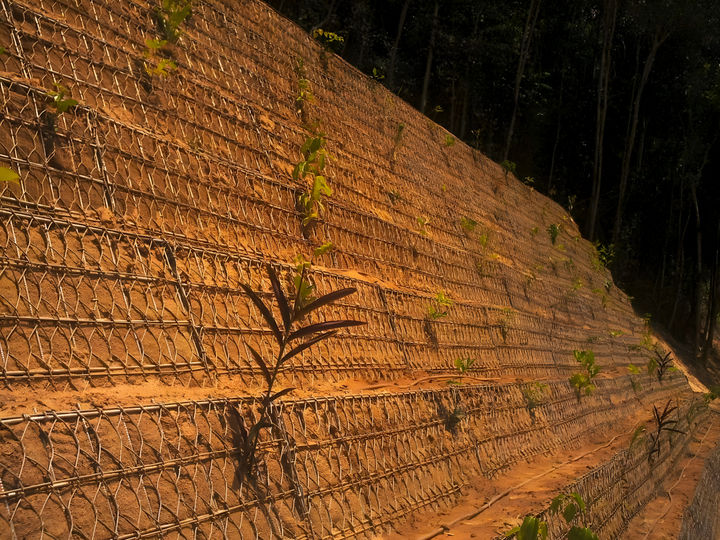
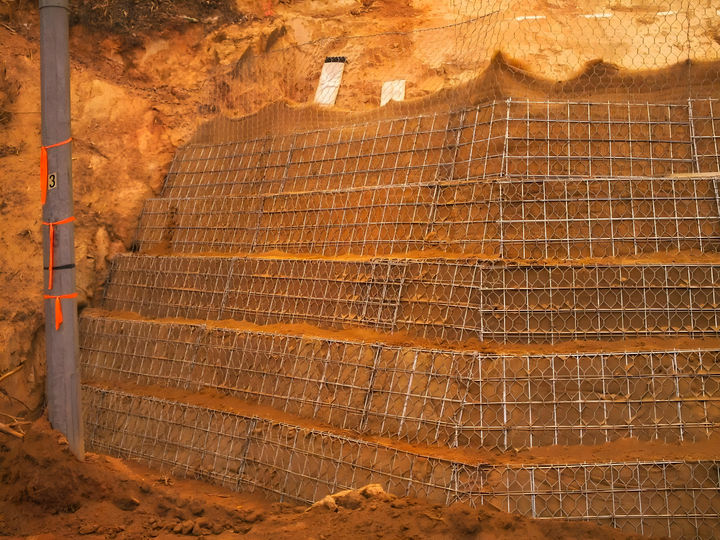
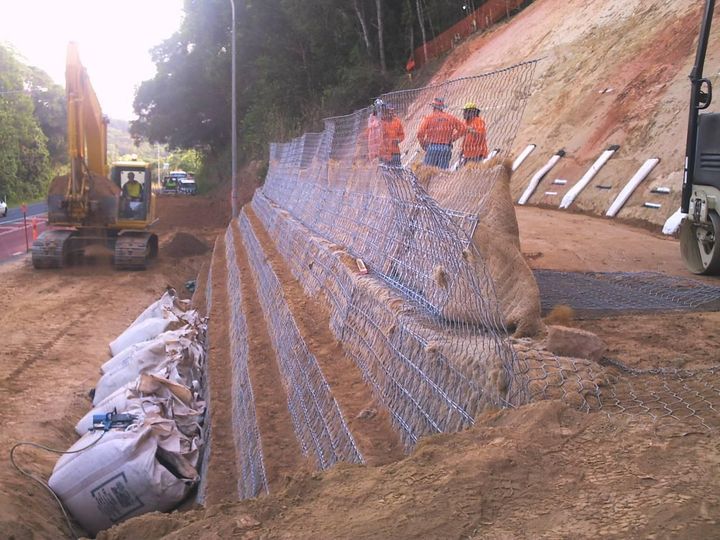
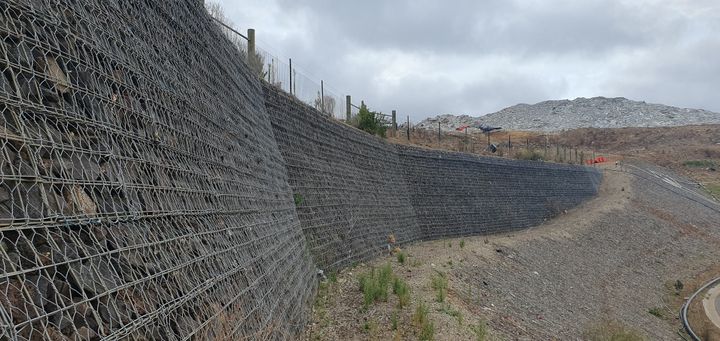
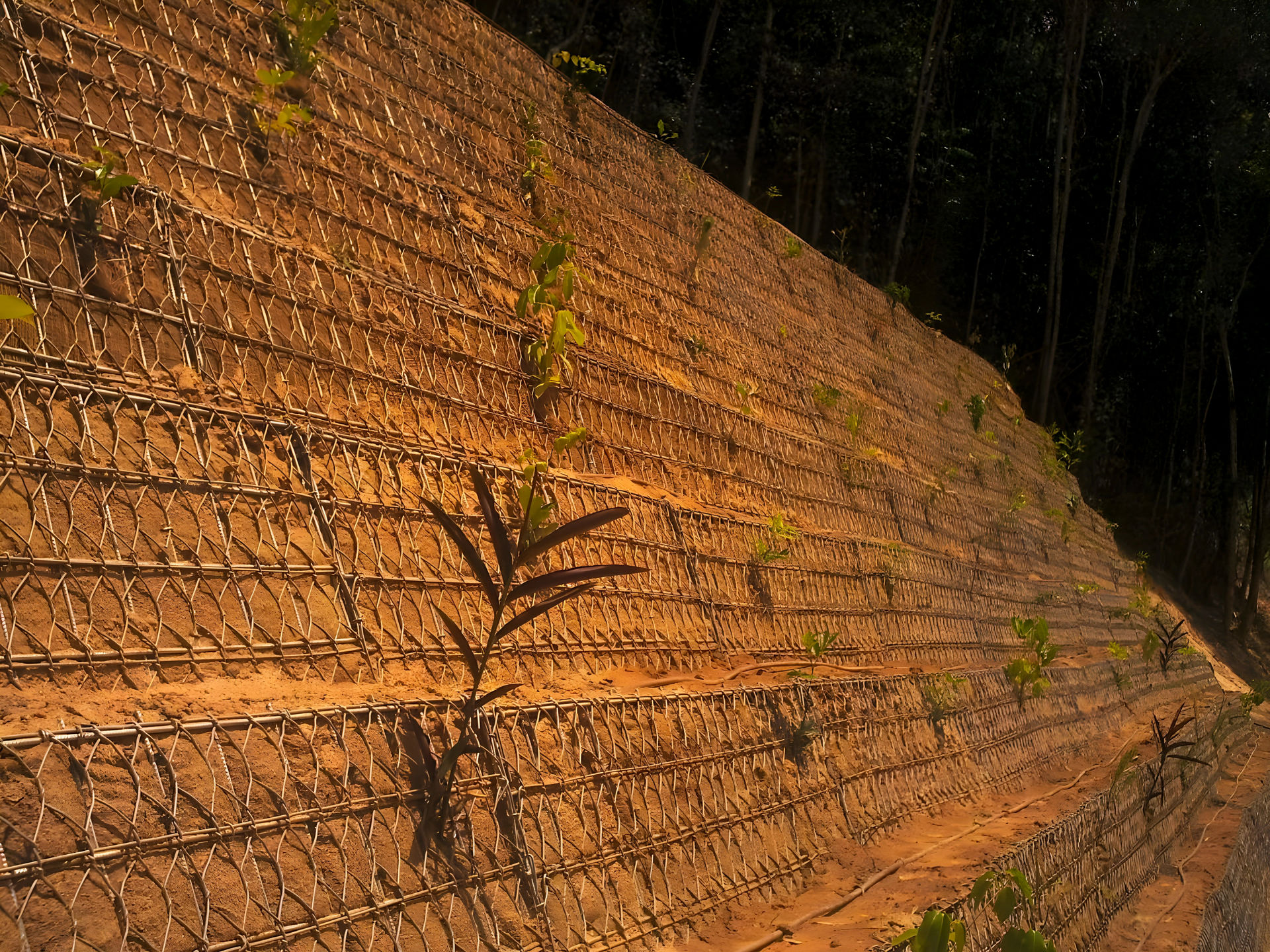
Terramesh® Green is a modular reinforced soil system built for exactly this kind of application. Each unit unit consists of a prefabricated single length of double twist steel wire mesh forming a lid, an inclined front face and an extended integral base referred to as the reinforced tail section. The inclined face section is lined with an erosion control blanket and stiffened with a welded mesh panel which provide stability during filling and enhances the establishment of natural or introduced vegetation. With a 120-year design life and the ability to install around 150m² in a single shift, the system offered the Queensland Department of Main Roads (QDMR) a way to combine structural performance with genuine rehabilitation value for the surrounding rainforest.
Proving the technology on site
Before Terramesh® Green could be considered for the wider program, QDMR’s design team required proof of concept. Maccaferri provided product and site support for the trial, and a design proposal was tendered. A new site was later selected, requiring a larger structure. The Rainforest Cooperative Research Centre (CRC) also provided advice on plant species selection.
The trial consisted of a 5.4-metre-high, 36-metre-long Terramesh® Green structure. Maccaferri’s design suggestion incorporated Terramesh® Green units and geogrid reinforcement. QDMR prepared the site, while Maccaferri supplied the materials.
Building the structure
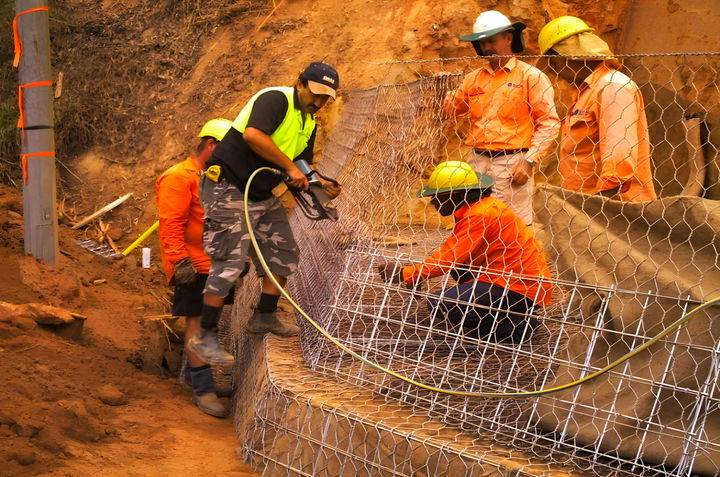
Construction followed a compact program. Site preparation with a 20-tonne excavator took five days, followed by two days of final trim, half a day of irrigation works, and a single day of planting. The crew comprised two labourers, a ganger, foreman and supervisor, supported by a 20-tonne excavator, a 5-tonne roller and a mini front-end loader. Materials included 170 Terramesh® Green units, five rolls of Maccaferri geogrid, two rolls of stripdrain, and one roll of geotextile.
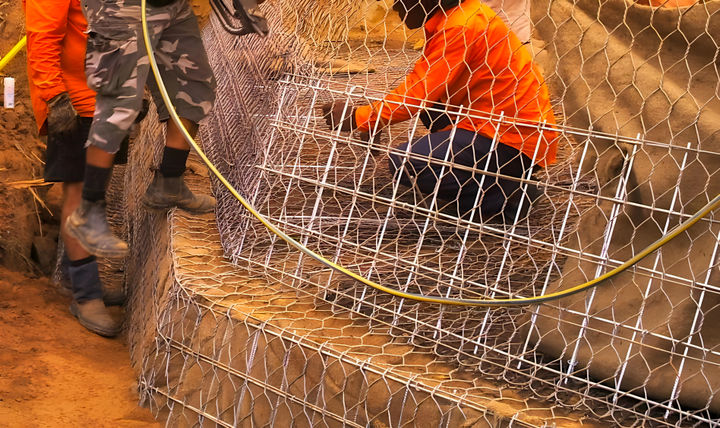
Construction moved through clear stages: a non-woven geotextile and drainage layer at the base, gabion mesh units built up and filled in stepped, angled lifts to match the batter profile, vegetative soil placed behind the front face, and the exposed face scarified ahead of hydromulching. Endemic shrubs, ferns, gingers and rainforest tree species selected through the CRC were then planted directly through the facing mesh.
The structure was built at an average rate of roughly 86m³ of fill placed, spread and compacted per day, with the full 5.4m structure completed in 12 days. The stepped, angled face suited the batter profile and made construction straightforward to repeat, requiring minimal labour input. Fully installed cost, including placing and compacting backfill. The finished structure was assessed as aesthetically acceptable, with favourable comments received from stakeholders.
Two decades of vegetation growth
The real test of a green-faced reinforced soil system is what happens after construction, and the Kuranda trial has now been observed for more than 20 years.
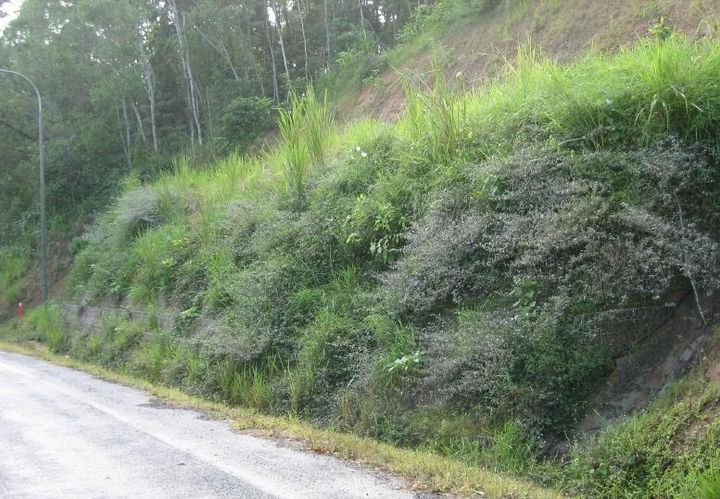
By June 2006, seven months after completion, the face was already carrying dense grass cover and establishing shrub growth. By March 2012, sections of the structure had developed into what site inspectors described as the “greenest” section of the slope, with canopy species visibly integrating into the surrounding rainforest edge.
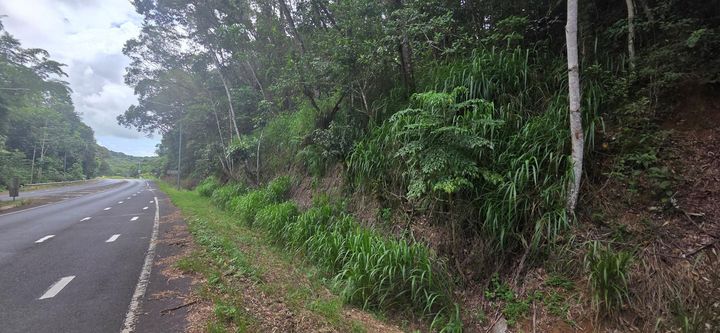
By March 2026, 21 years after installation, vegetation had developed across the structure to the point that the reinforced face was visually integrated with the surrounding native rainforest verge. The original steel mesh was obscured by established grasses, shrubs and trees, while root systems had developed through and around the Terramesh® Green units.
Engineering integrated with the landscape
What began in 2005 as a trial reinforced soil structure has developed into an established vegetated slope within the Kuranda Range environment.
As vegetation matured, its roots became increasingly integrated with the reinforced face, supporting soil retention and strengthening the connection between the engineered structure and the surrounding landscape.
The Kuranda Range trial provides a long-term Australian reference for the use of green-faced reinforced soil systems in environmentally sensitive locations. It demonstrates how reinforced soil engineering, drainage and carefully planned revegetation can work together to deliver a durable solution that progressively becomes part of the natural environment.
For more information about Terramesh® Green and reinforced soil solutions for infrastructure projects, contact us at info.au@maccaferri.com.